Pu'er Tea Experience
Yunnan's tea mountains — UNESCO Jingmai, Nannuo's ancient trees, Blang fire-pit rituals
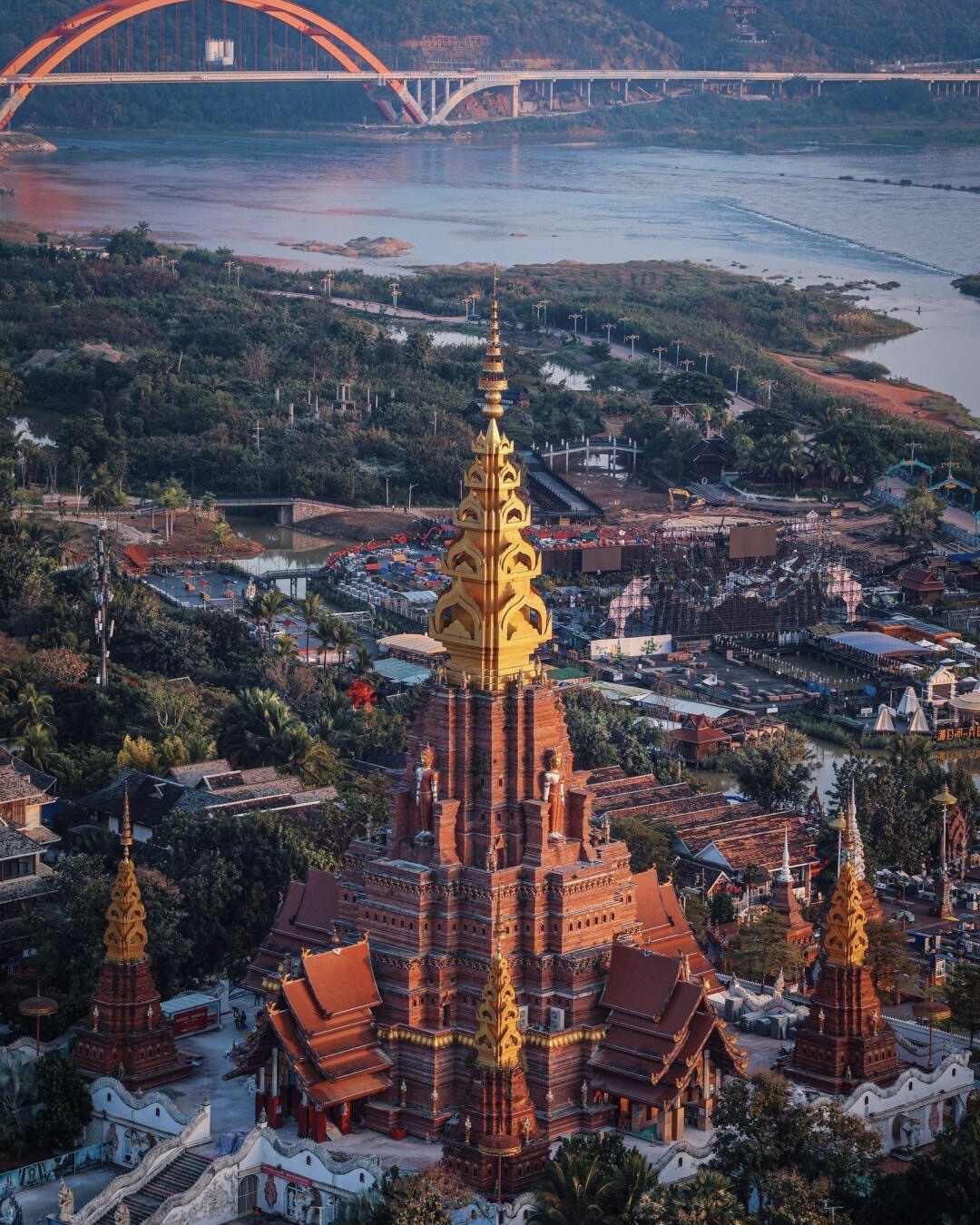
Pu'er tea is a thousand-year-old Yunnan tradition that travelled the Tea Horse Road into Tibet, Burma and Sichuan. We base this experience on the two mountains that anchor it — Nannuo, in Xishuangbanna, where Hani families still harvest 400-to-800-year-old tea trees from bamboo ladders; and Jingmai, in Pu'er, the world's first tea-themed UNESCO World Heritage site (inscribed 2023). Three to five days is long enough to walk the ancient forests, press your own cake on stone moulds at the tea estate, taste through a flight of estate Pu'ers in the tea garden, and sit through a Blang elder's fire-pit roasted-tea ritual at a heritage retreat in Mangjing village. We work with the tea families and estate masters directly — most local tea-mountain guides speak only Mandarin, so an English-speaking specialist makes the difference between watching and actually understanding what's in your cup.
Ask about this experiencePu'er Tea Experience is a 3–5 day immersion in Yunnan's tea mountains — Nannuo's 400-to-800-year-old ancient tea trees with Hani harvester families, Jingmai's UNESCO-inscribed Blang tea-forest landscape (the world's first tea-themed UNESCO World Heritage site, inscribed 2023), hands-on Pu'er cake-making at the tea estate, a tasting flight in the tea garden, and the Blang fire-pit roasted-tea ritual at a heritage retreat in Mangjing village. Best for slow-travel tea lovers and culture seekers. Slots into a longer Yunnan trip from A$2,400 per person twin-share for a 4-day module. Year-round, with March–April for new-leaf picking and September–November for clearest cloud-sea mornings.
The experience
- Two tea mountains: Nannuo (Xishuangbanna, Hani harvesters) and Jingmai (Pu'er, UNESCO Blang & Dai)
- Hands-on Pu'er cake-making — fresh-leaf harvest, kill-green, rolling, and stone-mould pressing with the estate's tea master
- Tasting flight in the estate tea garden — 识茶 · 品茶 · 论茶 (recognise · taste · discuss)
- Blang fire-pit roasted-tea ritual (烤茶, kǎo chá) at a Mangjing heritage retreat
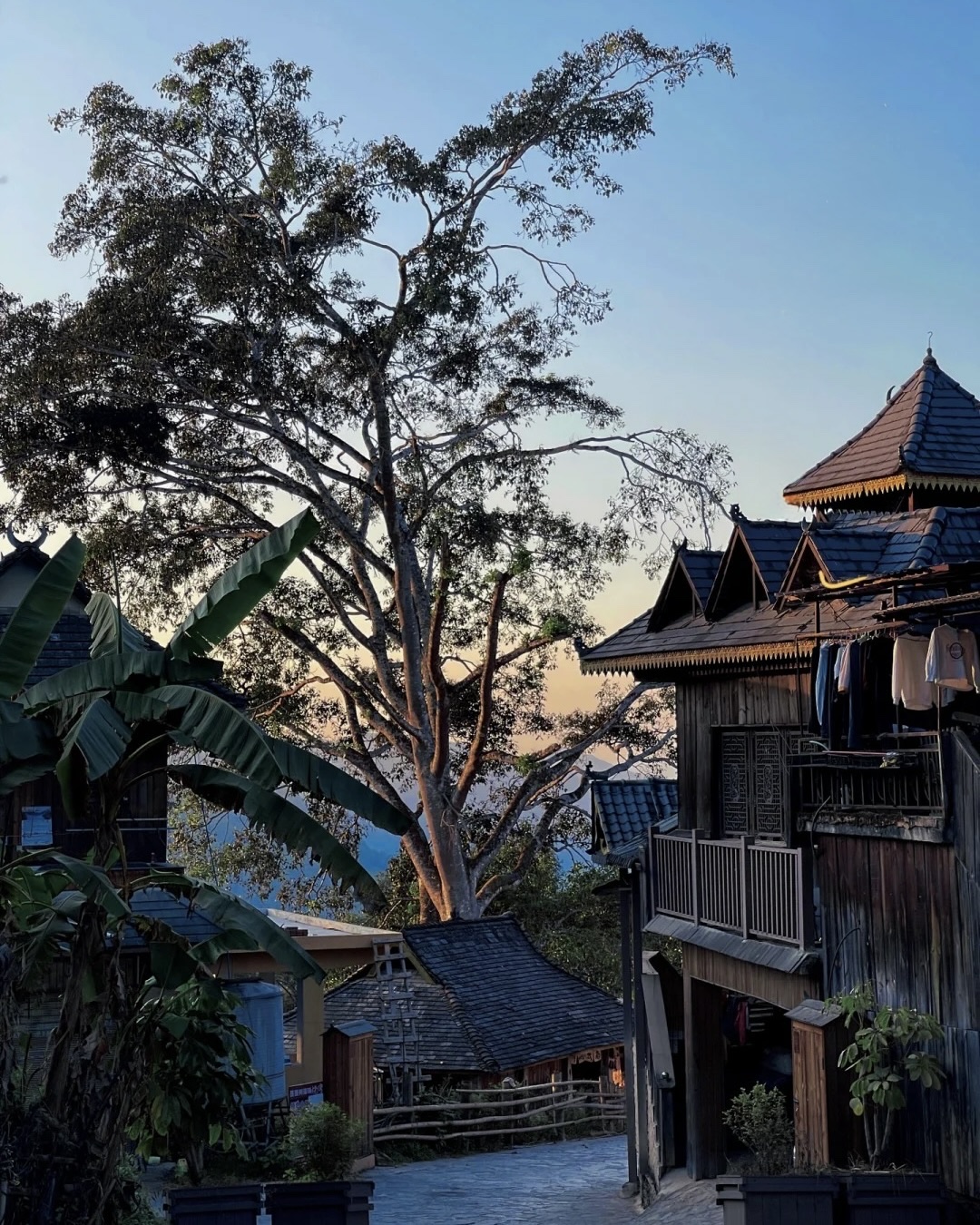
- Walks through UNESCO villages — Mengben's gilded Dai Buddhist temple, Nuogan's stilted timber rooftops, the sacred bee tree
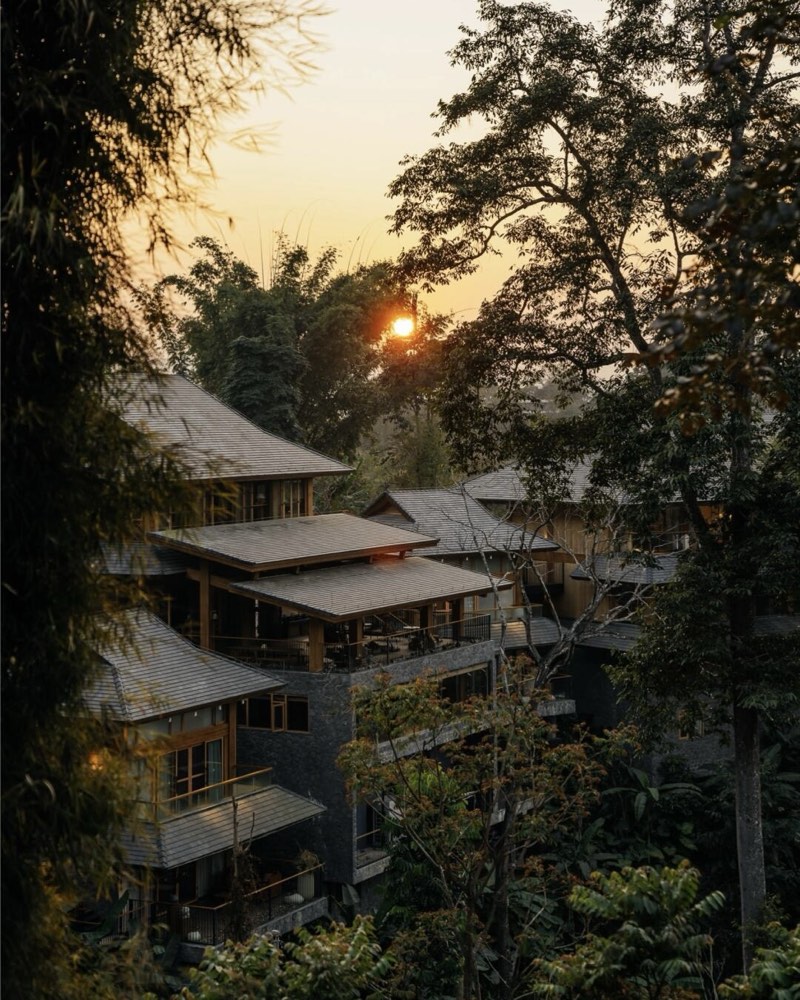
- Stays inside the heritage landscape, not next to it — a tea estate on Jingmai and a retreat in Shangzhai village
- Optional Lincang extension — Bingdao (冰岛), the ancient-tree village whose 冰糖甜 ice-sugar sweetness commands China's highest tea prices
The activities
-
Walking the UNESCO ancient tea forest at Jingmai
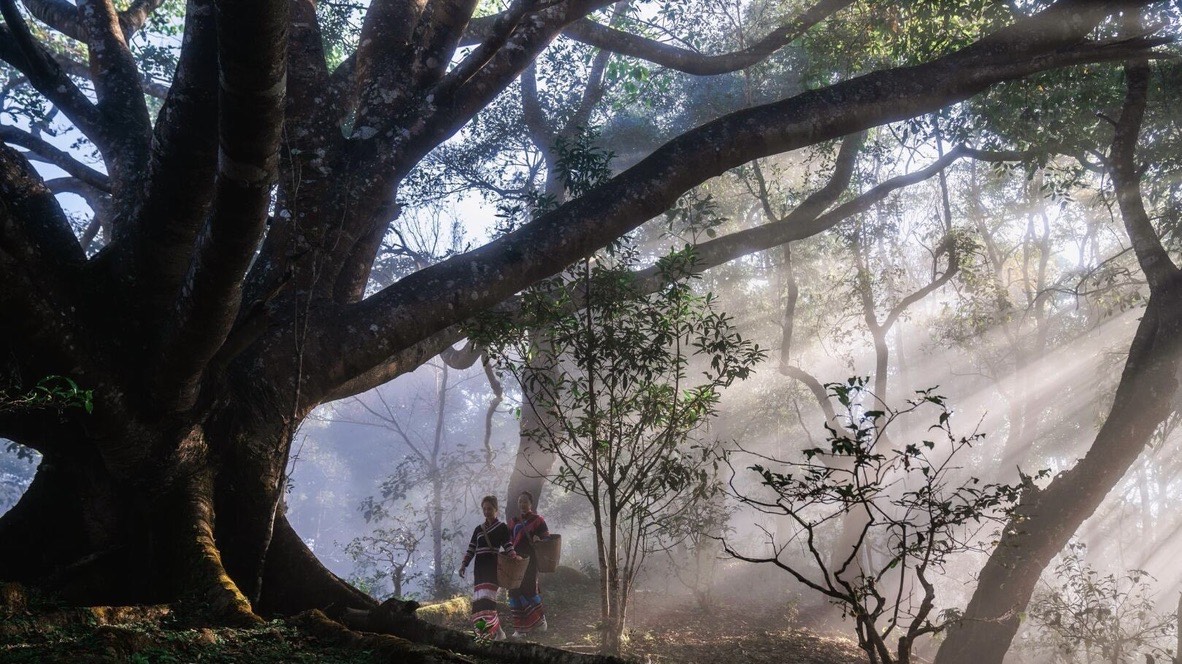
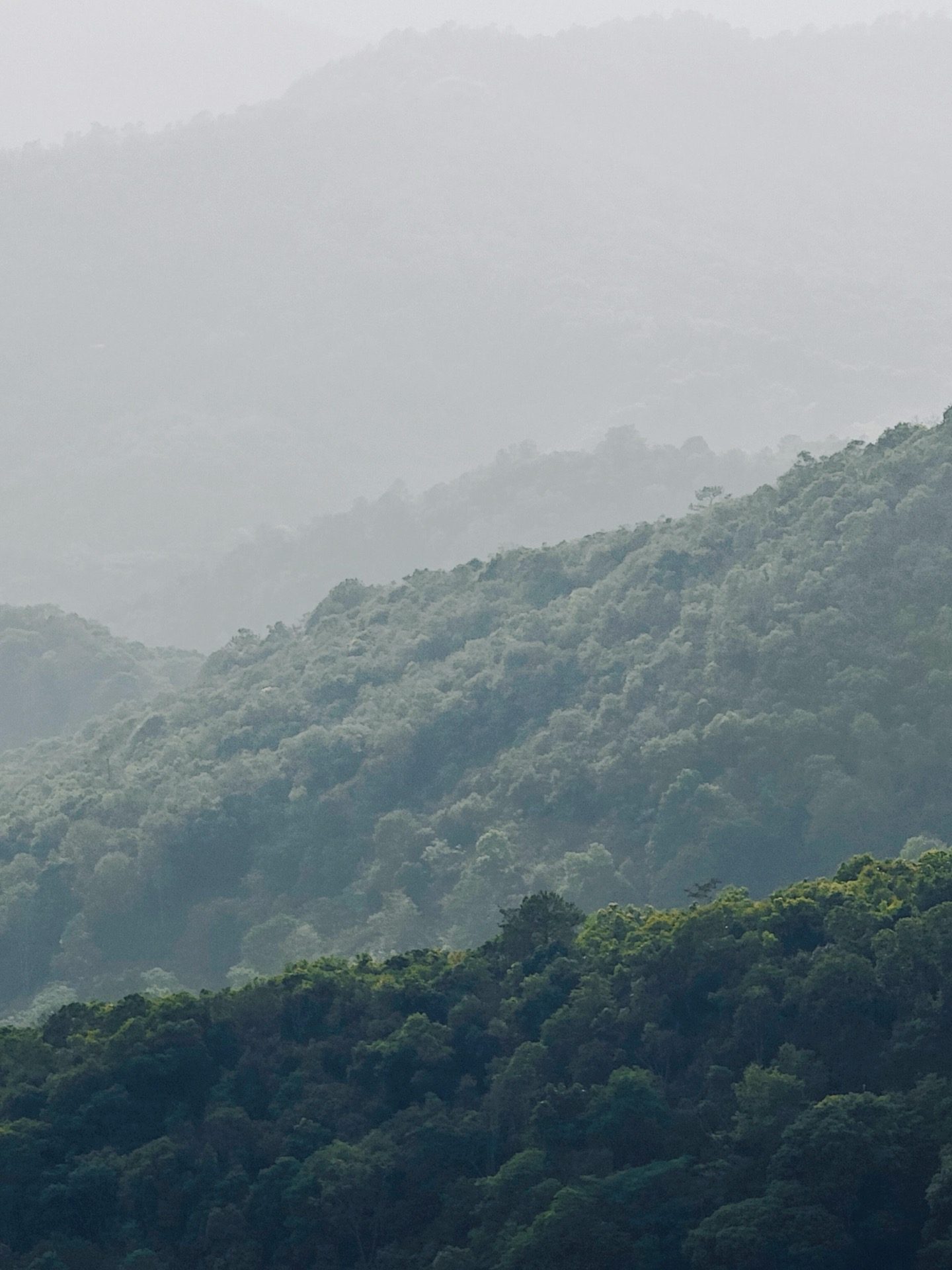
Mangjing, UNESCO Jingmai Cultural Landscape (Pu'er)The Cultural Landscape of Old Tea Forests of Jingmai Mountain was inscribed as UNESCO World Heritage in September 2023 — the first tea-themed site on the list. Roughly 1,000 years of continuous Blang and Dai tea cultivation has produced a forest where shade-grown ancient tea trees live in symbiosis with the surrounding old-growth canopy. We walk a 2–3 hour loop with a local guide through the ancient-tree archway, the bee-spirit tree, and Mangjing's heritage paths — slow pace, frequent stops, and an introduction to a Blang family at the end.
-
A Pu'er cake masterclass at the tea estate
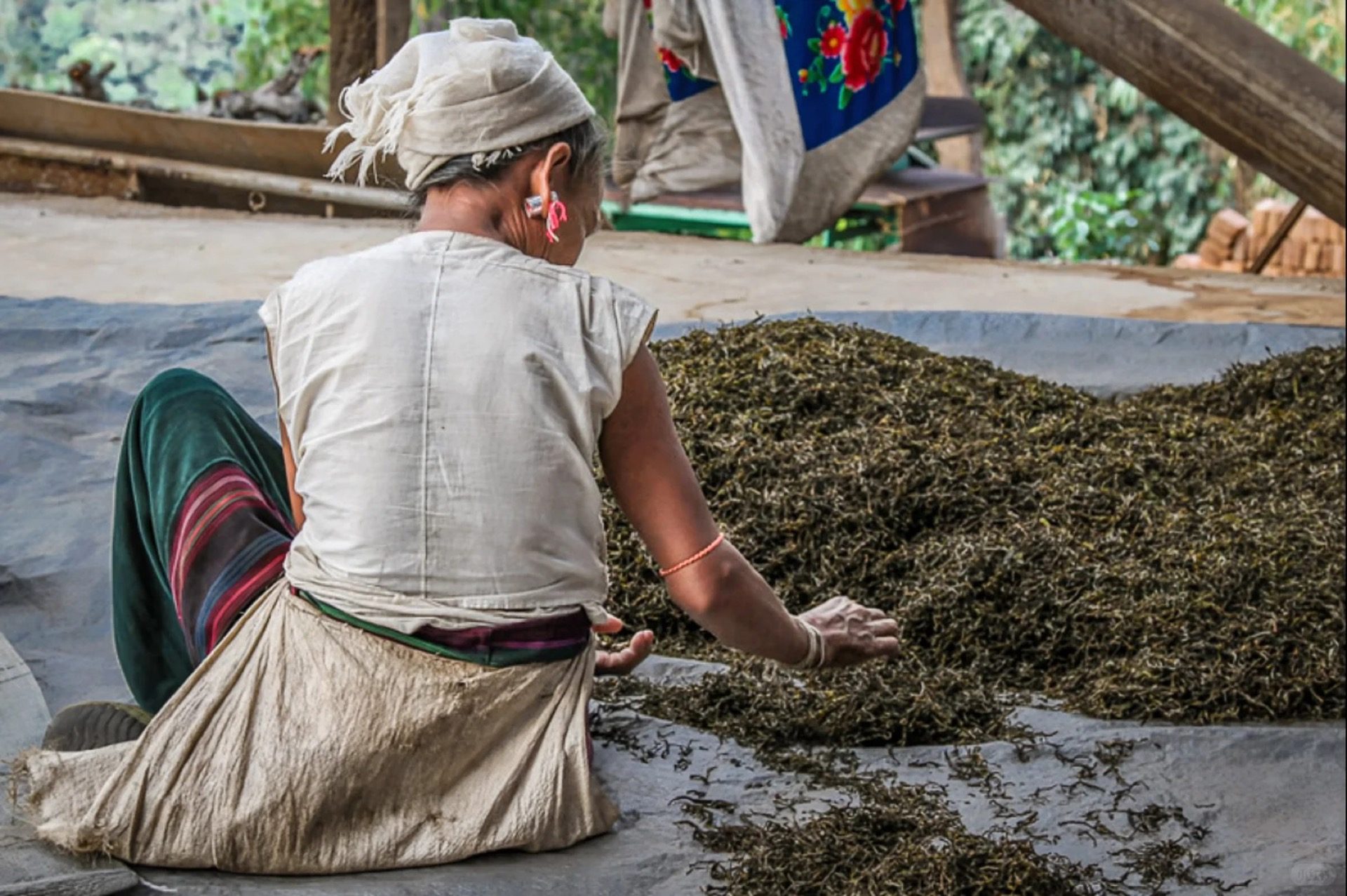
Jingmai tea estate (景迈)The estate is a working Pu'er tea manor on Jingmai Mountain. We arrange a private morning with the in-house tea master — harvest fresh leaves on the estate, watch the traditional process (kill-green, rolling, sun-drying), and then press and stamp your own cake on the estate's stone moulds (古法制作普洱茶饼). The cake travels home with you. Pairs with a tasting flight in the tea garden in the afternoon.
-
Nannuo's 400-to-800-year-old tea trees with the Hani
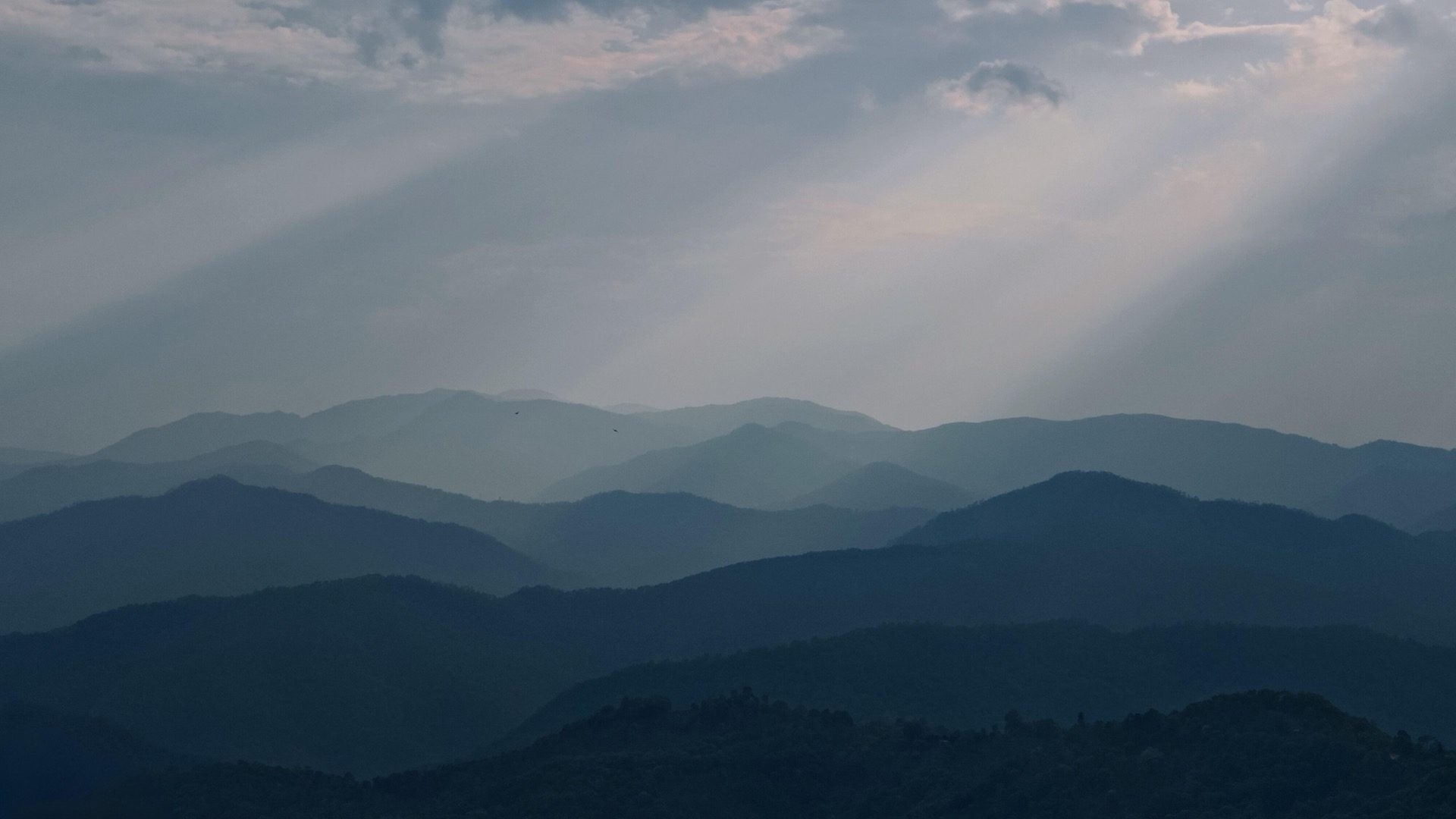
Nannuo Mountain (Xishuangbanna, ~40 min from Jinghong)Nannuo Mountain sits 40 minutes west of Jinghong at around 1,500 m, with one of Yunnan's most famous concentrations of 400-to-800-year-old ancient tea trees and a celebrated Tea King Tree (茶王树) in a small forest clearing. The local Hani (Aini) families still harvest them in the traditional way — climbing bamboo ladders propped into the canopy and pulling fresh leaves by hand. We walk through the forest with a Hani family in the cool morning, finishing at the Tea King Tree for tea brewed on the spot.
-
Blang fire-pit roasted-tea ritual (烤茶)
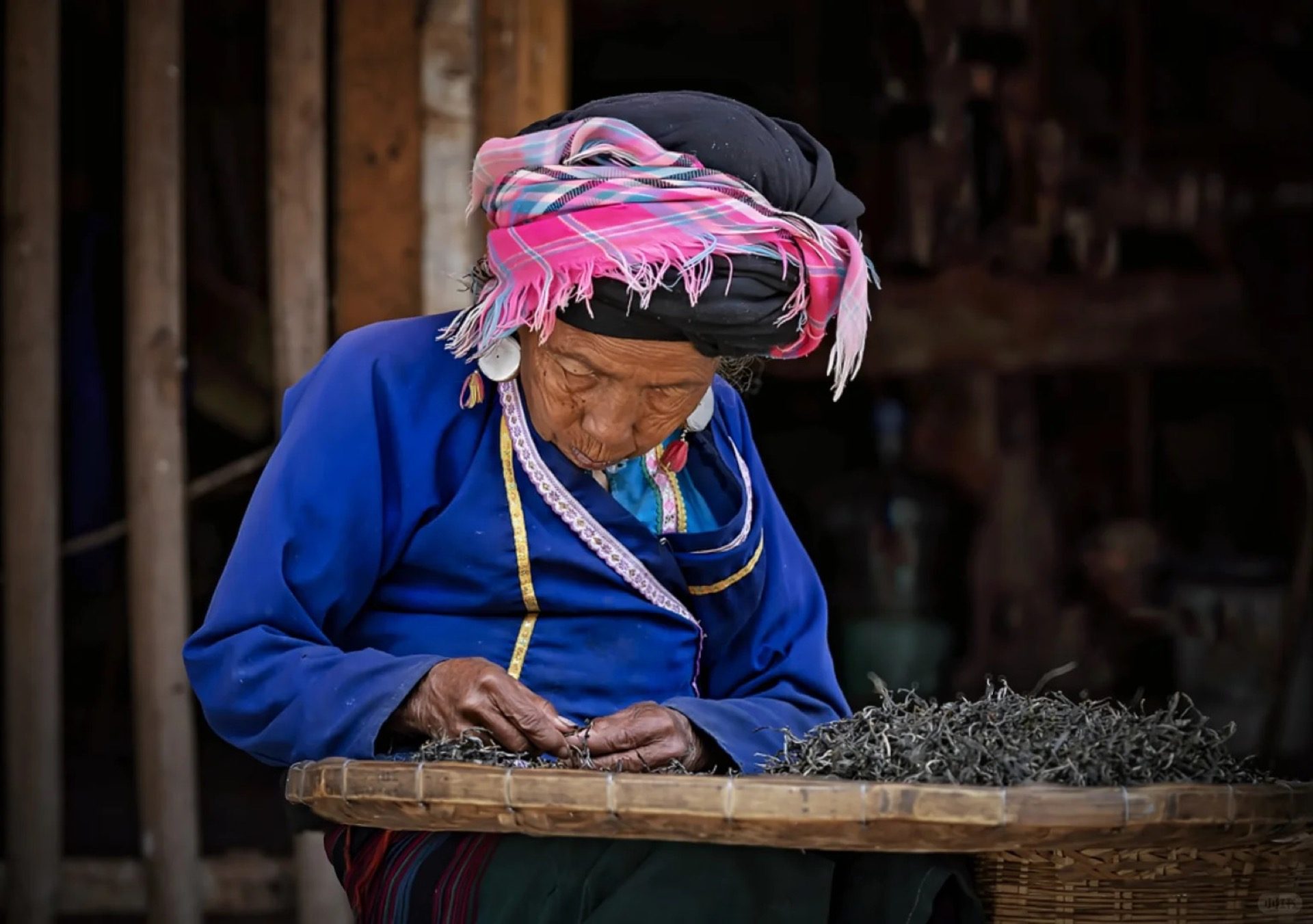
Shangzhai village, Mangjing (UNESCO Jingmai)Roasted tea — kǎo chá in Mandarin, the Blang call it differently in their own language — is the way tea is drunk in the houses of the elders, not the way it appears in any tourist tea ceremony. A Blang elder builds the fire in a clay pit, roasts the leaves over the embers until they crack and smoke, then brews and pours in the traditional sequence. We arrange this with the heritage retreat in Shangzhai village, with traditional Blang music in the background and dinner from the village kitchen — smoked meats, foraged greens, fire-pit pairings.
-
A tasting flight in the estate tea garden
Jingmai tea estate (景迈)Most Pu'er tasting most travellers do is in a Kunming or Beijing teahouse, decades removed from the mountain. The estate's tea garden runs a flight on the estate itself — 识茶 · 品茶 · 论茶 (recognise, taste, discuss) — across the estate's own raw and aged Pu'ers, paired with a double afternoon tea. Cake structure, leaf grade, vintage, the difference between shade-grown old-tree and modern terrace bushes; you walk away with a working palate rather than a brochure.
-
UNESCO villages — Mengben, Nuogan, the bee tree
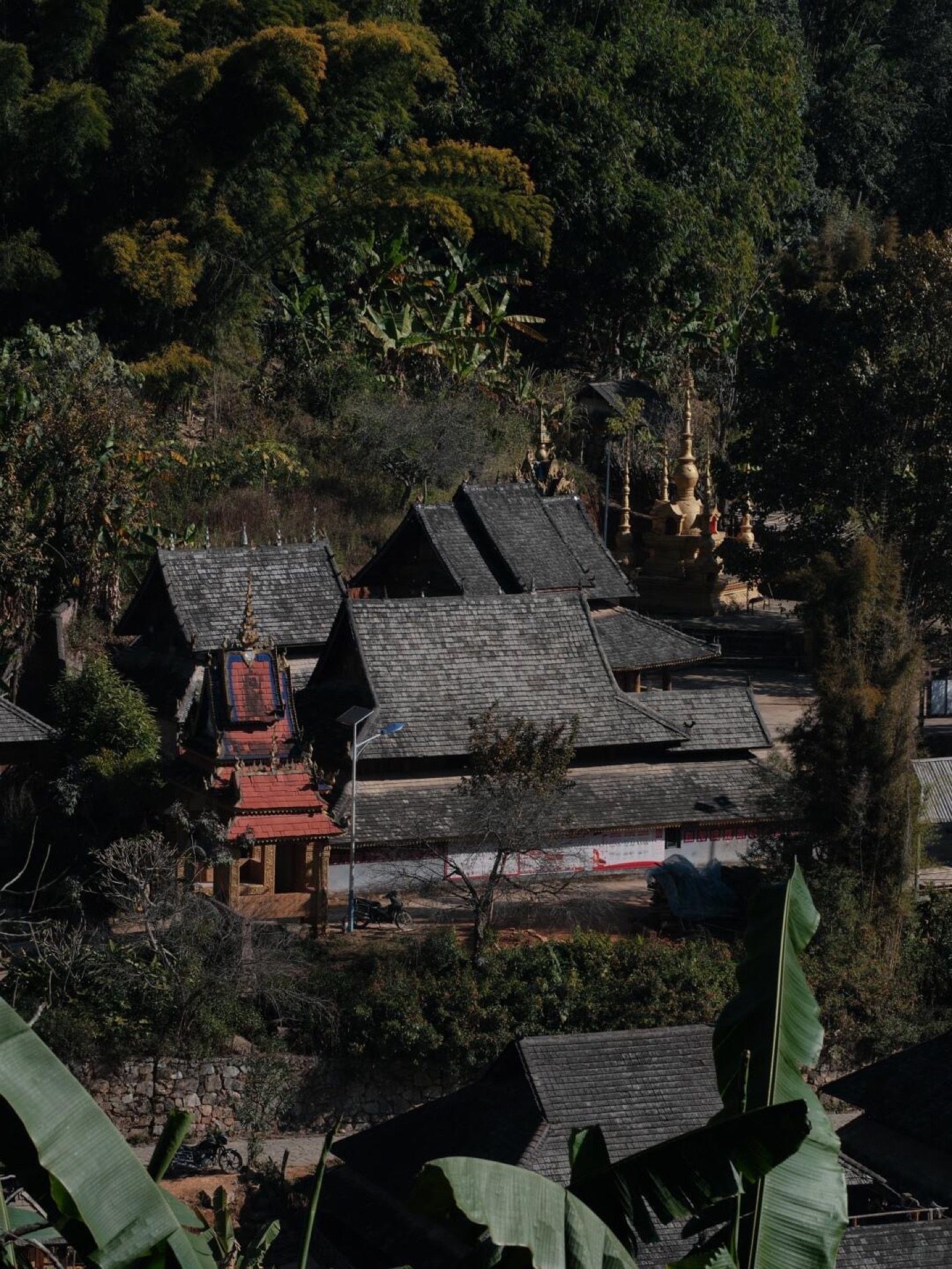
Mengben & Nuogan villages, UNESCO JingmaiThe Jingmai cultural landscape is nine traditional villages, five ancient tea forests and three separation forests across roughly 19,000 hectares — a working landscape, not a museum. We walk a short circuit between Mengben (a gilded Dai Buddhist temple still in daily use), Nuogan (Dai stilted-timber rooftops at dusk) and the bee tree (蜂神树) — a sacred old tree where wild bees still nest in the heart of the Blang spiritual landscape.
-
Bingdao (冰岛) — Lincang's most coveted tea village
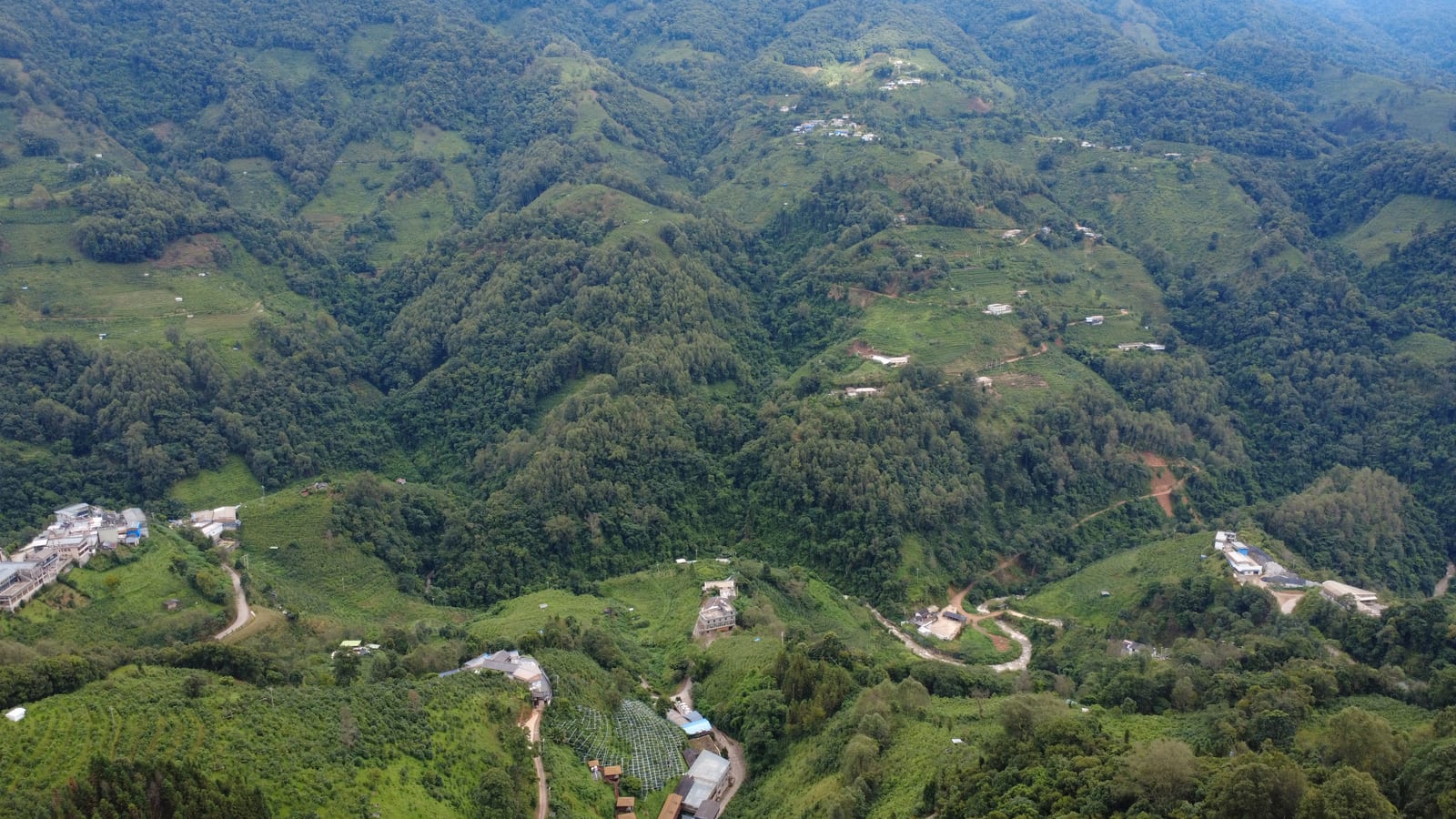
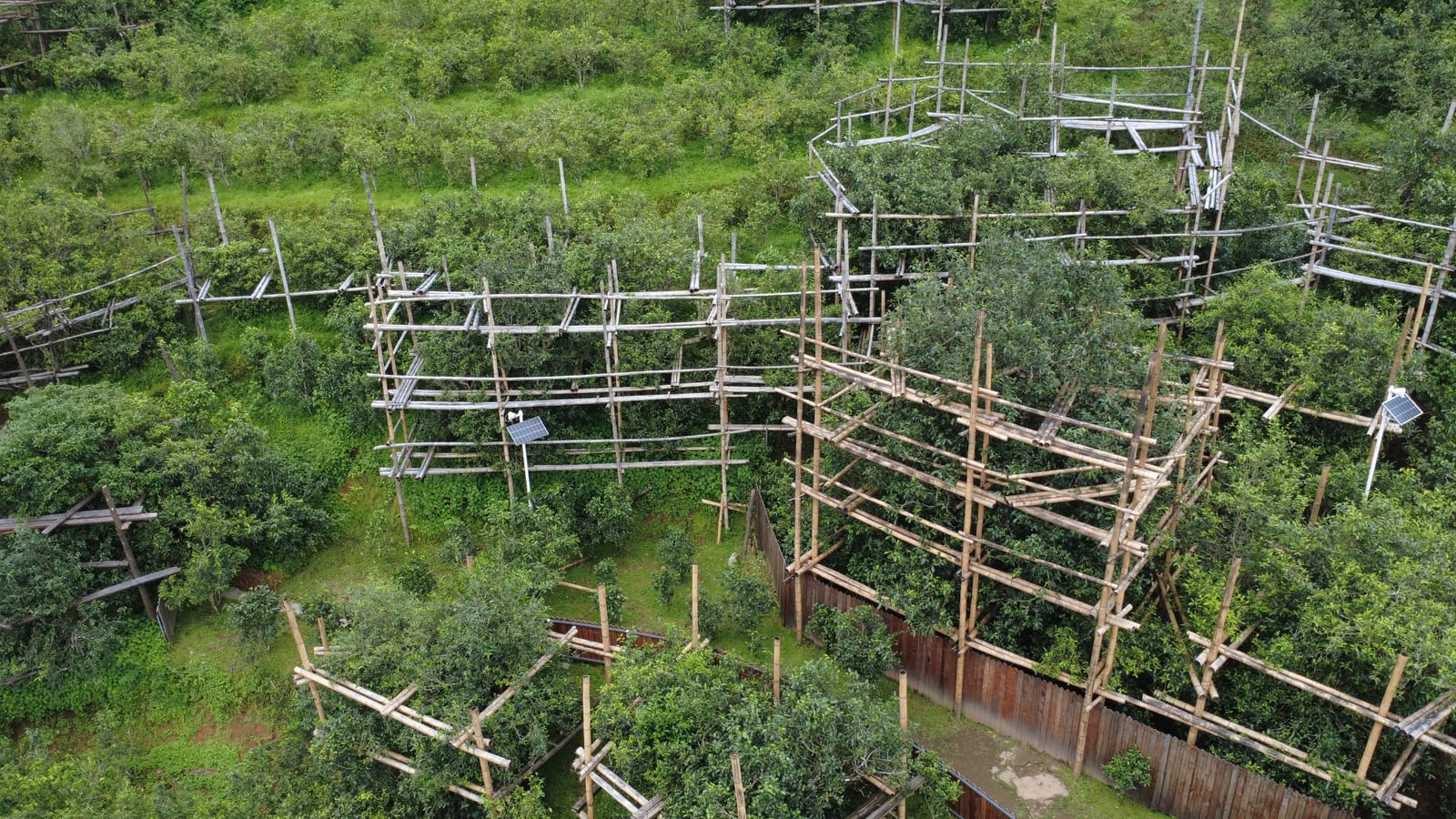
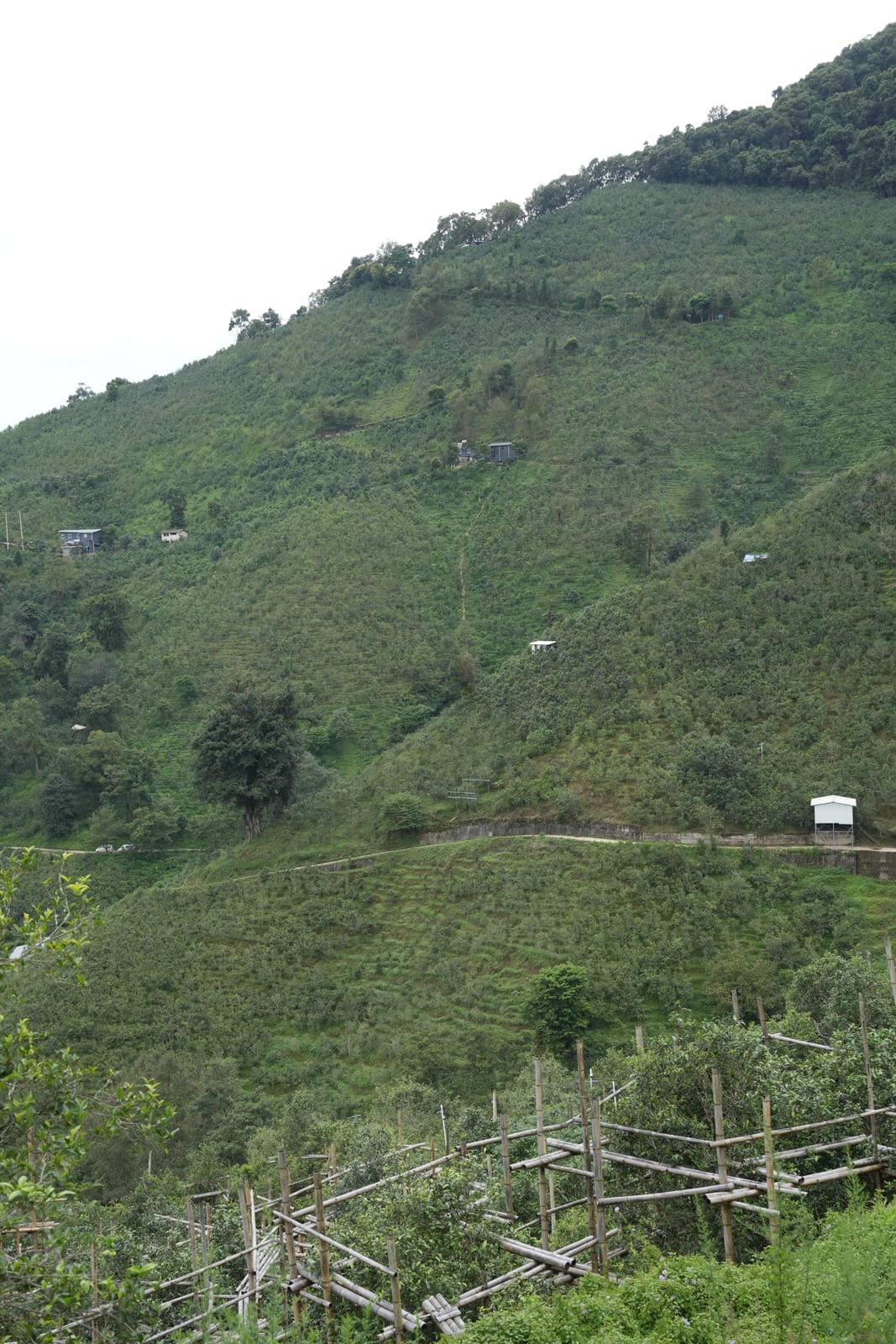
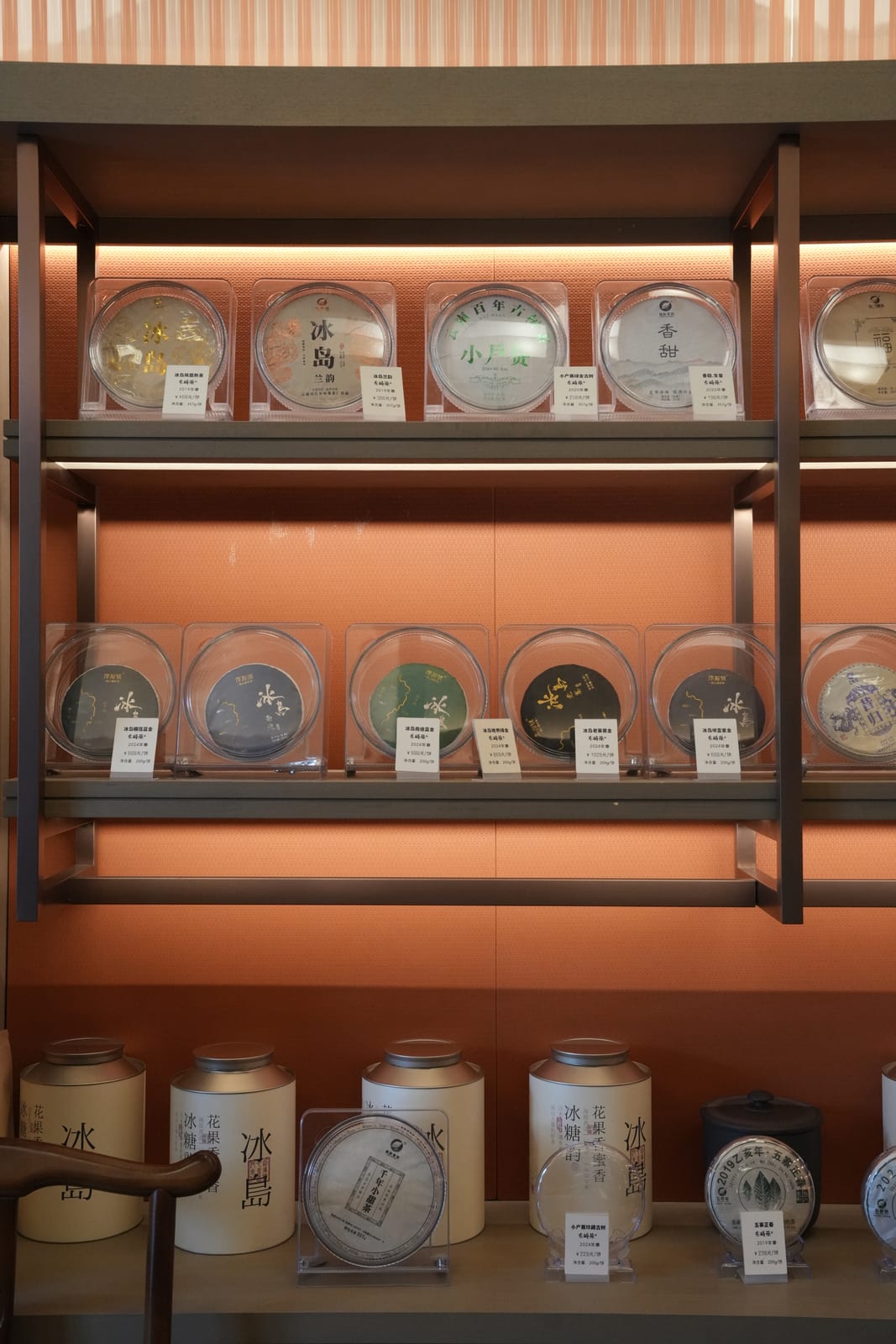
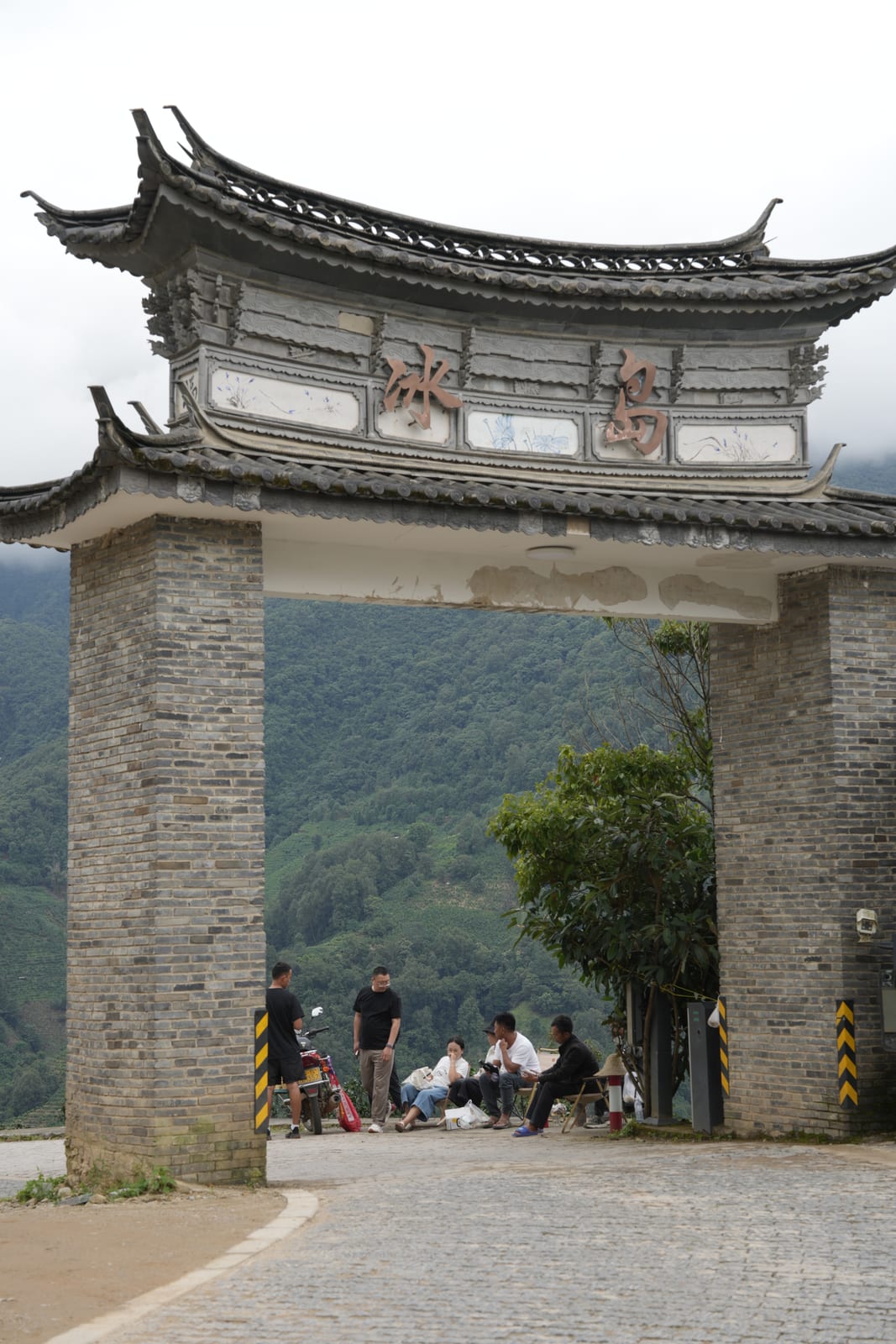
Bingdao Laozhai, Mengku (Lincang)In the Pu'er world, no single-origin is prized more highly than Bingdao. The old village — Bingdao Laozhai — sits high above the Mengku valley in Lincang, and its ancient-tree tea is famous for a clean, lingering sweetness the Chinese call 冰糖甜 (bīngtáng tián), 'rock-sugar sweet'. The most storied old trees are now fenced and platformed to protect them, and spring leaf from them commands some of the highest prices of any tea in China. We visit with a local grower, walk the gardens of ancient trees, and reach a working tea village most travellers never see — an optional Lincang extension for serious tea lovers.
-
Tasting Bingdao's ice-sugar sweetness
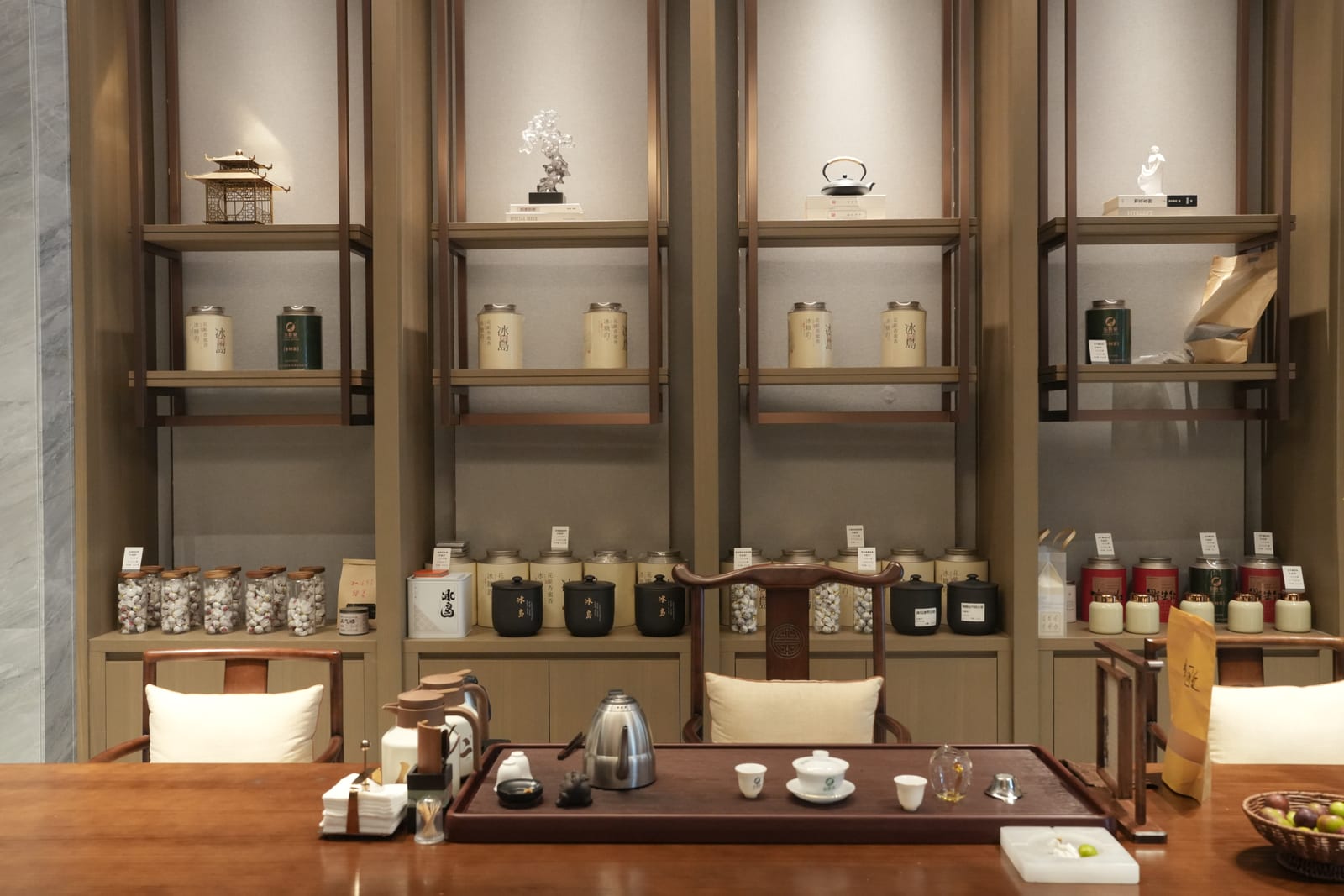
Bingdao, Mengku (Lincang)Bingdao is so valuable it's among the most-faked teas in China — most people who love it have never tasted the real thing. In a village tea room we taste Bingdao's own teas at the source: the celebrated 冰糖甜 ice-sugar sweetness, and the differences between the cluster of hamlets that share the name. It's a rare chance to calibrate a palate on one of Pu'er's benchmark single-origins, and to understand what people mean when they talk about a tea's 'mountain character'.
How the days typically run
- Day 1 — Jinghong (JHG) arrival → 40-min drive to Nannuo; sky-terrace welcome tea at a hillside stay on Nannuo
- Day 2 — Morning Nannuo ancient tea-forest walk with a Hani family; 3-hour drive west to Jingmai via Menghai; afternoon tea-garden tasting and double afternoon tea at the estate
- Day 3 — Morning Pu'er cake masterclass at the estate; transfer to a Mangjing heritage retreat; evening Blang fire-pit roasted-tea ritual with music and a Blang-Dai shared-table dinner
- Day 4 — Morning UNESCO village walk (Mengben temple, Nuogan rooftops, bee tree); slow afternoon at the retreat
- Day 5 — Breakfast and short drive to Lancang Jingmai Airport (JMJ) for the flight onward
Before you book
01 When is the best season for the Pu'er tea mountains?
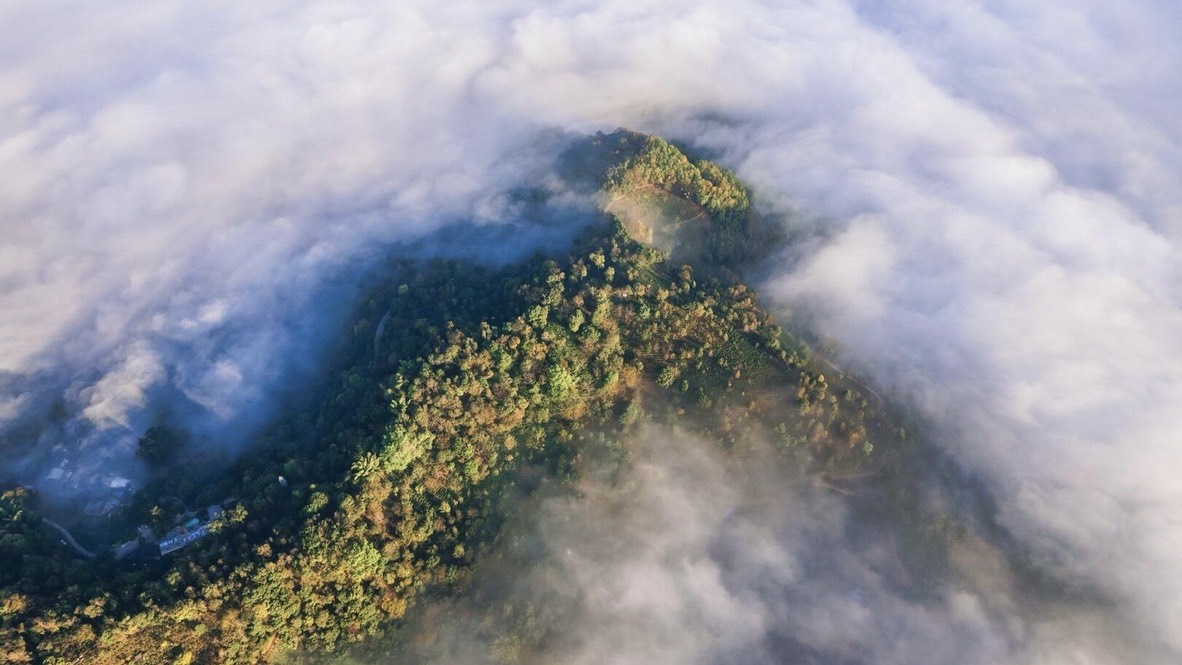
Year-round, but with two clearly different moods. March–April is the new-leaf picking window — you can join the harvest. May–August is the lush green-season cloud-mist period — daily afternoon rain, the forest at its most atmospheric. September–November brings the clearest cloud-sea sunrise mornings from Mangjing. Winter (December–February) is dry and cool, with sharp light and very few visitors. The mountain is at 1,400–1,800 m, so temperatures are mild year-round (typically 14–28 °C) and the air is clean.
02 Do I need to like tea to enjoy this?
It helps, but it's not a requirement. The trip is built around the tea mountains as a landscape and culture, not as a tasting course — UNESCO heritage walks, Blang and Dai village rhythms, Hani harvesters, hot-pit ritual dinners, slow mornings at the estate. The tasting flight is a one-afternoon module; the rest is mountain, forest and village. People who don't drink tea daily leave noticing things in tea they hadn't noticed before.
03 How do I get there?
Two airports serve the trip. Xishuangbanna Gasa Airport (JHG, just outside Jinghong) is the natural entry point for the Nannuo Mountain start. Lancang Jingmai Airport (JMJ, opened 2017) is the natural exit, with daily flights to Kunming (~70 minutes) and Xishuangbanna. We typically fly visitors in to JHG and out from JMJ so the route runs linear west, but the trip works either way.
04 Is this physically demanding?
No. Difficulty is gentle. The forest walks are flat-to-rolling on prepared paths and dirt trails (2–3 hours, slow pace, frequent tea stops); the village circuits are short and easy. There are no early starts and no real hikes. Comfortable walking shoes with grip are the main piece of gear; a light rain shell helps in the May–August green season.
05 Can this be combined with another part of Yunnan?
Yes — that's how most clients book it. The Pu'er tea mountains pair well with Xishuangbanna (tropical forest, Dai temples, the Tropical Botanical Garden), with Tengchong-Mangshi (Dai border culture, volcanic hot springs), or with the Bai-and-Naxi northern circuit (Dali, Shaxi, Lijiang). The /itinerary/jingmai-tea-tasting-tour/ on this site is the 5-day tea-mountains-only version; longer trips that include this module run 10–14 days.