Lanlinge is a Bai courtyard hotel on Shaxi's old Sideng Street on the Tea-Horse Road — stone walls and a lily pond, timber-ceilinged rooms opening onto bamboo, and a stone-and-beam library for slow afternoons.
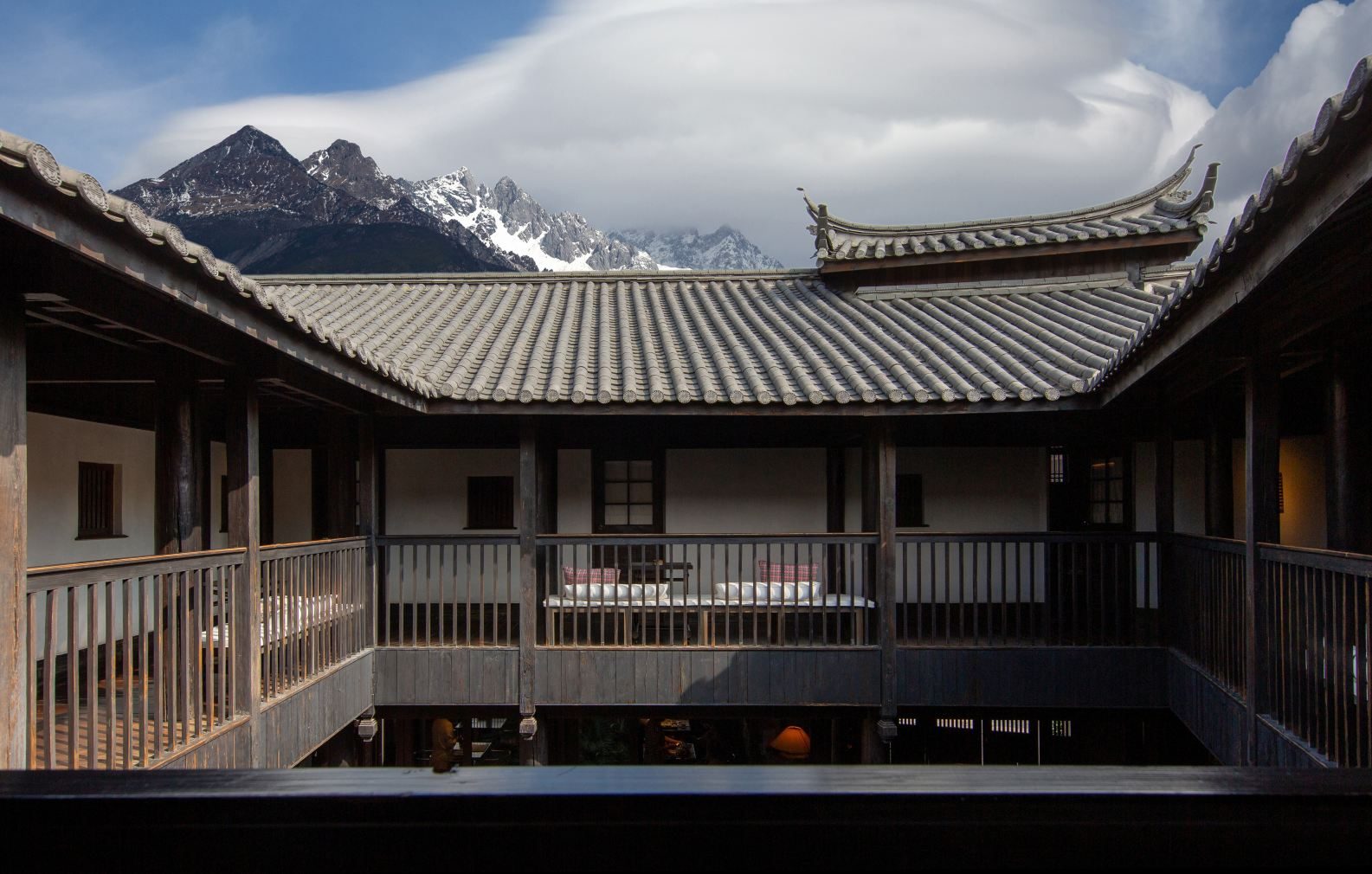
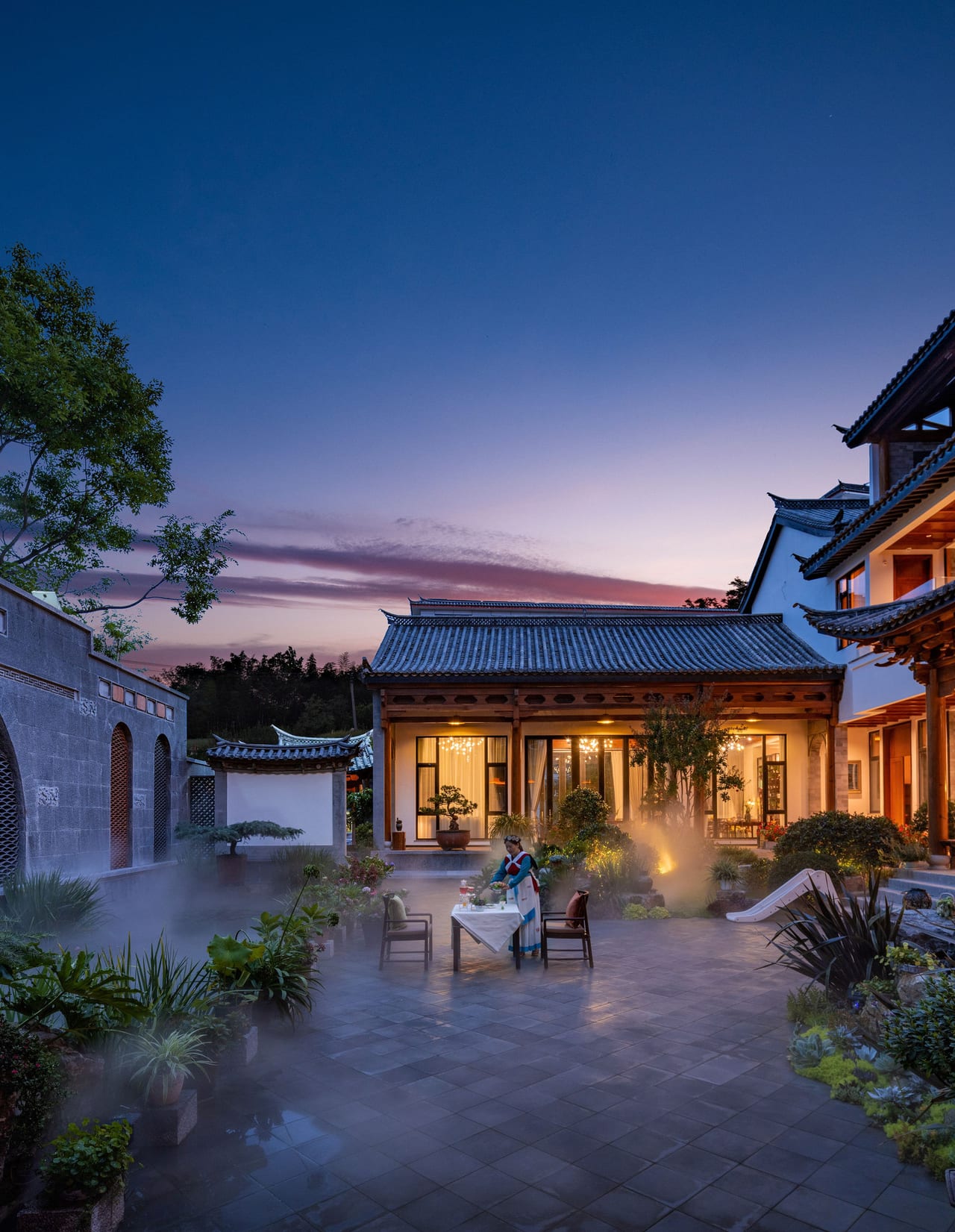
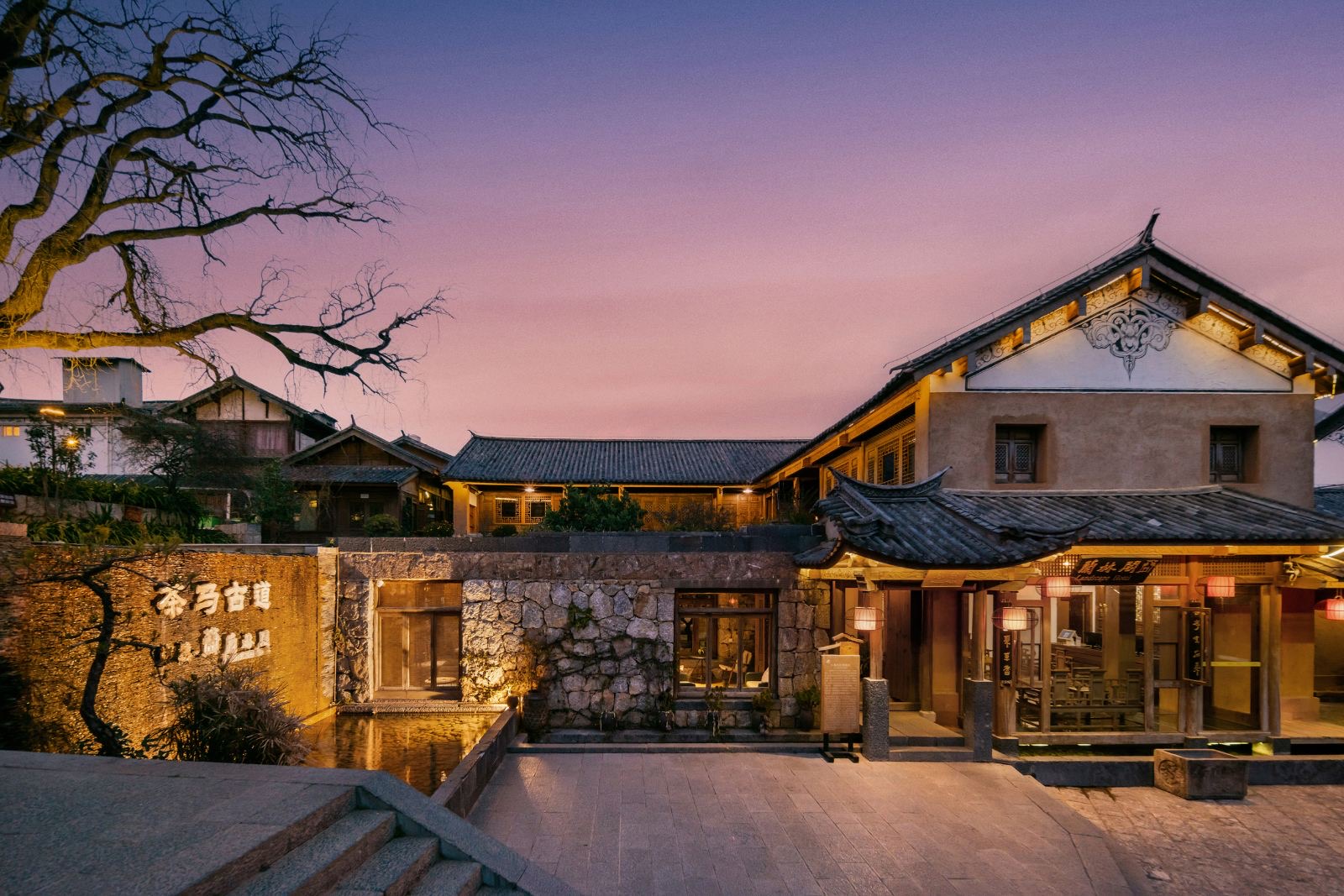
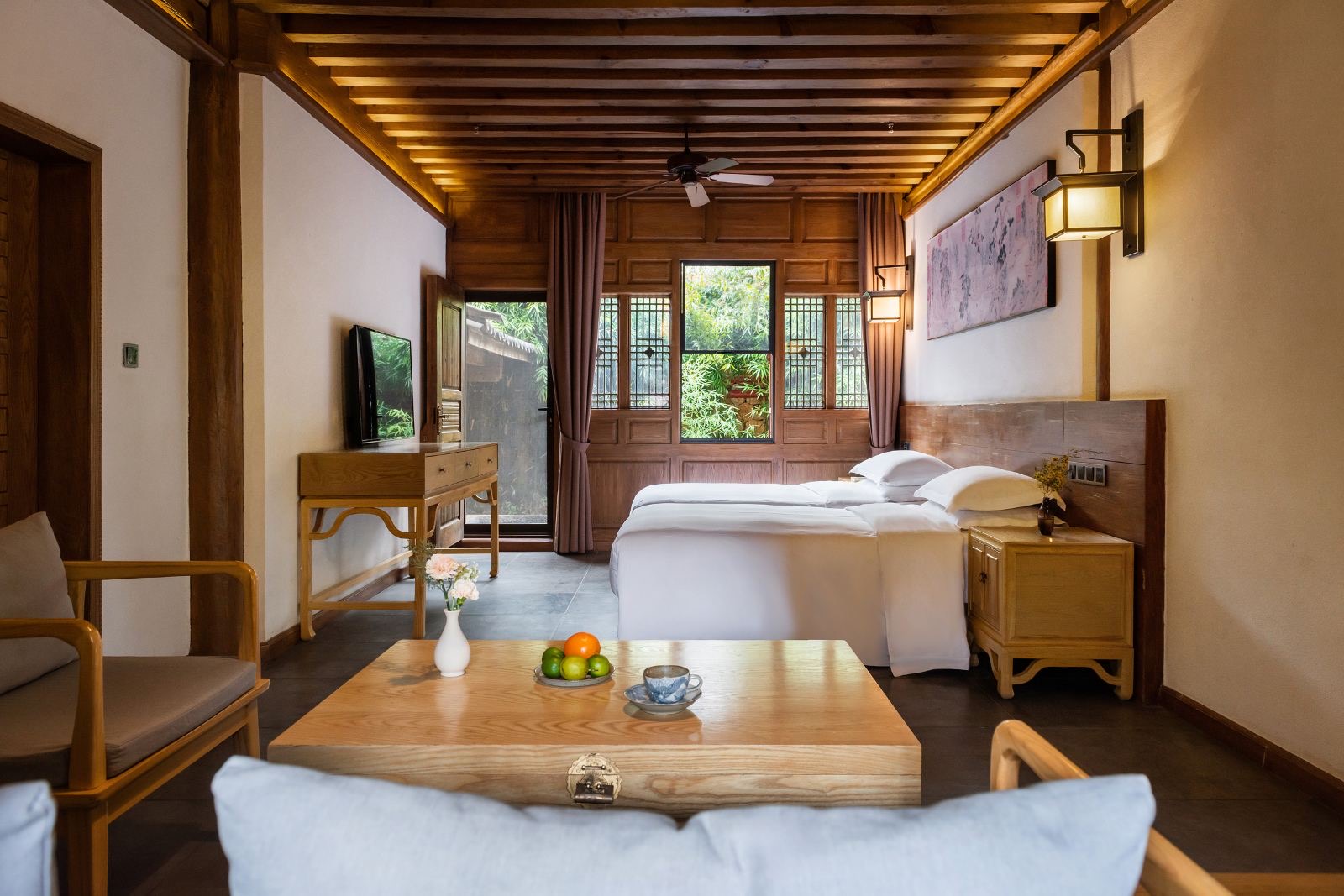
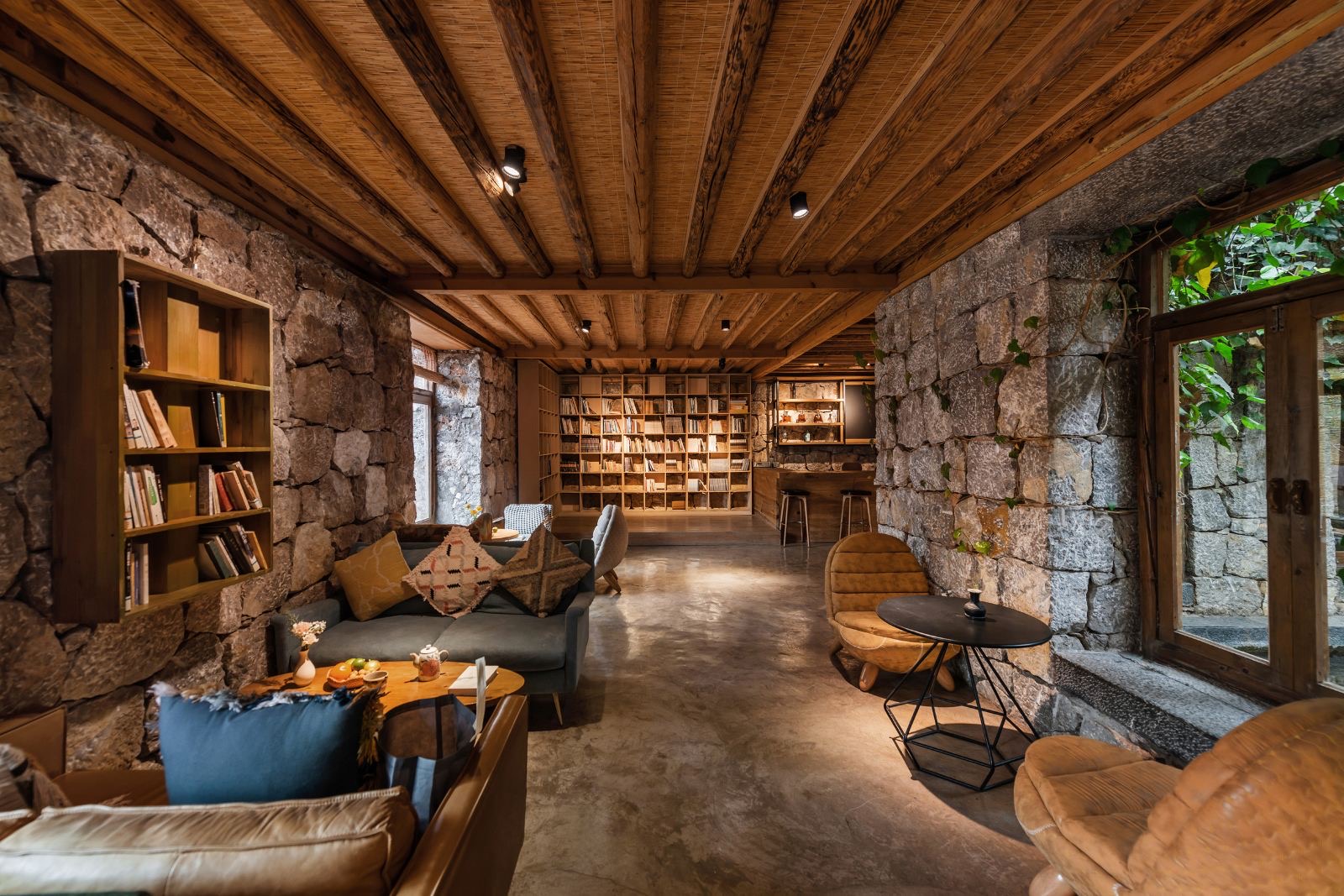
A Bai-style courtyard hotel on Shaxi's old Sideng Street, in the heart of the Tea-Horse Road caravan town. Timber halls with grey-tiled roofs and red lanterns wrap a stone-walled forecourt and a reflecting lily pond, one wall carved with the characters for the Tea-Horse Road (茶马古道). Rooms are timber-beamed, furnished in plain carpentered wood, with lattice windows and glass doors that open onto bamboo; a library lounge of rough stone walls and exposed beams, lined with floor-to-ceiling bookshelves, is kept for slow afternoons.
Highlights
- A Bai-style courtyard on Shaxi's old Sideng Street — right in the heart of the Tea-Horse Road caravan town, not on its outskirts
- Timber halls under grey-tiled roofs and red lanterns wrap a stone-walled forecourt and a reflecting lily pond
- One courtyard wall is carved with the characters for the Tea-Horse Road (茶马古道)
- Timber-beamed rooms in plain carpentered wood, with lattice windows and glass doors opening onto bamboo
- A library lounge of rough stone walls and exposed beams, lined floor-to-ceiling with bookshelves, kept for slow afternoons
- A quiet, character-rich base for exploring the market village and its Tea-Horse Road history on foot
Inside Lanlinge
Staying at Lanlinge
01 Where is Lanlinge and how do I get there?
It sits right on Shaxi's old Sideng Street, in the heart of the Tea-Horse Road caravan town in northern Dali prefecture, Yunnan. Shaxi is a small market village in a mountain valley, usually reached by road from Dali or Lijiang, so most travellers arrive on a private transfer as part of a wider Yunnan route.
02 What's it like to stay inside?
It's a traditional Bai courtyard: timber halls under grey-tiled roofs and red lanterns wrap a stone-walled forecourt and a reflecting lily pond. Rooms are timber-beamed with plain carpentered wood and lattice windows opening onto bamboo, and there's a stone-and-beam library lounge lined with bookshelves for slow afternoons.
03 Who is this stay best for?
Travellers who want to be inside the old town rather than on its edge, and who like quiet, character-rich courtyards over polished hotels. It suits couples and slow-travellers drawn to Tea-Horse Road history, timber-and-stone architecture, and unhurried days built around the village square and reading corners.