

The most photographed stretch of wild Great Wall near Beijing — Jiankou, its towers split open to the sky on white limestone crags — is also the riskiest to walk. It’s a much harder climb than the other three, with a real risk of falls and of old, crumbling brick giving way, and access has been restricted in 2026 after recent public safety incidents.
Most Great Wall guides skip that part. They also skip the good news: the wild wall worth walking — ticket gate, specialist guide, a farm-stay at the bottom — is Jinshanling, about two hours north-east of the city.
So here’s the honest comparison of the four sections people ask us about — Badaling, Mutianyu, Jiankou and Jinshanling — and how we build a wild-wall walk into a longer private trip.
When to go: September and October are the standout months — clear skies, dry air, autumn colour on the ridges. Late April and May are the other good run, after the spring dust and before the summer heat. Winter is cold and stark, with thinner crowds.
| Section | The wall | Crowds | From central Beijing | Best for |
|---|---|---|---|---|
| Badaling 八达岭 | Heavily restored | Capped at 65,000 visitors a day | Its own high-speed rail station | A quick look |
| Mutianyu 慕田峪 | Fully restored, forested ridge | Quieter than Badaling | ~1.5 hours by road | Families and mixed ages |
| Jiankou 箭扣 | Unrestored, crumbling, cliff-edge | Access restricted in 2026 | Next to Mutianyu, Huairou District | Photographs — too risky to walk |
| Jinshanling 金山岭 | Restored at the west end, wild to the east | Far fewer people | ~2 hours by road | Walkers, over several days |
Badaling — built for volume (八达岭)
Badaling is the Great Wall at its most organised. In 2019 it introduced real-name online booking and a cap of 65,000 visitors a day, and the same year the Beijing–Zhangjiakou high-speed railway gave it its own station — Badaling Great Wall, 102 metres underground, the deepest high-speed rail station in the world. The wall itself is heavily restored, easy to reach and very rarely quiet.
Our view: go if you want the box ticked and the clock is tight. If you want to walk the wall rather than queue on it, give the day to Mutianyu or Jinshanling.
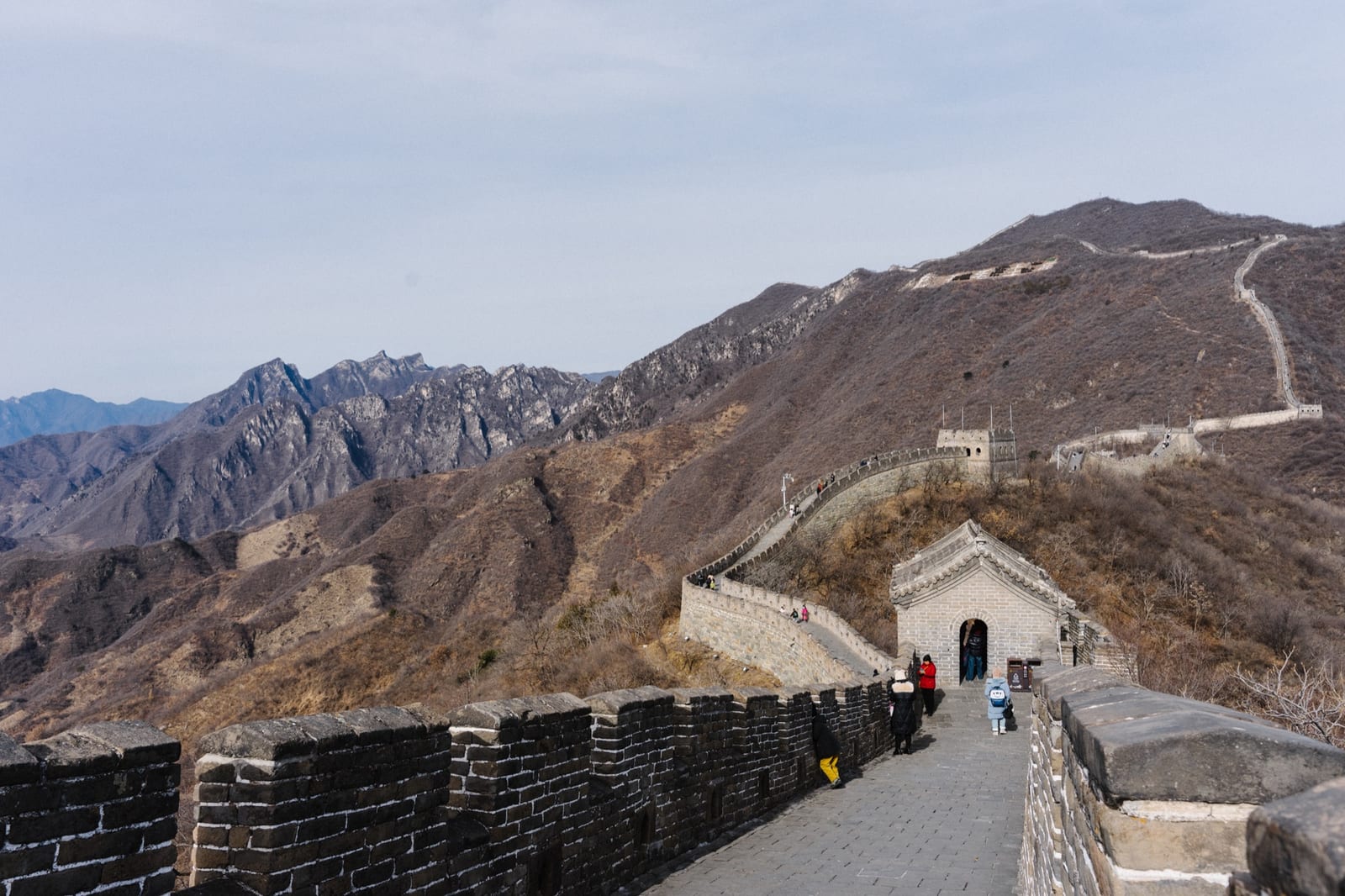
Mutianyu — the right restored wall (慕田峪)
If you want one easy, beautiful day on the wall, it’s Mutianyu. It’s about an hour and a half north-east of the city, fully restored along a forested ridge, and quieter than Badaling. A cable car lifts you to Tower 14, and from there the walk climbs the ridge towards Tower 23. Coming down, a chairlift and a toboggan run from Tower 6 — the toboggan being the bit children talk about afterwards.
It’s the section we give a full day to on our Classic China tour, and the one we’d pick for any mixed-age group. There’s more on how we run the day in our Beijing guide.
Jiankou — spectacular, and genuinely risky (箭扣)
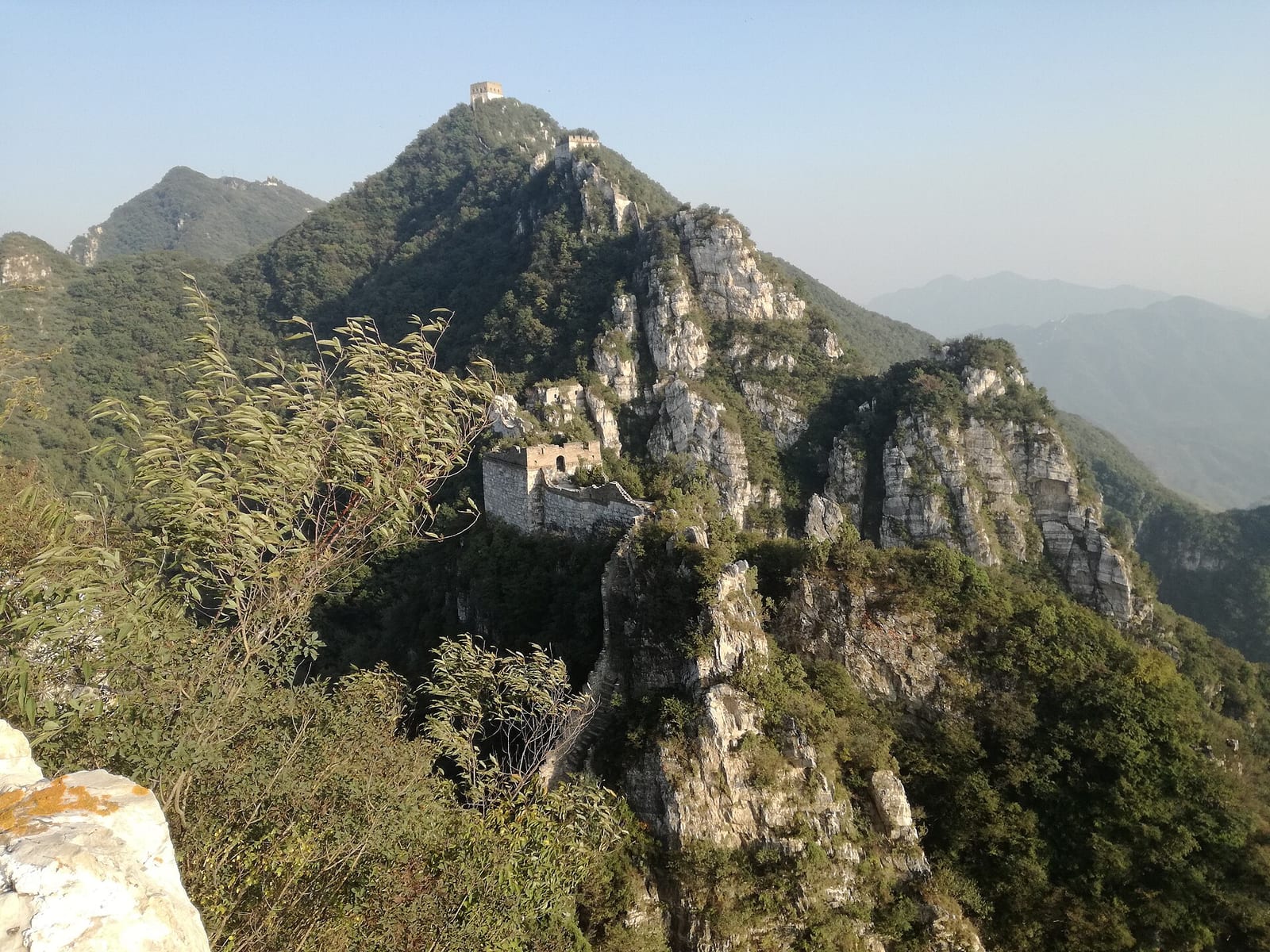
Beyond Mutianyu’s Tower 23, the wall runs on unrestored into Jiankou. The name means “arrow nock” — the notch at the end of an arrow — after the shape of the ridge. This is the wall of the famous photographs: watchtowers split open to the sky, ramparts clinging to white limestone crags, named stretches like the Sky Ladder and the Beijing Knot.
It’s also a much harder climb than anything else on this list — steep, exposed pitches like the Sky Ladder, with a real risk of falls and of old, crumbling brick giving way underfoot. After recent public safety incidents, access to Jiankou has been restricted in 2026, and we don’t take anyone onto it.
That’s less of a loss than it sounds. When someone asks us for Jiankou, we build them Jinshanling.
Jinshanling — the wild Great Wall you can actually walk (金山岭)
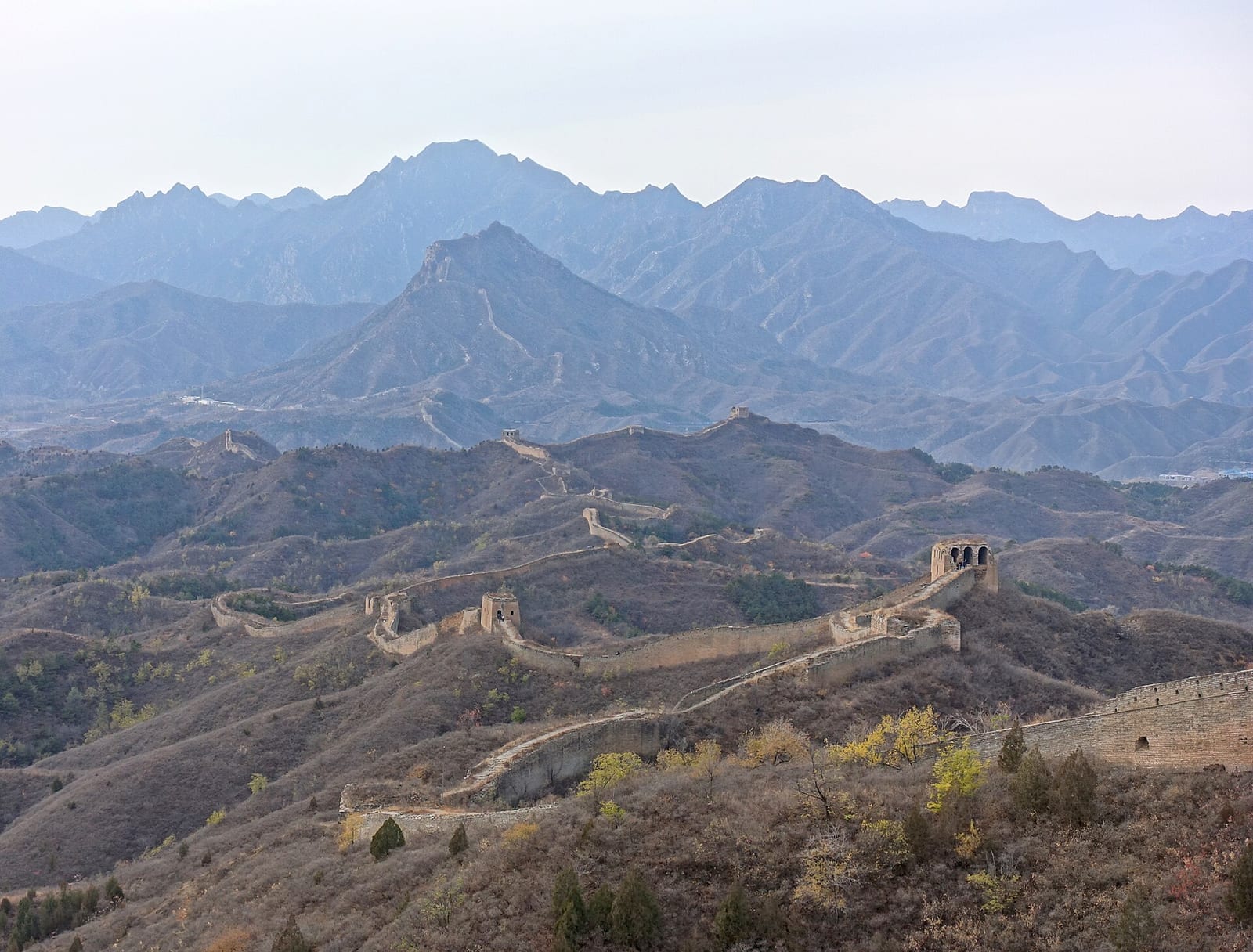
Jinshanling sits about two hours north-east of Beijing, just over the line into Hebei, and it’s one of the finest surviving stretches of Ming engineering anywhere on the Great Wall. It’s restored near its western end and grows wilder and emptier the further east you go — the chain of watchtowers marching over the ridges ahead, original Ming brick underfoot.
And every section we walk here — Gubeikou, Jinshanling, Simatai — is opened and ticketed. The wild wall, with a ticket gate and a guide.
How we walk it: three days, village to village
We don’t do Jinshanling as a day trip. We walk it as a relay — Gubeikou, then Jinshanling, then Simatai — and each morning you step back onto the wall exactly where you came off it the day before.
Day 1 — Gubeikou. Your guide and driver collect you from your Beijing hotel after breakfast, and it’s about two hours to Gubeikou, an old garrison town where the wall has guarded the pass for centuries. Straight up onto the Panlongshan ridge and east along original Ming brick: collapsed towers open to the sky, and almost nobody else up there. You come off at the old pass where Gubeikou hands over to Jinshanling, and it’s a short drive to your base for the next three nights — a family-run farm-stay in Hualougou village, right below Jinshanling’s ticket gate. Simple twin rooms, home cooking, dinner and breakfast in, and the wall on the skyline above the courtyard.
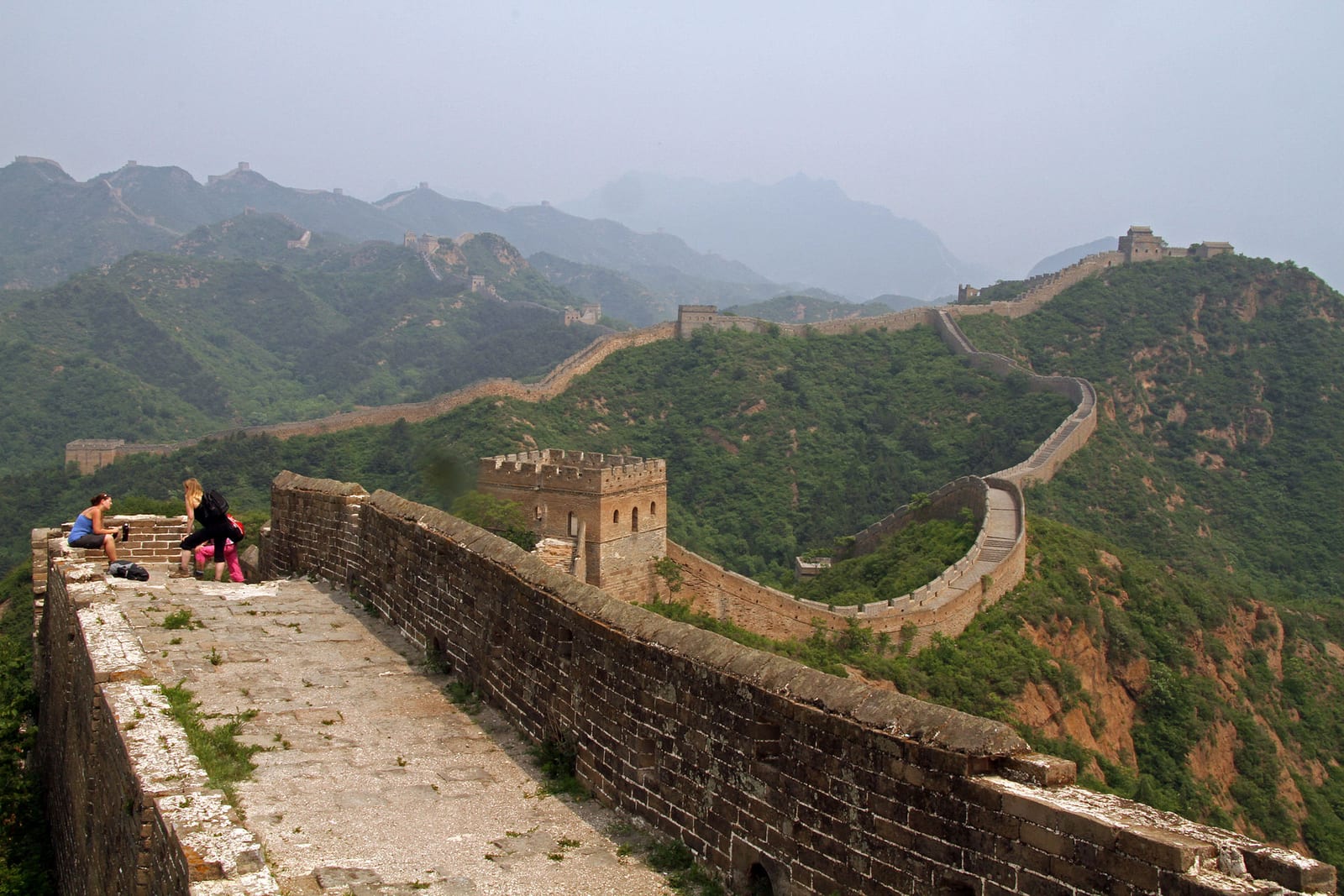
Day 2 — the full Jinshanling chain. The longest day: six to seven hours walking the whole of Jinshanling west to east, watchtower to watchtower. You’re down at the east gate by late afternoon and back at the farm-stay for dinner and an early night.
Day 3 — Simatai. Reached through the Gubei Water Town complex, Simatai is steep and narrow — the ridge climbing tower by tower toward the crags, the whole Gubeikou valley opening out below. It also opens for evening walks year-round, with the Water Town’s lantern-lit canals below.
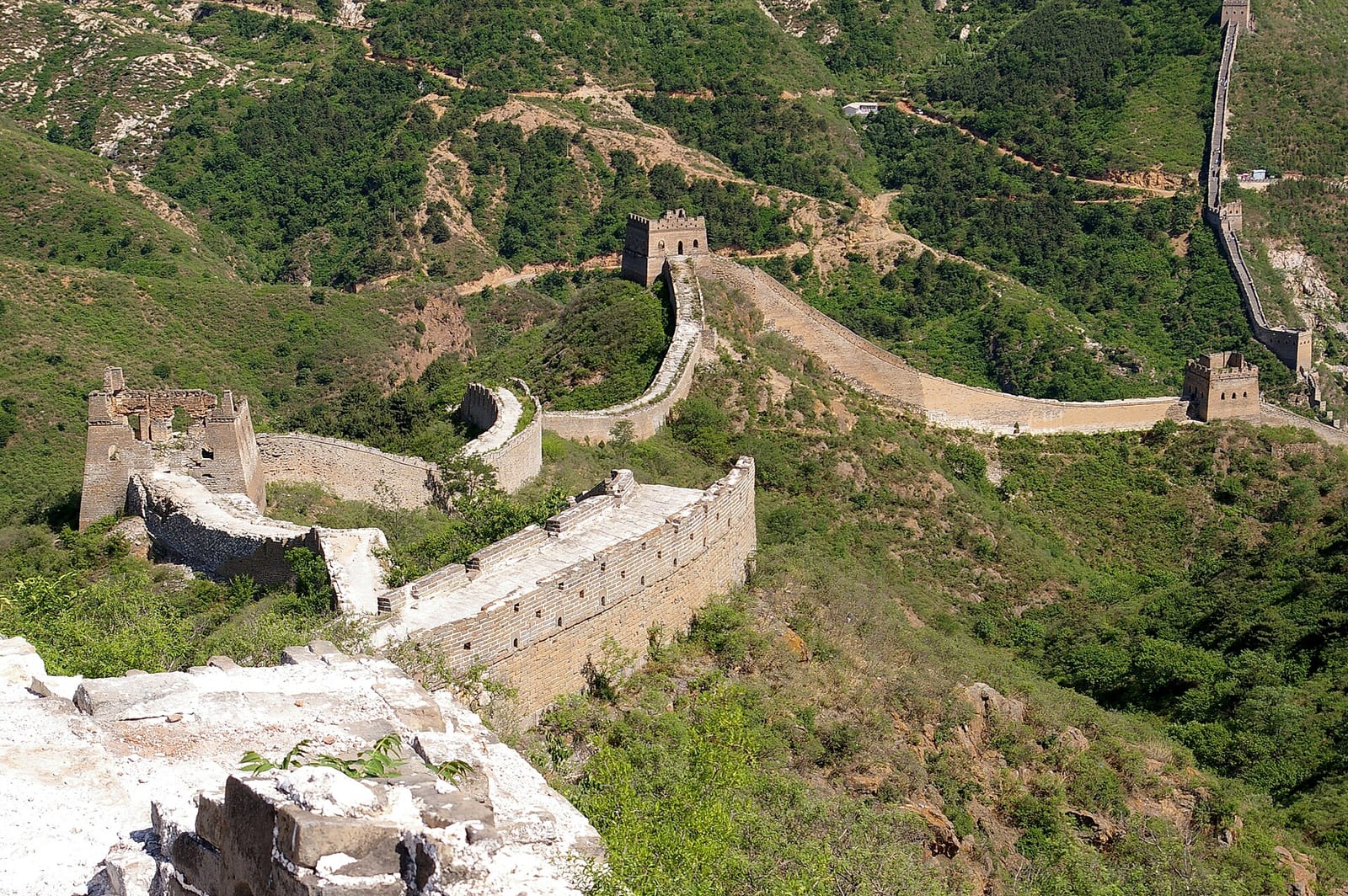
Day 4 is a slow farm-stay breakfast and the two-hour drive back into the city.
How hard is it? It’s original Ming brick — steep, broken in places, big uneven steps. If you walk regularly and don’t mind stairs, you’ll enjoy it. If knees are the question, Mutianyu is the answer.
Where the wall fits in a longer trip
The relay takes four days of a trip — three on the wall and a slow morning back — and it sits naturally at the start or end of a Beijing stay. One trip we’ve built this year runs thirteen days: three days walking from Gubeikou to Simatai, then Xi’an and the Terracotta Army, a night on Huashan’s summit, and three big walking days through Zhangjiajie’s stone-pillar country.
Two of our Classic China journeys build the wall in too: Warriors, Pandas & Stone Pillars spends a day on Jinshanling before Xi’an, the pandas and Zhangjiajie, and Classic China & Yunnan walks Mutianyu before flying south to Yunnan’s old towns.
Back in the city, Mandarin Oriental Wangfujing puts you a short walk from the Forbidden City — a good base for the palace days either side of the wall.
Before you go
- Tickets. Badaling’s tickets are real-name and booked online in advance. On our wild-wall walks, every entry — Gubeikou, Jinshanling and Simatai — is arranged for you.
- A guide who knows the route. The relay between sections takes local knowledge, so we walk it with a specialist wall guide. Here’s what a private guide actually does.
- Getting there. Check China’s visa-free entry rules, and set up your China travel apps before you fly.
So which section should you walk?
- Walkers who want the wild wall: Jinshanling, as a three-day relay from Gubeikou to Simatai with a farm-stay under the wall. It’s the one we’d choose ourselves.
- Families and mixed ages: Mutianyu — cable car up, toboggan down, and a restored wall everyone can manage.
- Short on time: Badaling by high-speed train. Efficient, if not quiet.
- Jiankou: admire it in the photographs — it’s too risky to walk, and access is restricted in 2026. The wild wall to walk is Jinshanling.
Want the wild wall done properly? Tell us your dates and we’ll build the walk into your trip.
Photos via Wikimedia Commons: Jinshanling (cover) and Gubeikou by Luka Peternel, CC BY-SA 4.0; on the wall from Gubeikou to Jinshanling by Ronnie Macdonald, CC BY 2.0; Simatai by Jakub Hałun, CC BY-SA 4.0; Jiankou by Sindarus, CC BY-SA 4.0; Mutianyu by Lloyd Tudor, CC BY-SA 4.0.




.jpg)


