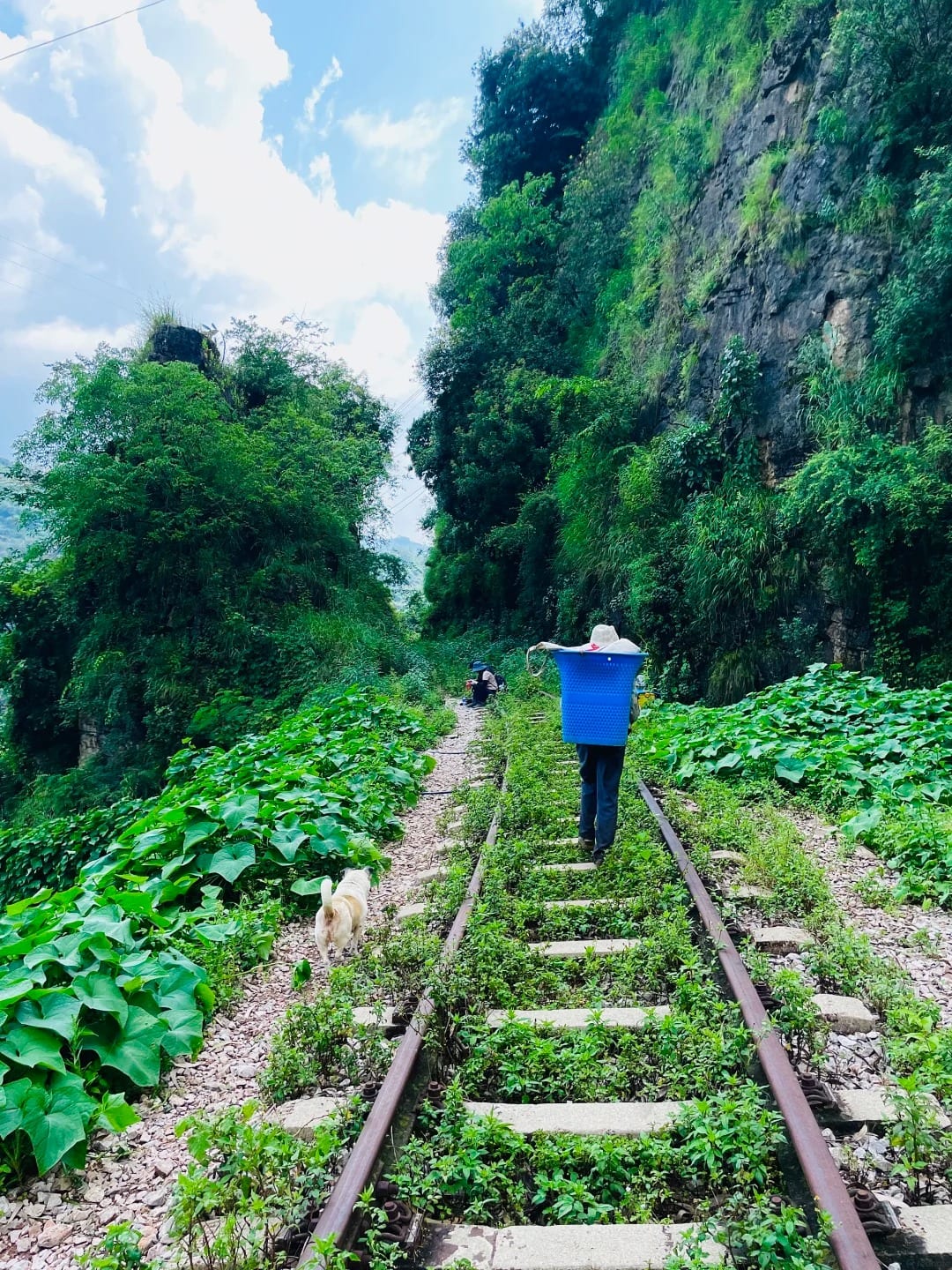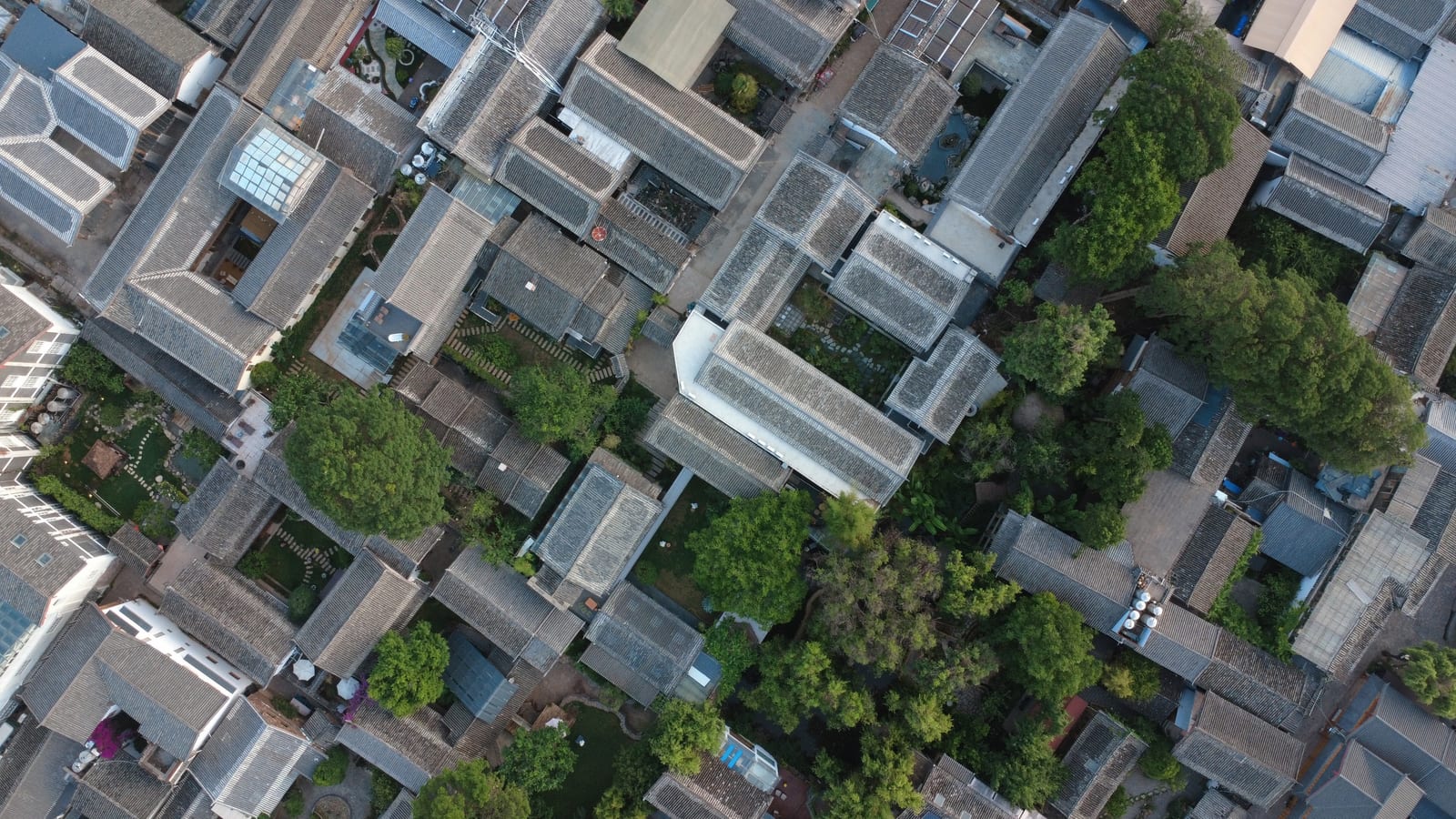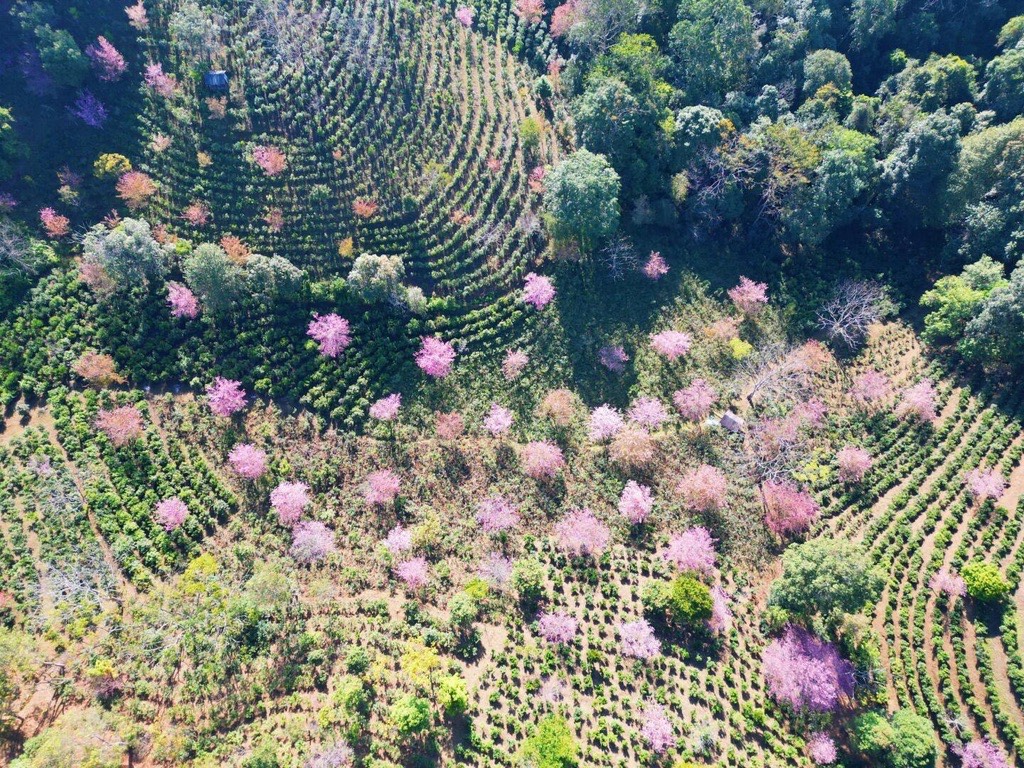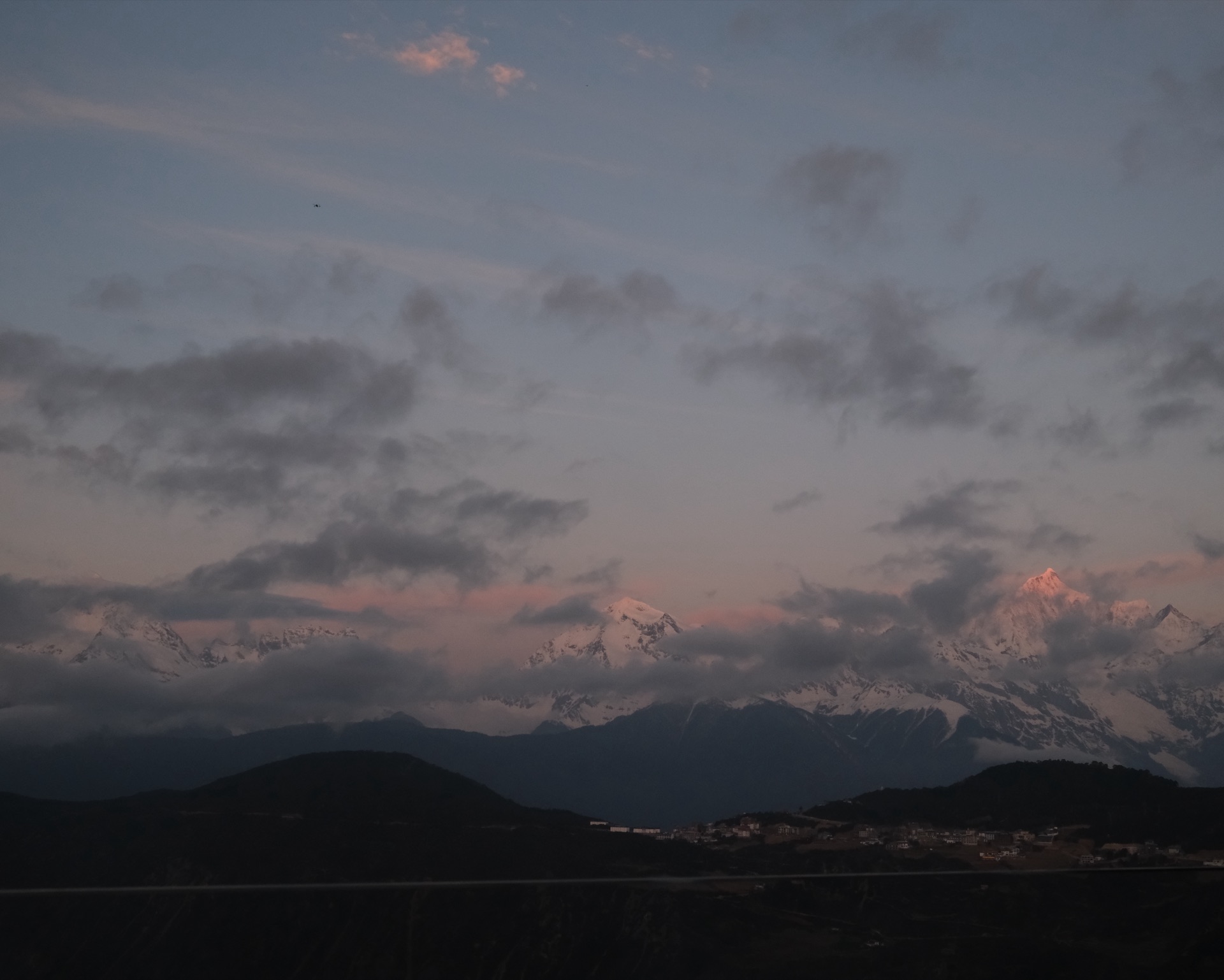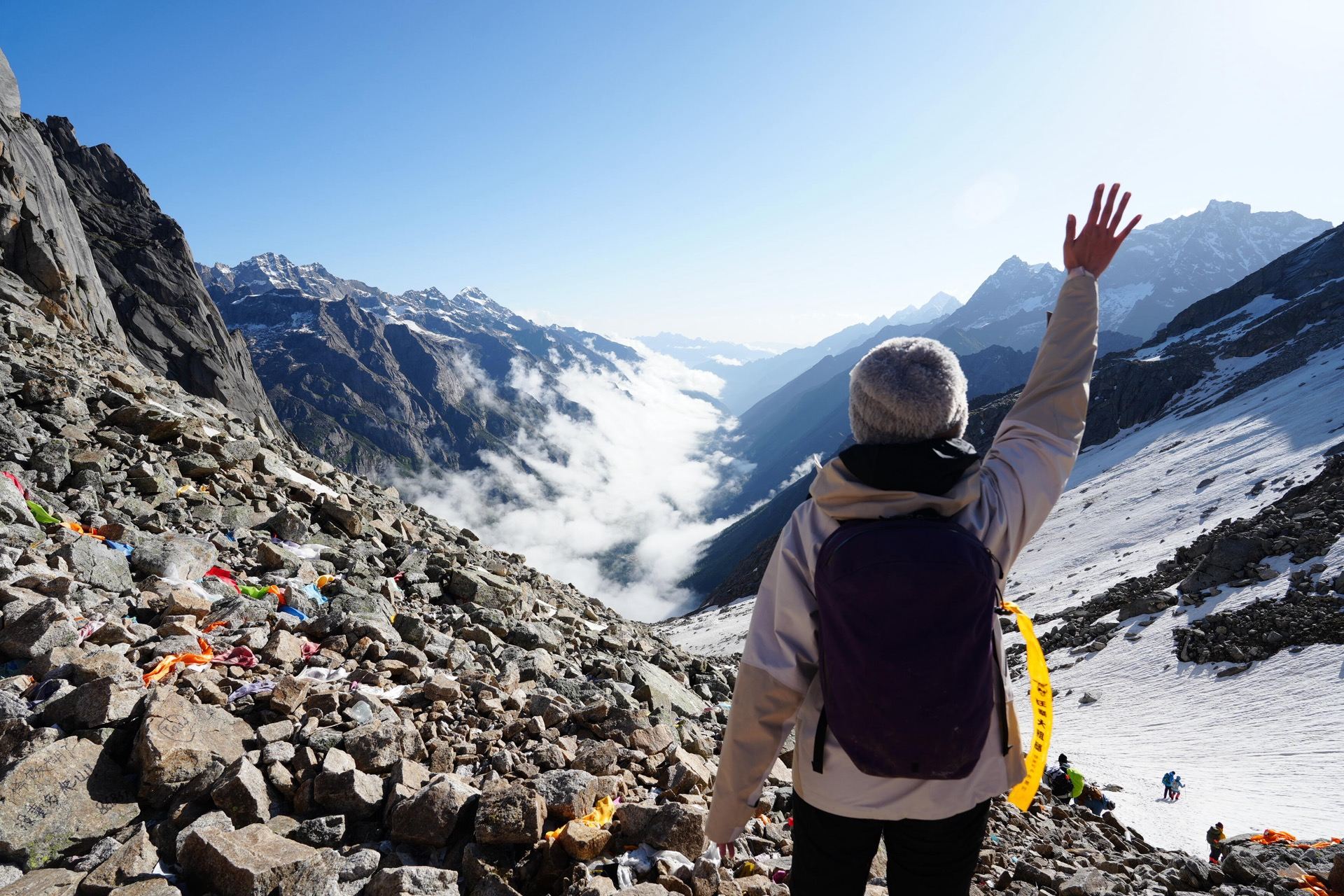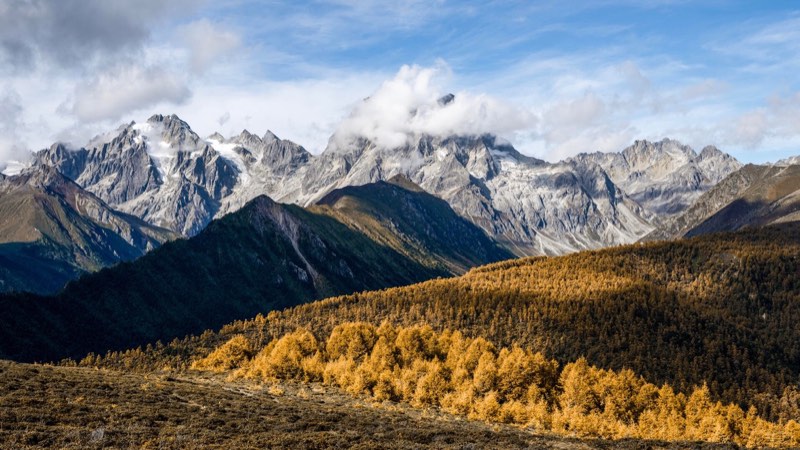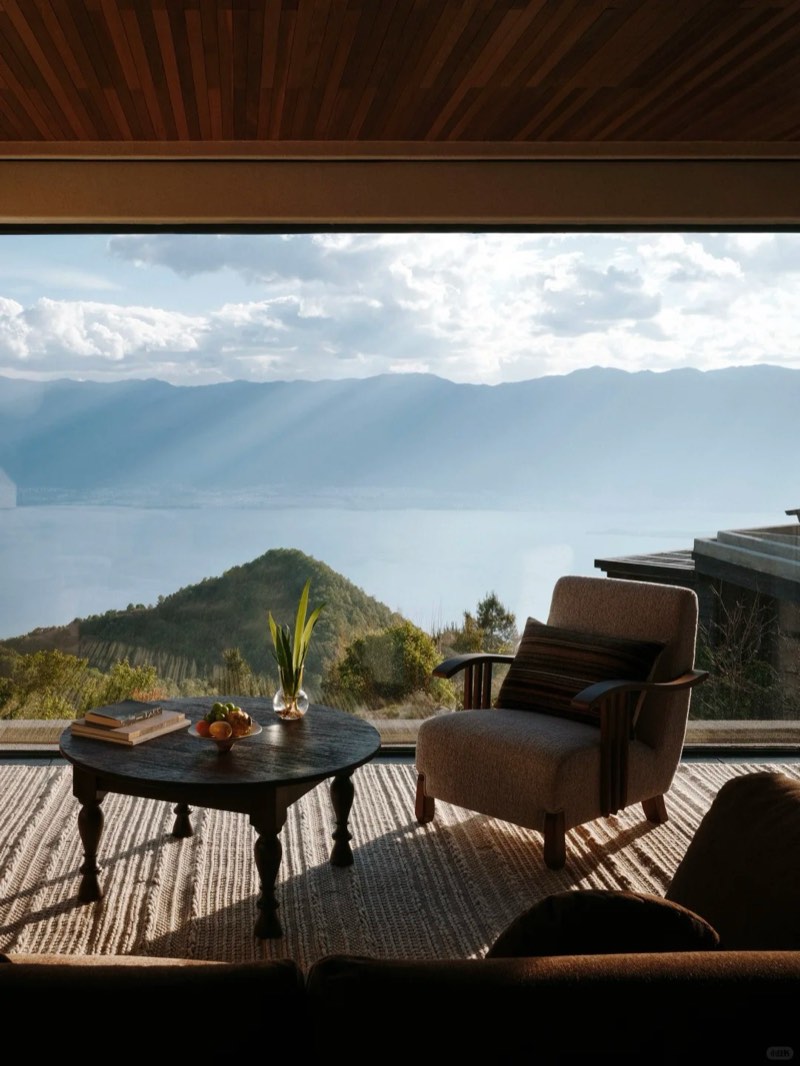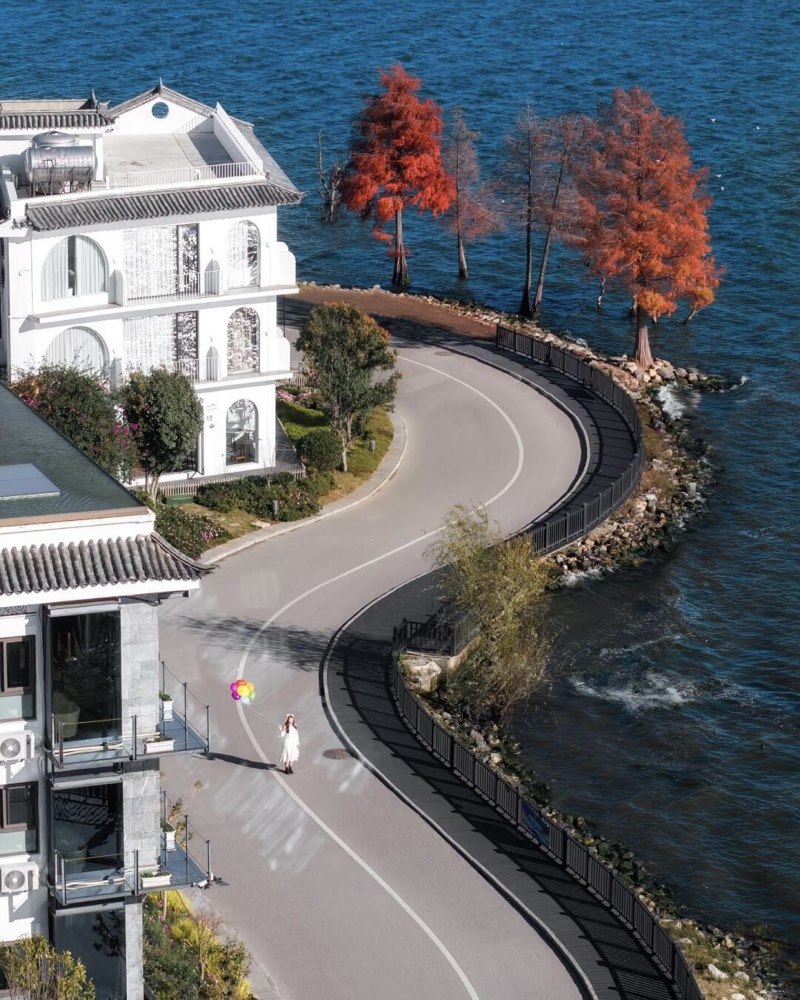

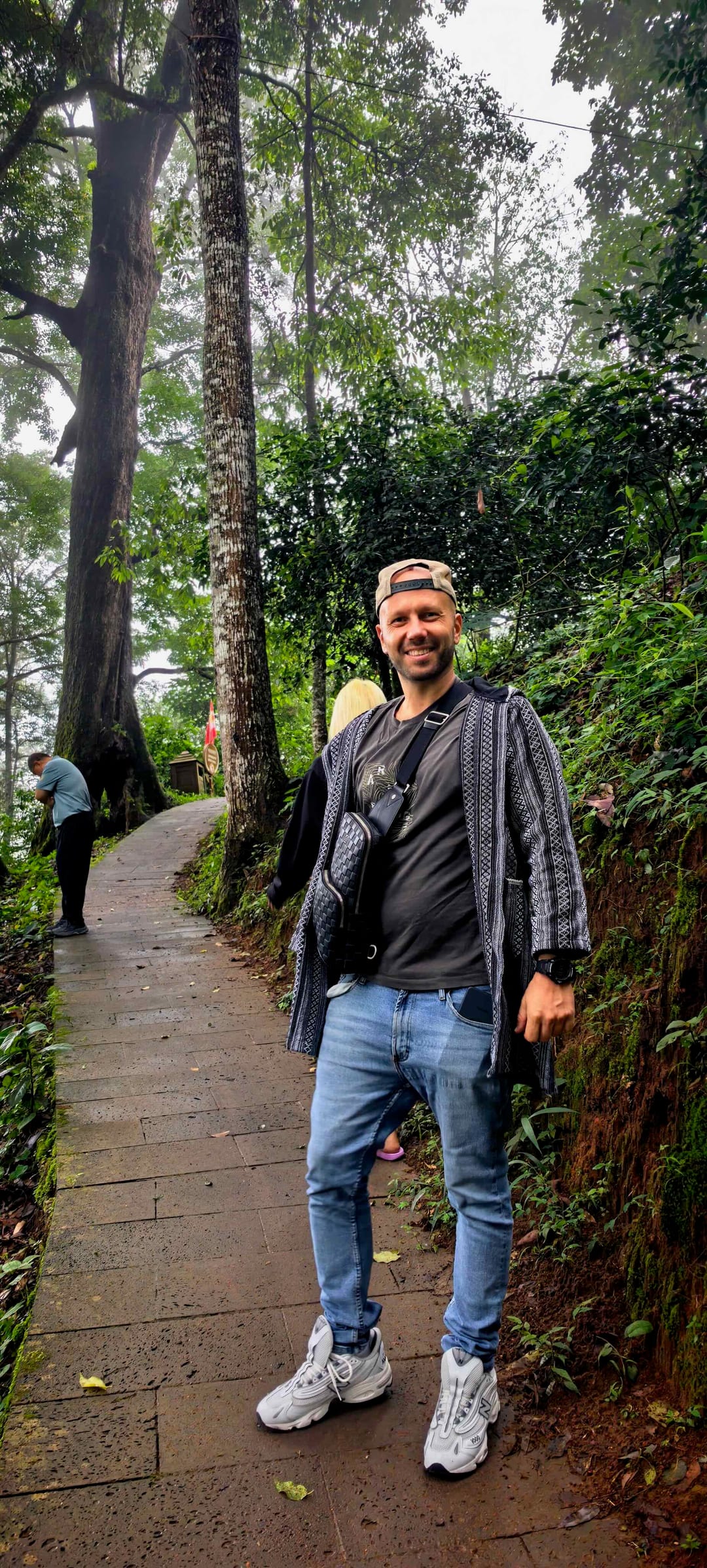
Twenty minutes into the ancient tea forest on Nannuo Mountain, the sky opened. Not a shower — a proper green-season downpour, the kind that turns the forest loud and sends most tours running for the van.
Mario sat down at the tea table instead. The Hani family who farm this stretch of forest keep an open-sided tea shed on the trail, and while the rain hammered the roof, the kettle went on. He worked the gaiwan himself — leaves picked a few hundred metres from where he sat — and the downpour became the best half hour of the morning. Nobody checked a watch.
That’s the photo at the top of this page, and it’s a fair summary of the whole trip: five days in early July, two European travellers, and a plan that bent around the weather instead of breaking.
The trip they booked
Mario and his guest came to us for tea — not a tea-themed resort stay, but the real geography of it. Five days, one route: fly into Jinghong, forty minutes up to Nannuo Mountain at 1,500m, then three hours west to Jingmai Mountain — since 2023 the world’s first tea-themed UNESCO World Heritage landscape — with an English-speaking tea guide on every touring day.
It’s the same route as our Jingmai Tea Tasting Tour, tuned for two people and the green season. No early starts, no real hikes. One anchor experience a day, and afternoons left deliberately open.
They travelled 1–5 July — the lush, cloud-mist window most brochures warn you off. More on that below, because the rain turned out to be the point.
Trees older than most countries
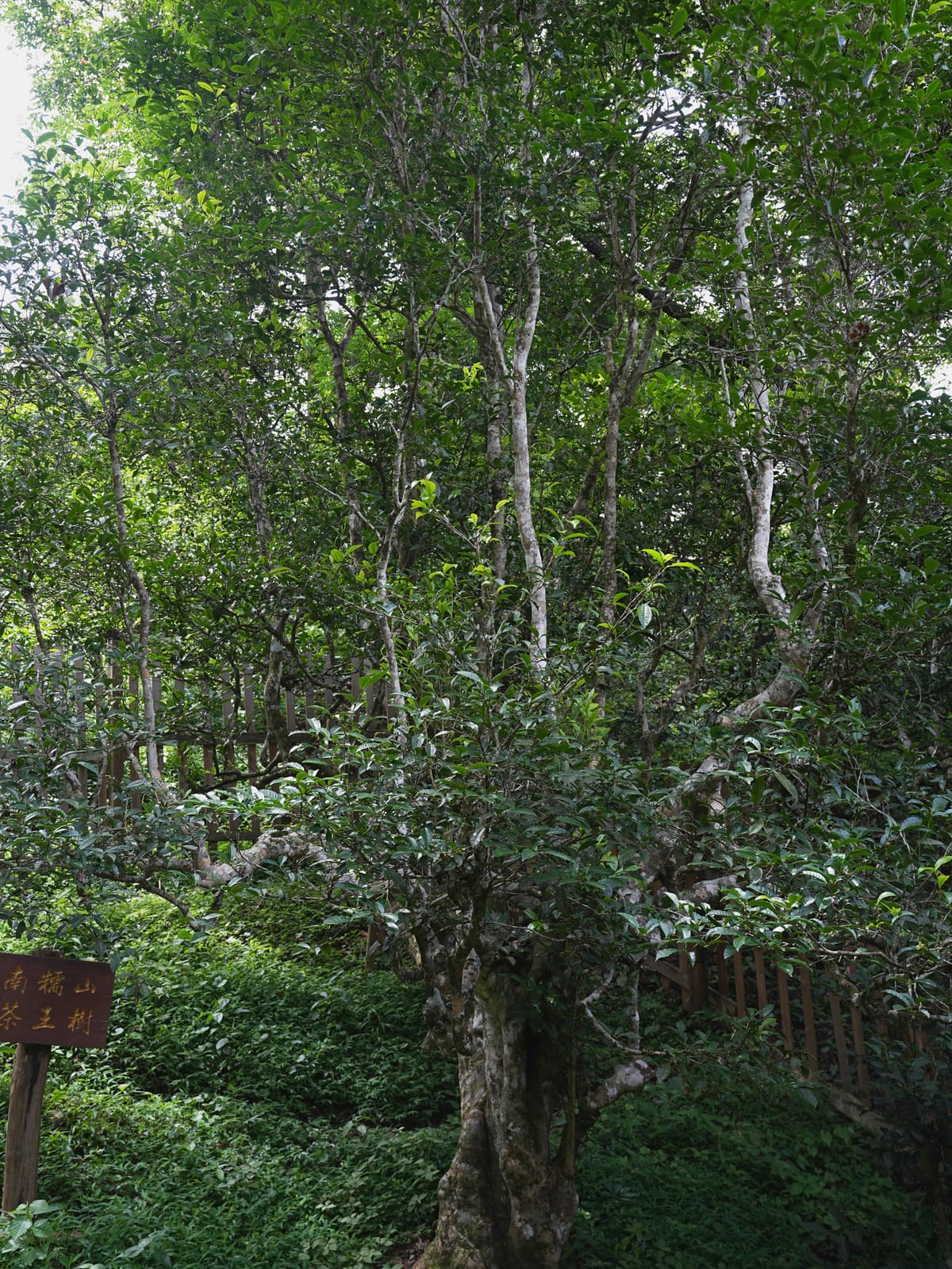
The first full morning was the Nannuo ancient forest with a Hani family — tea trees between 400 and 800 years old, still harvested from bamboo ladders propped into the canopy. The walk ends at the Tea King Tree (茶王树), Nannuo’s elder trunk, fenced and signposted and genuinely humbling.
What surprised them wasn’t the age. It was that the forest is a workplace. The trees are farmed by the families who live below them, tea is brewed on the spot from leaves you just watched come off the branch, and the “attraction” is somebody’s livelihood with a path through it.
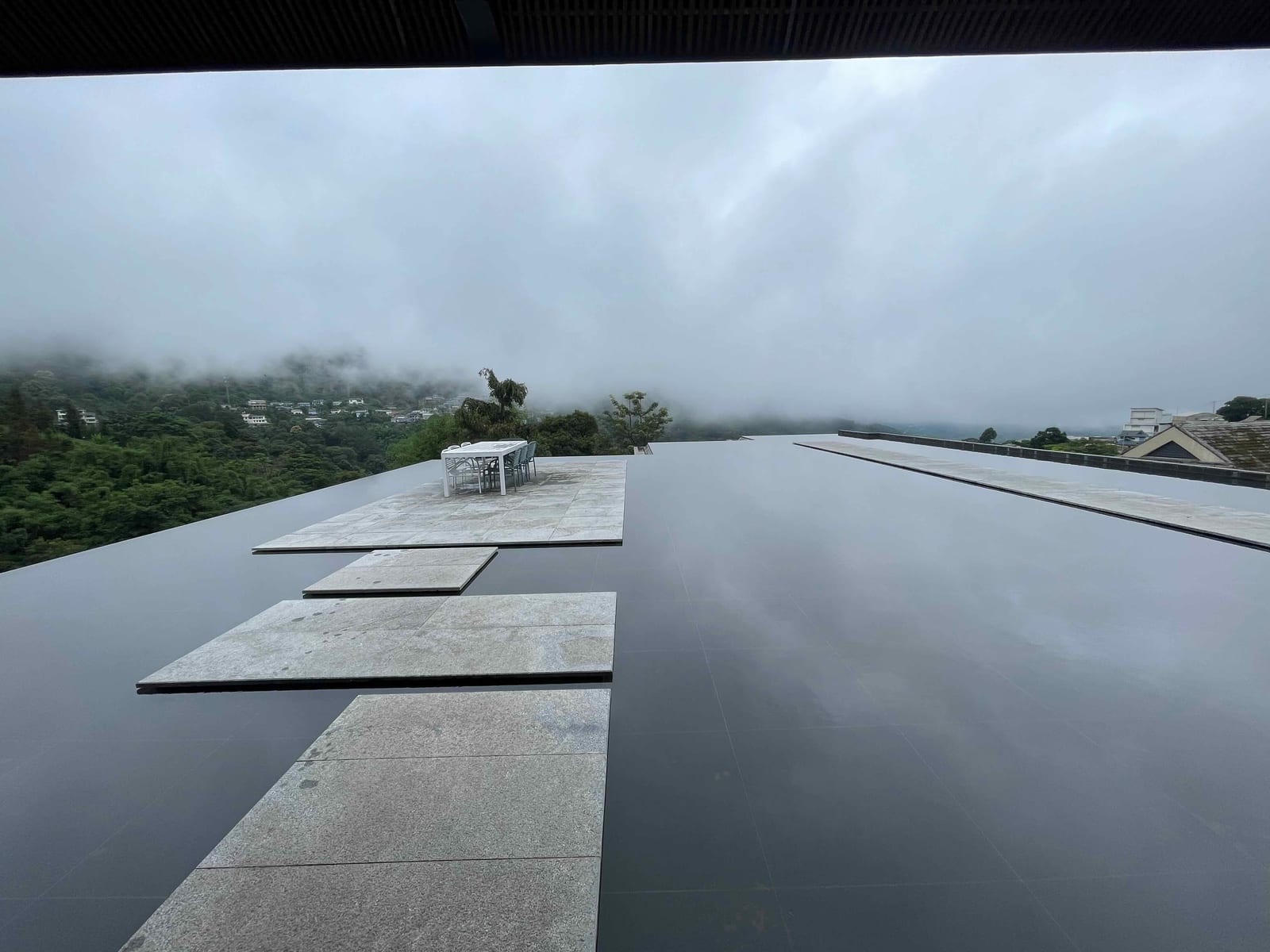
That night was a hillside design hotel back among the Hani village terraces — the one with the sky-mirror pool. In green season it doesn’t mirror the sky so much as dissolve into it.
A cake with their name on it
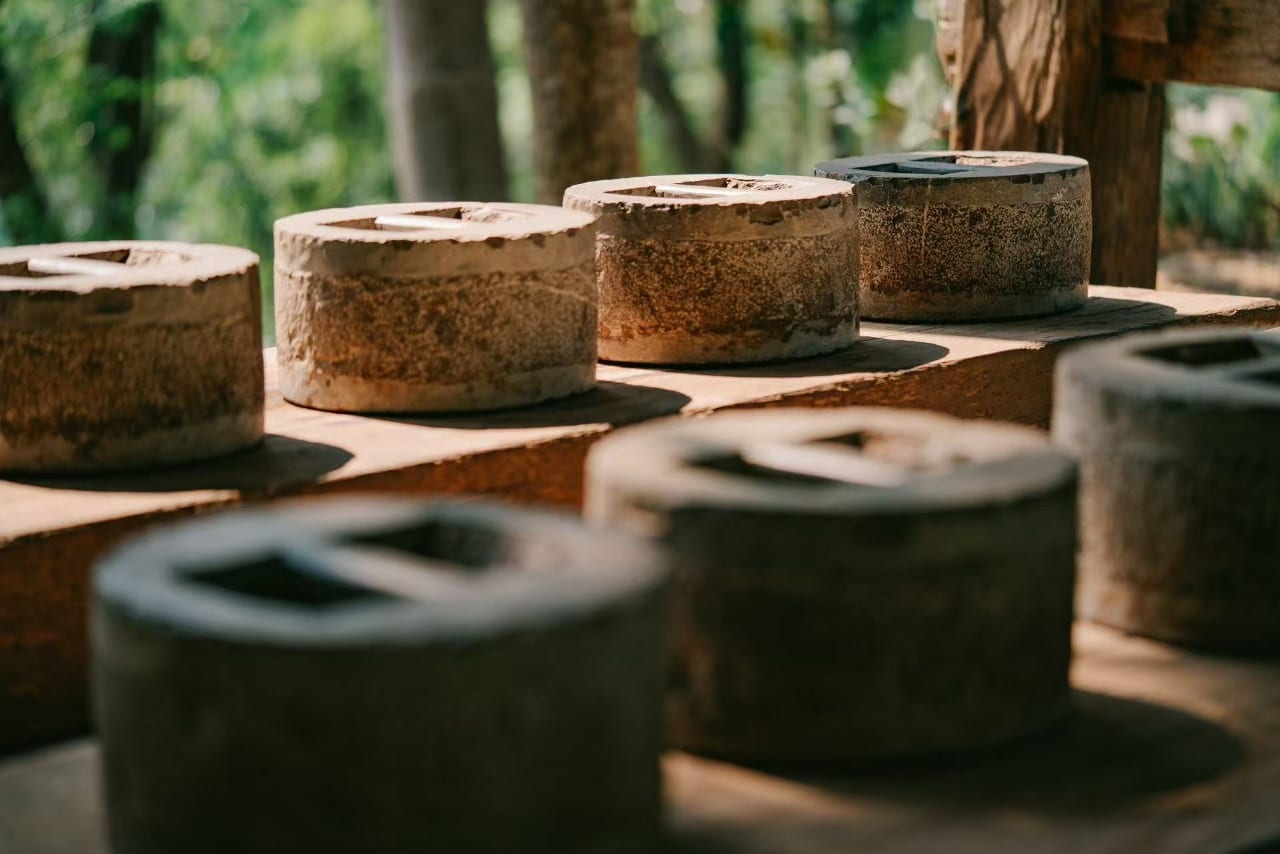
Day three, on Jingmai, they pressed their own Pu’er cake at the Bolian tea estate — the full traditional sequence (古法制作普洱茶饼), from leaf to wok to stone mould, guided one-on-one by the estate’s tea master. The cake goes home in your luggage. In twenty years it will still be improving, which is more than you can say for most souvenirs.
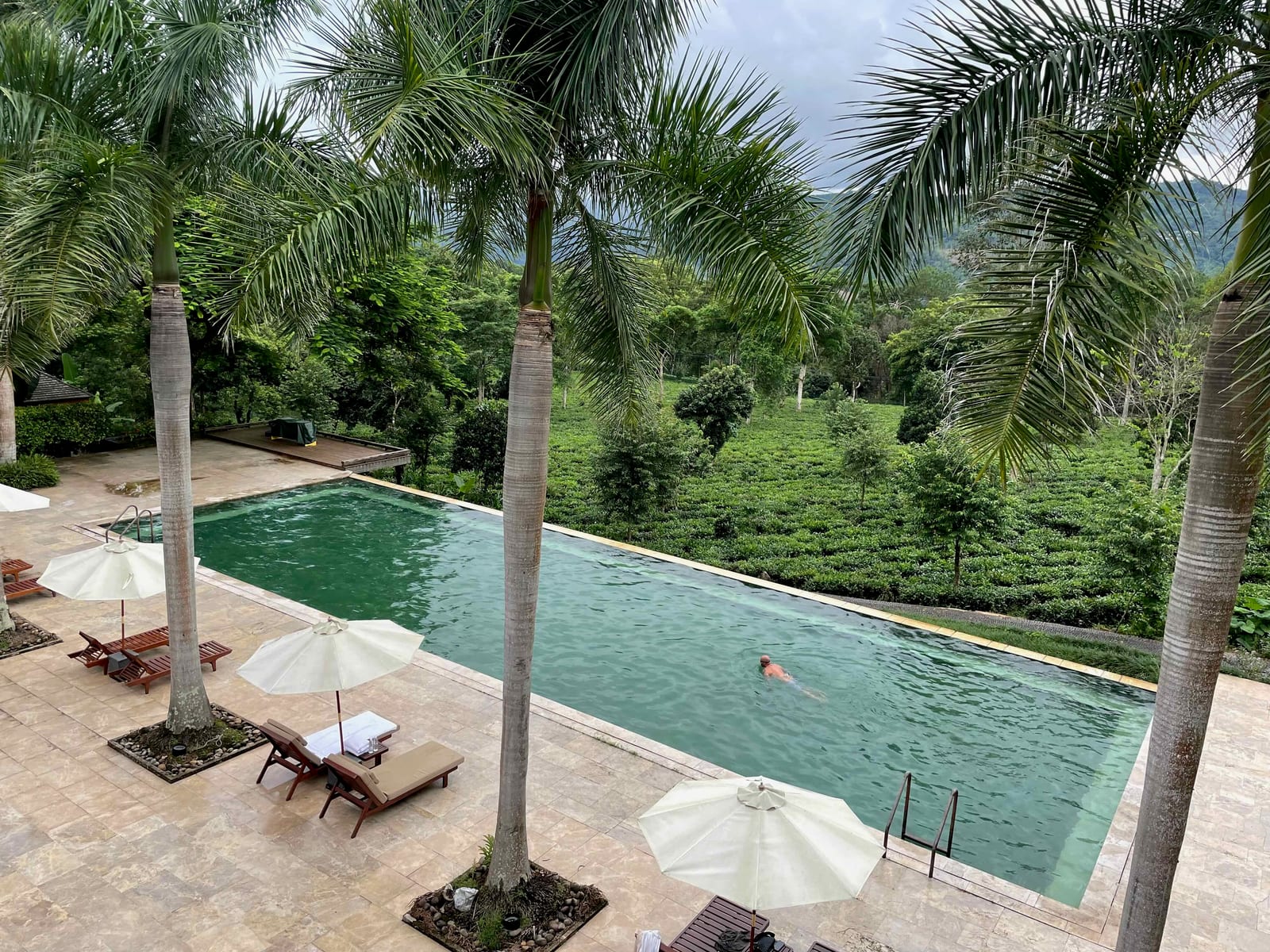
The estate afternoon is built for exactly the kind of unhurried travellers this trip suits: a tasting flight in the tea garden, then nothing scheduled at all. Mario swam the infinity pool with the tea rows running downhill below him. It rained later. Nobody minded by then.
Nights inside the World Heritage
The last two nights weren’t in a hotel at all. They stayed at a Blang family tea inn in the Mangjing village cluster, inside the UNESCO landscape — a household that grows, presses and fire-roasts its own tea on the slope it has farmed for generations.
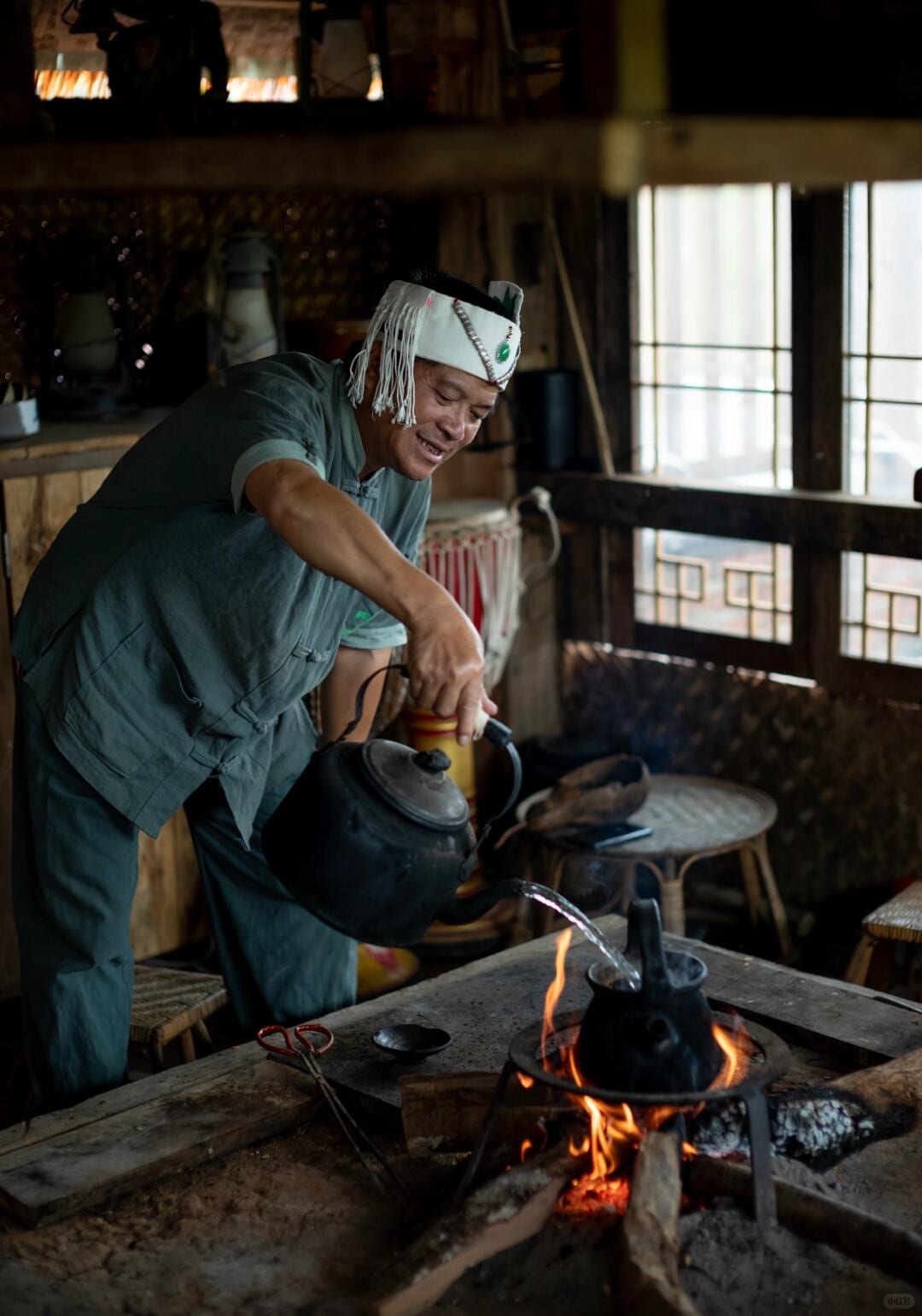
This is where the trip’s quietest highlight happened: the Blang roasted-tea ritual (烤茶, kǎo chá). An elder builds the fire in the clay pit, roasts the leaves over embers until they crack and smoke, then brews and pours in the traditional sequence, with Blang music alongside. It isn’t staged for visitors. It’s how tea is actually drunk in the houses of the elders, and you’re simply at the table.
The second night, the family set a table for two out on the lawn — festoon lights, the ridgelines of the Pu’er tea country going navy behind them, dinner from the village kitchen. No other tables, no menu, no bill theatre. Just the evening.
”Right to the very last second”
Green season means the mountain decides your sequence. Mornings got swapped, walks shifted an hour, a temple stop (Manduan, a gilded Dai hall in the rice country) slotted into the drive back to Jinghong. That flexibility isn’t a compromise on these trips — it’s the design. The guide’s job is to hold the shape of the day while moving the pieces, which is what a private guide is actually for.
It’s the thing Mario and his guest kept thanking us for afterwards — how attentively the small stuff was handled, and how little of the adjusting they ever had to see.
“Our guide made sure everything was perfect — right to the very last second of the trip.” — Mario
The last second, for the record: their guide walked them into the terminal at Jinghong, farewell gift in hand, and waited until they were through check-in.

The same mountains, on your dates
Every version of this trip we run comes out different, because the mountains change and so do the travellers. Mario and his guest got the green season — mist, drama, empty trails, tea brewed against the rain. The next guest has booked the opposite: a solo September journey timed for the autumn harvest, when the picking is live and the whole route smells of drying leaf, with Hekai’s ancient tea garden added between Nannuo and Jingmai.
If you want the shape of it, start with the Jingmai Tea Tasting Tour — five days, from A$2,400 per person twin share — or go deeper on the region with our Pu’er tea travel guide and the Pu’er Tea Experience module that slots into longer Yunnan trips.
Then tell us your dates. The oldest trees on Nannuo have been picked for eight hundred years. They’ll wait for you — but the picking seasons won’t.