← All journal entries
Yunnan 9 min read

Shangri-La Off the Beaten Path: Five Places Worth the Drive

Most visitors see Shangri-La's old town, Songzanlin and Pudacuo, then leave. Here are five places within two and a half hours that they miss — Abujicuo, the Ren'an valley, Wudi Lake, Balagezong and Baishuitai — with honest drive times and when to go.

Most people give Shangri-La two days. They walk Dukezong, the old town, climb up to Songzanlin Monastery, take the boardwalks at Pudacuo and drive out to Napa Lake. All good. But the town of Shangri-La sits in the middle of a county the size of a small country, and the places worth the drive are further out: a glacial lake at 4,200 metres, a valley of Tibetan farmhouses that glows at sunset, a forest lake the locals say has no bottom, a canyon a thousand metres below town, and white terraces where the Naxi say their religion began. Here’s Shangri-La off the beaten path: five places within two and a half hours, what each one is honestly like, and how we fit them in.

When to go and how high: Shangri-La town sits at about 3,300 m, so give yourself a night or two in town before anything strenuous. May to October is the season for the high places: Abujicuo and Wudi Lake are snowy and icy through winter, and the road to Wudi climbs above 4,000 m. June to September is the rainy season, green and full of flowers, but cloud can hide the peaks, and heavy rain brings rockfall that can close a road or a park for a day or two. Every time below is by car from Shangri-La’s old town, door to door.

PlaceWhat it isBy carBest for
Abujicuo 阿布吉措Glacial lake at ~4,200 m, Xiaozhongdian~1h to the trailheadA big day hike
Ren’an valley 仁安River valley of Tibetan farmhouses~30 minA night, or a summer sunset
Wudi Lake 无底湖Forest-and-meadow lake at ~3,800 m, Geza~2h–2h30An easy walk, May to October
Balagezong 巴拉格宗Limestone canyon on the Gangqu River~2h–2h30Scale, and a day lower down
Baishuitai 白水台White travertine terraces, Sanba~2hA stop between Tiger Leaping Gorge and town

Abujicuo — the lake at 4,200 metres (阿布吉措)

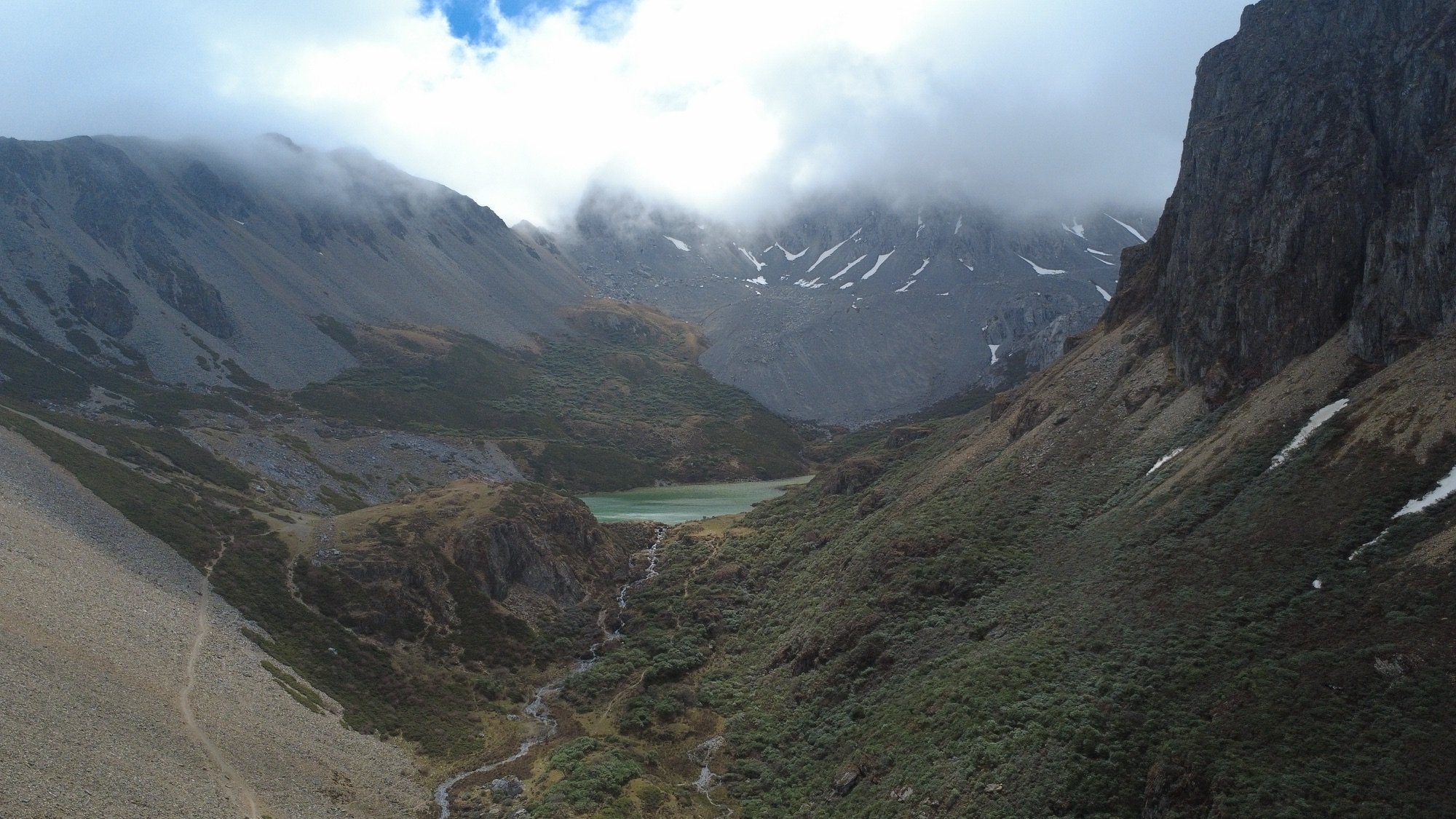
This is the one to earn. Abujicuo is a glacial lake in the heart of Tianbao Snow Mountain above Xiaozhongdian, south-east of town, at about 4,200 m. It’s an hour’s drive to the trailhead at the Niguge pasture, at around 3,700 m. From there the walk runs through fir forest and rhododendron, out onto yak pasture and scree, and up a steep pitch the locals call the Despair Slope: 800 m long, with 400 m of climbing. Then the lake opens up, milky turquoise under a wall of grey peaks. It’s about 9 to 12 km there and back, depending on where the car can leave you, and five to seven hours on your feet. It isn’t technical. The altitude is what makes it hard.

Two things have changed. In October 2025 Diqing prefecture banned unauthorised hiking in its undeveloped mountains, and the other approach you’ll find online, from Washbasin Pass (洗脸盆垭口) over to Abujicuo, is named in the ban. The Niguge route is the one the prefecture’s own newspaper describes. And this isn’t a walk to do alone: we send every group with a local mountain guide, and horses wait at the trailhead for anyone who’d rather ride part of the climb.

Go between May and October. Rhododendrons and irises flower from May to August. In winter the lake freezes and snow can close the trail, so we check it that morning and have a gentler lake in reserve. The full route is on our Abujicuo day hike page, and it sits alongside eight more walks in our Shangri-La hiking guide.
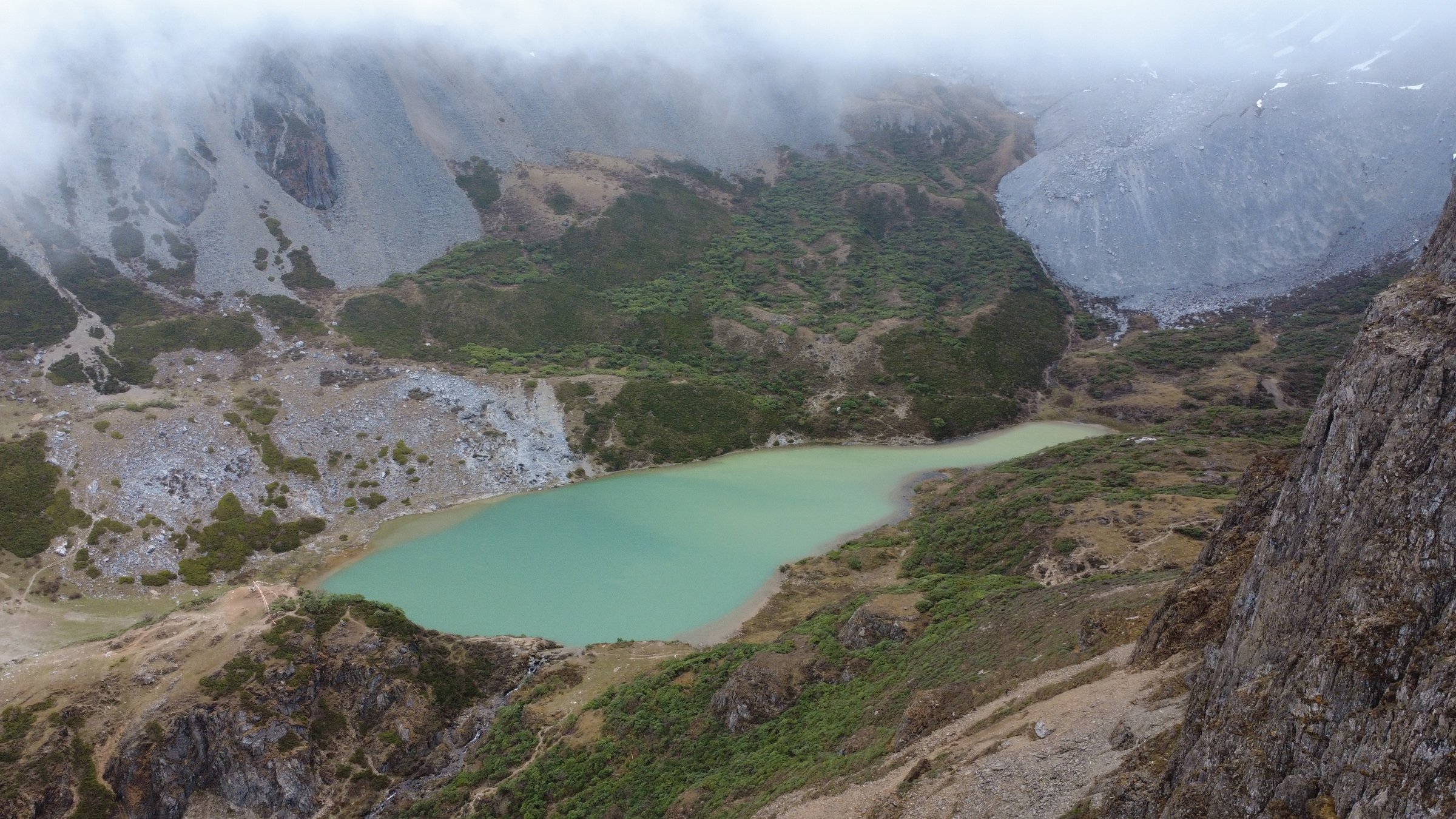
Abujicuo's milky-turquoise lake at about 4,200 m in a glacial basin of grey scree, mist on the peaks above

Looking up the valley to Abujicuo, a small turquoise lake below cloud-capped peaks and a dark cliff

The Ren’an valley — stay the night, or come for the sunset (仁安)

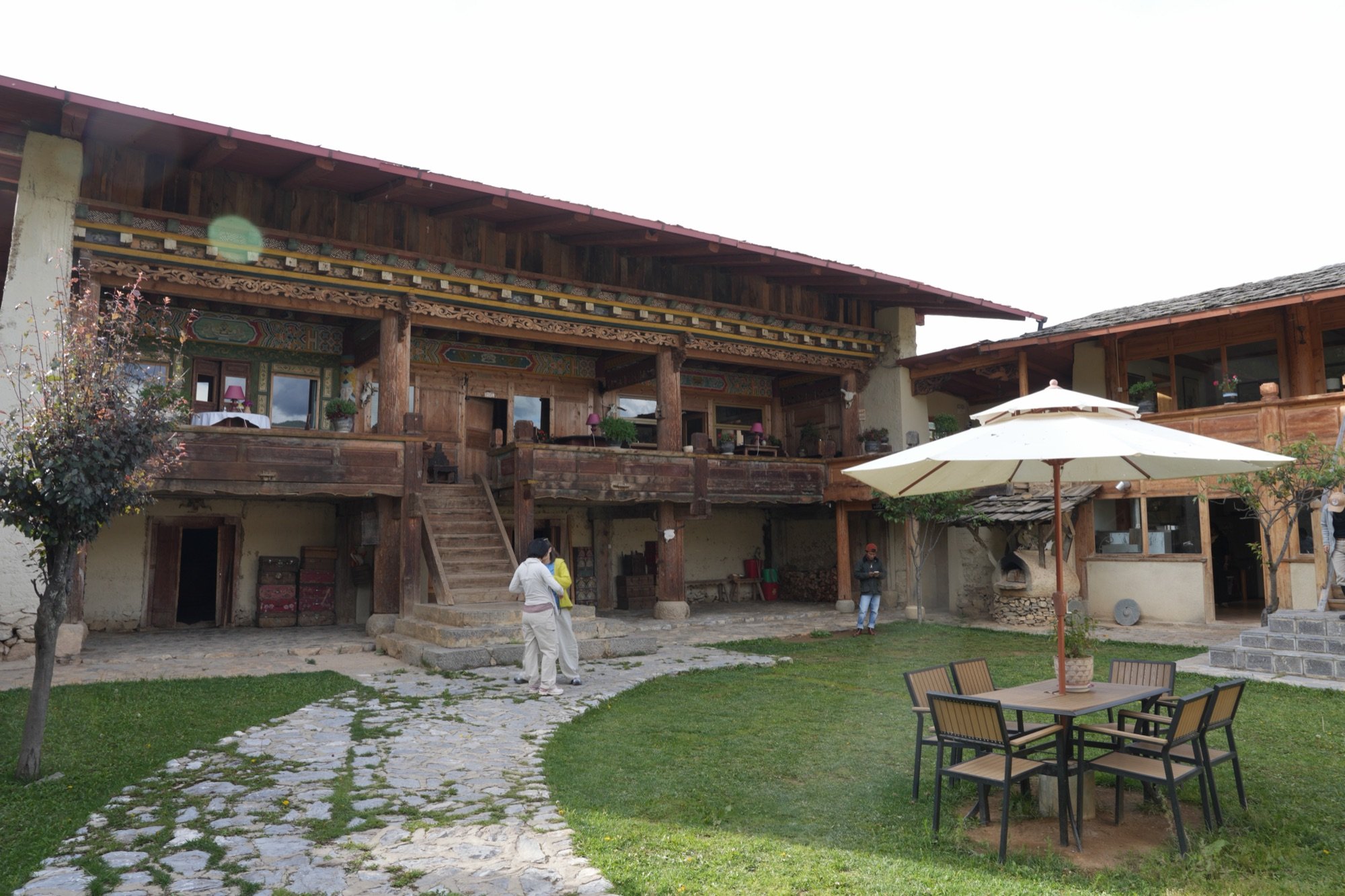
Half an hour from town, the Ren’an valley (Ringha, to Tibetans) is the gentlest thing in this guide, and the one we’d least like you to skip. The Shudu Gang river winds through pasture, horses, cattle and sheep graze the water meadows, and big Tibetan farmhouses of timber and rammed earth sit on the slopes above. Nothing happens here, and that’s the point.

There are two ways to do it. The first is to stay. Banyan Tree Ringha is 32 lodges made from old Tibetan farmhouses, taken down and reassembled on the hillside at about 3,200 m; it closes for the winter, roughly December to February, so it’s a spring-to-autumn stay. For families, Ferme Liotard is the farmhouse base of a horse-caravan trekking outfit a Frenchman started here in 2010, open to guests since 2023: canvas bell tents with heaters and electric blankets, a shared bathroom block, and French-Tibetan dinners by the fire. Children love it, and so do adults who don’t need a private bathroom.

The second is a sunset drive in spring or summer, from your hotel in town. All of China runs on Beijing time, and Shangri-La is a long way west, so the sun doesn’t set until about 7.40 pm in April and 8.20 pm in June and July. Drive out at six, walk the river meadows while the cattle come in, and be back in town for a late dinner.
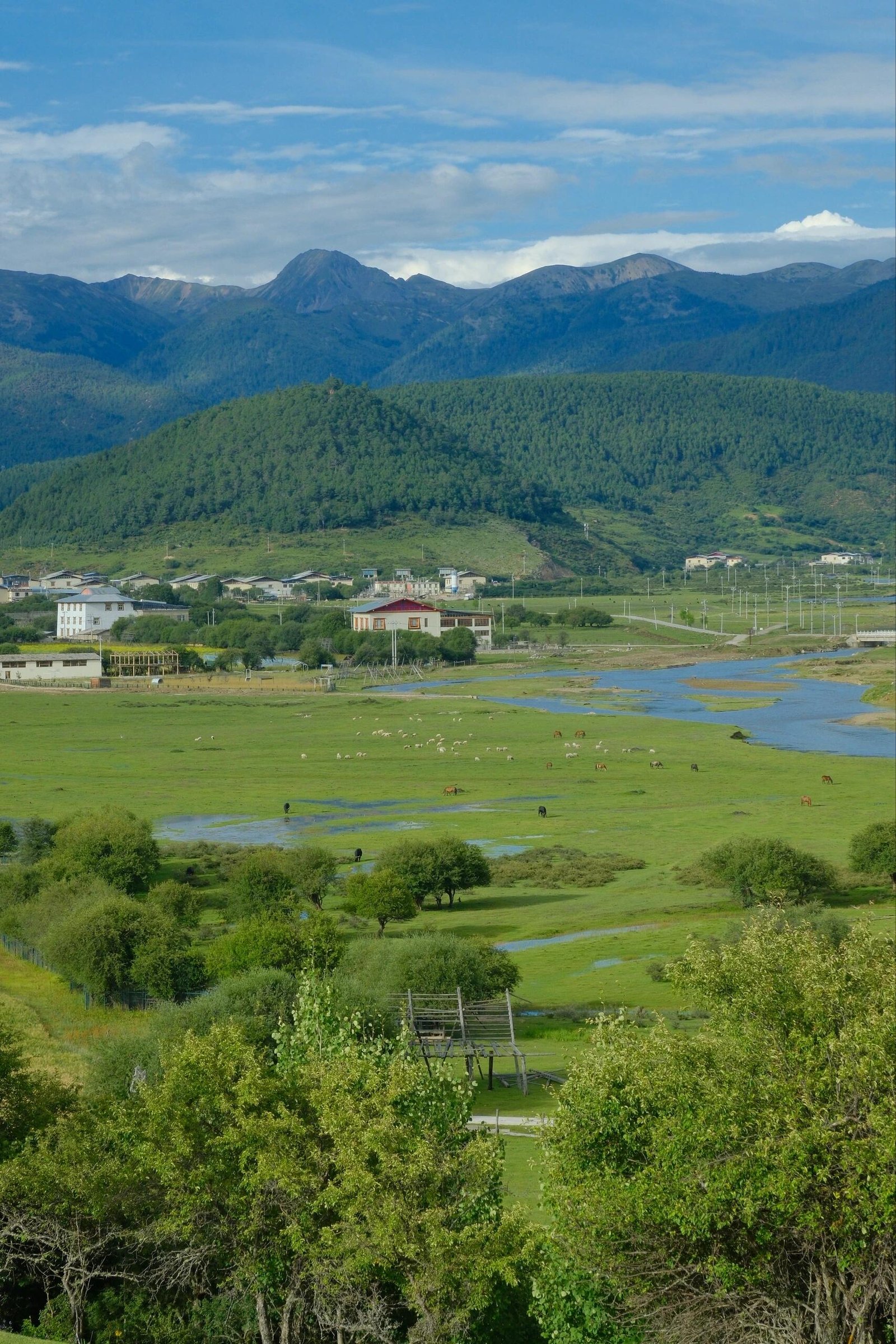
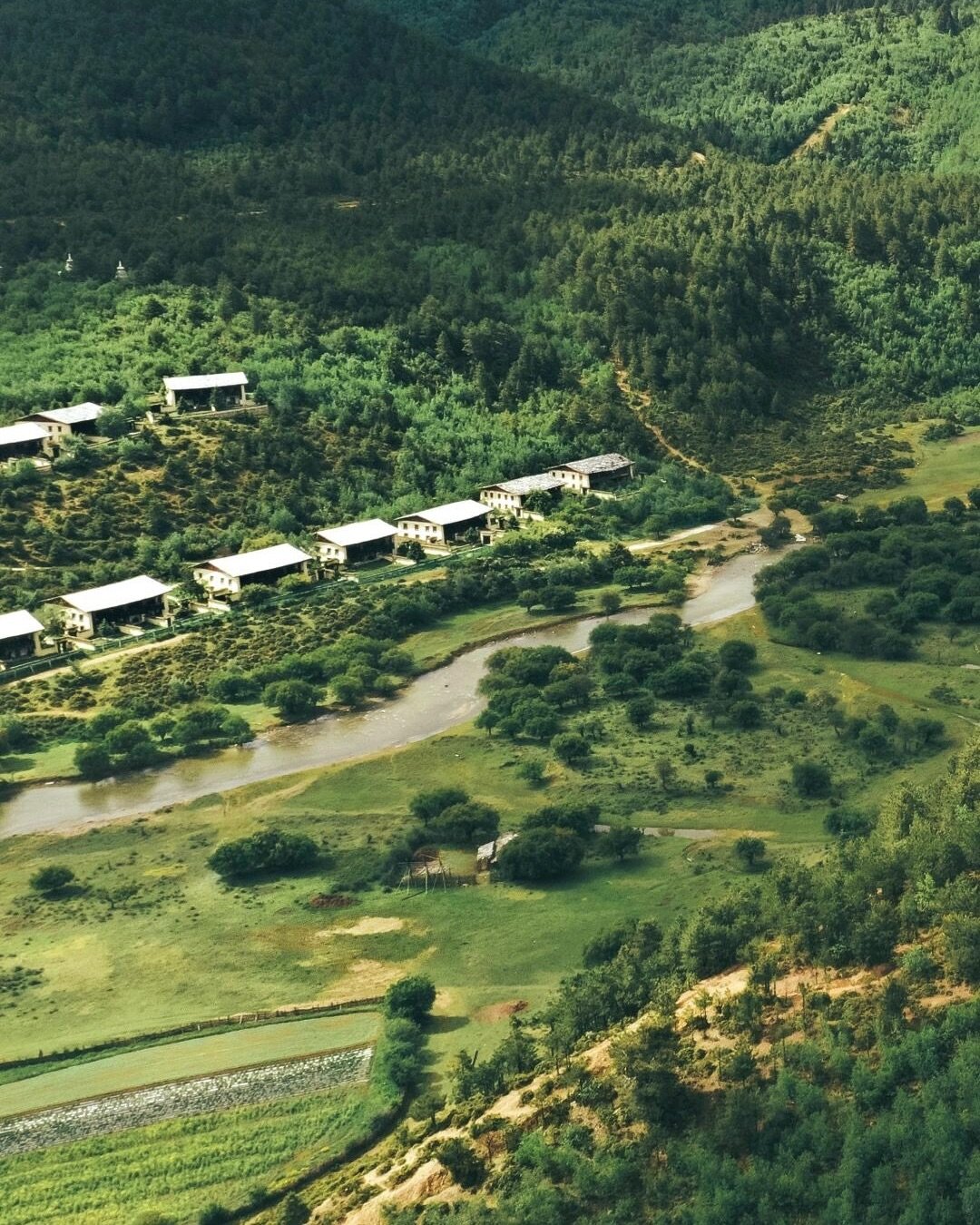
The Ren'an valley in summer: a river winding through green pasture with grazing horses and sheep, farmhouses and forested hills behind

Banyan Tree Ringha's farmhouse lodges in a row on a green slope above the river in the Ren'an valley

The courtyard of Ferme Liotard, a restored Tibetan farmhouse with a carved timber gallery, garden tables and a parasol

Wudi Lake — the lake with no bottom (无底湖)

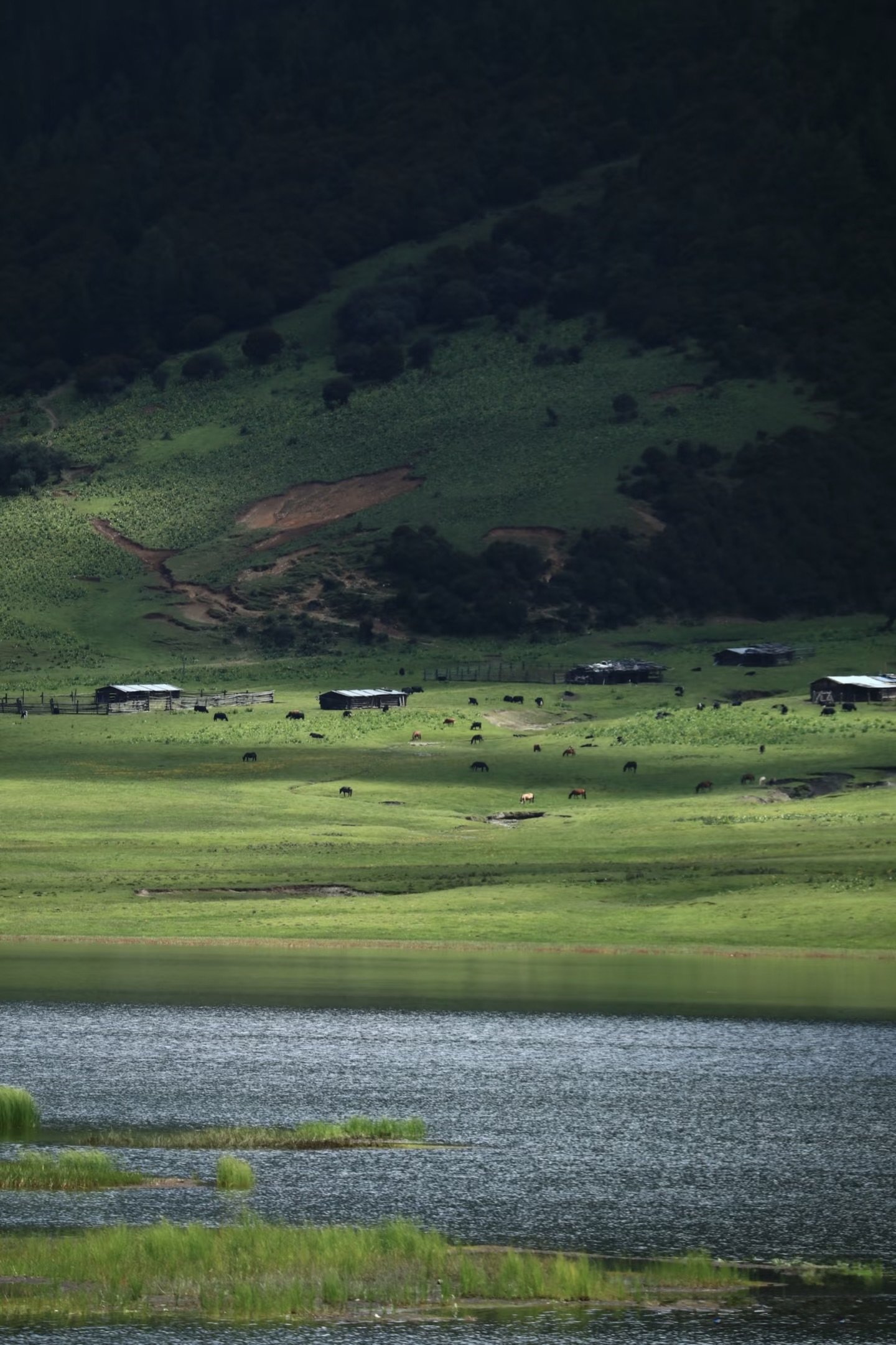
North-east of town in the Geza hills, Wudi Lake is the easy one: a lake at about 3,800 m with forest on one side and meadow on the other, a snow peak at the head of the valley, and a 3 to 5 km loop around the shore that takes a couple of hours. The name means “bottomless lake”. Tibetan pigs root along the shore, and the squirrels in the forest are almost tame.

Be clear about what it is. Wudi isn’t a secret in China any more: about 60,000 people came in 2023, and about 110,000 in the first nine and a half months of 2024. Buses now leave town in the morning and reach the lake around noon. There’s a visitor centre, a ¥10 cleaning fee and food at the lake. It’s still almost unknown outside China, and with a private car you can be walking the shore before the buses arrive.

The drive is the catch. It’s two to two and a half hours on the road north towards Daocheng in Sichuan, through a tunnel at about 4,300 m, with rockfall on the cliffs and ice on the shaded bends from late autumn. Go between May and October, with a driver who knows the road. It’s a good day for anyone who wants the high country without a serious climb, and it’s one of our fallbacks when the weather closes Abujicuo. Serious hikers will find it tame.
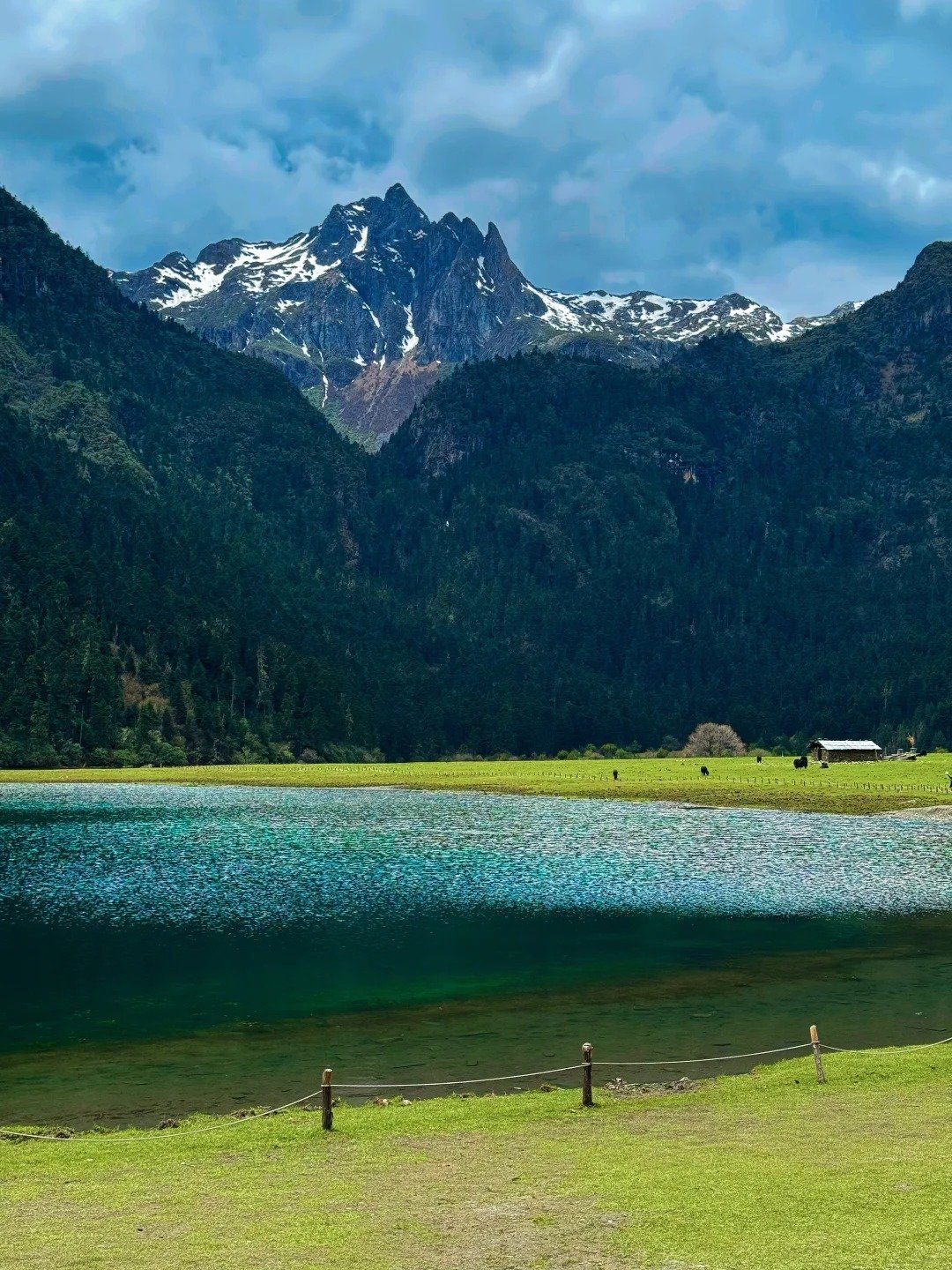
Wudi Lake's blue water below a meadow and a sharp snow peak, a log fence along the shore

Yaks grazing a sunlit meadow on the far shore of Wudi Lake, timber herders' sheds below the forest

Balagezong — the canyon a thousand metres down (巴拉格宗)

Two to two and a half hours north-west of town, near the Sichuan border, the Gangqu River has cut a canyon through limestone so deep that the walls go straight up from jade-green water. Above it all stands Balagezong Snow Mountain, 5,545 m, the highest peak in Shangri-La. The canyon floor is at about 2,000 m, more than a thousand metres lower than town: a warmer day, and an easy one on the lungs.

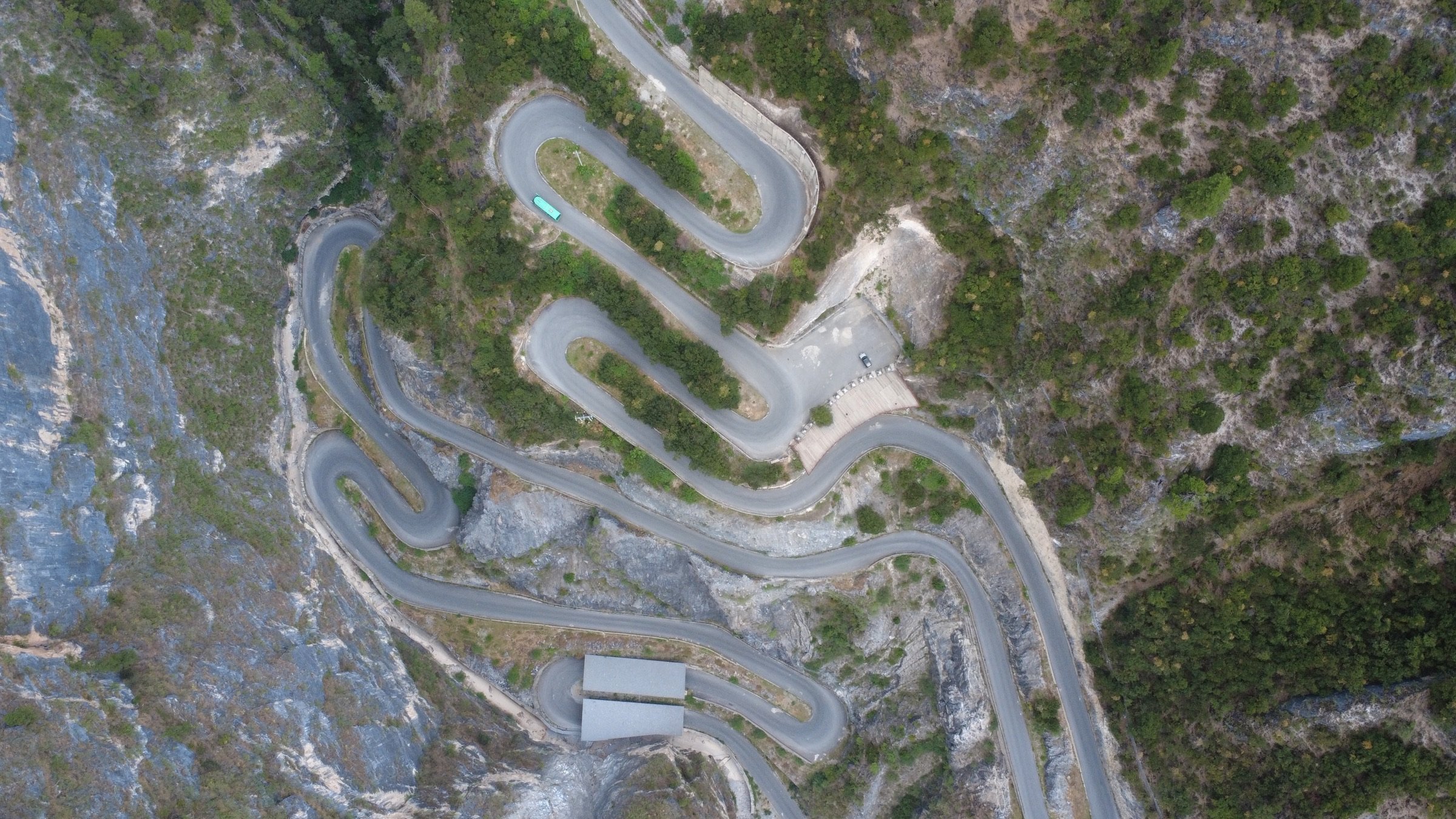
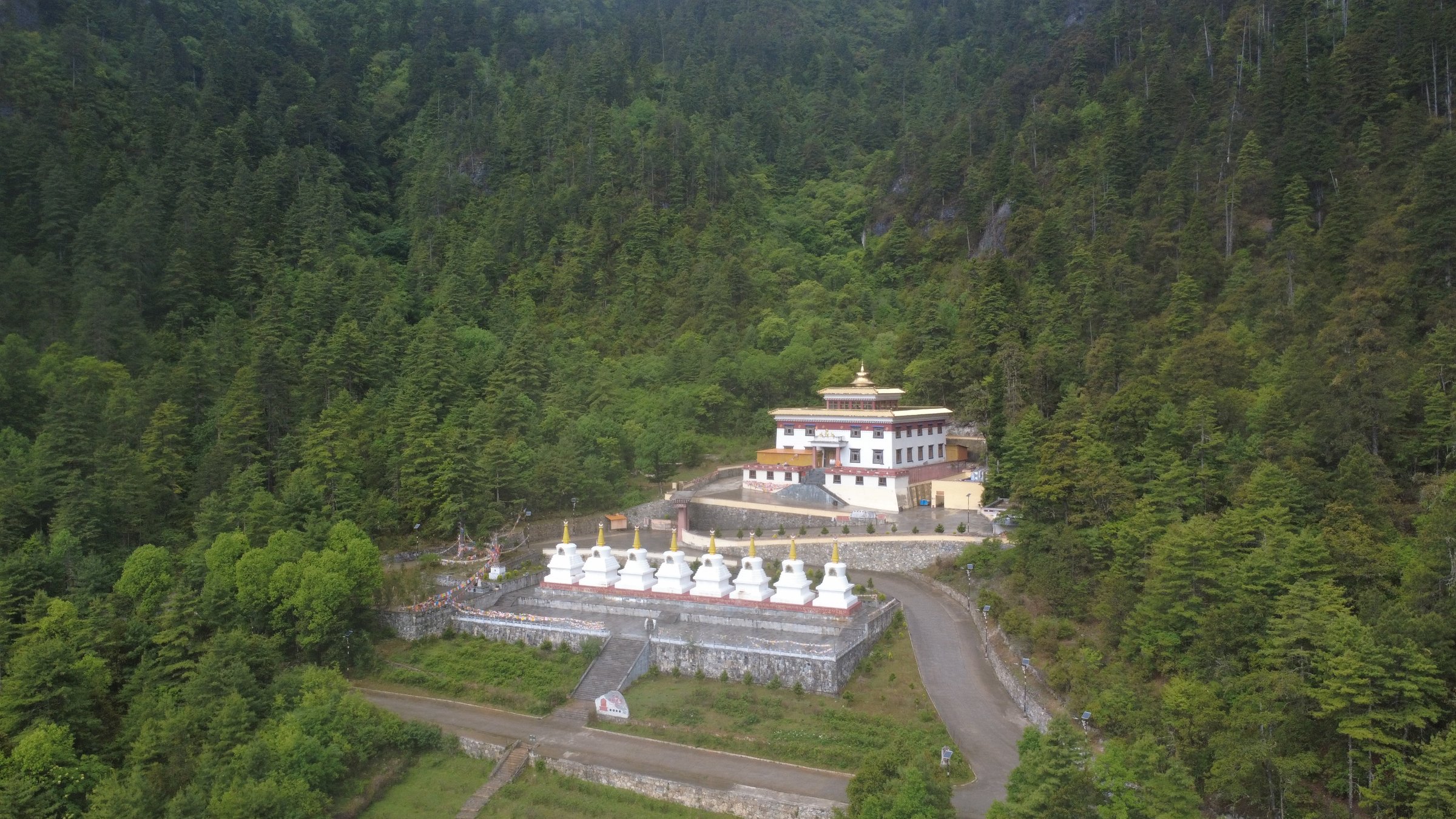
It’s a developed park. A boardwalk is bolted to the cliff above the river, there’s a glass-floored platform hung over the drop, and Bala, the old Tibetan village that gave the place its name, sits up at the head of the valley. In March 2026 the park opened its “108 bends” road to private cars, climbing from the valley floor to the Shambhala stupa at 4,250 m. Our cars drive in on a vehicle permit rather than joining the park shuttle, so you stop where you like.

Balagezong is on the old road north towards Benzilan and Meili, so it works as a full day out from Shangri-La or as the first half of the drive to Meili Snow Mountain. In the rainy season, check before you go: the park shut for a time in August 2025, when heavy rain raised the risk of rockfall on the road in.
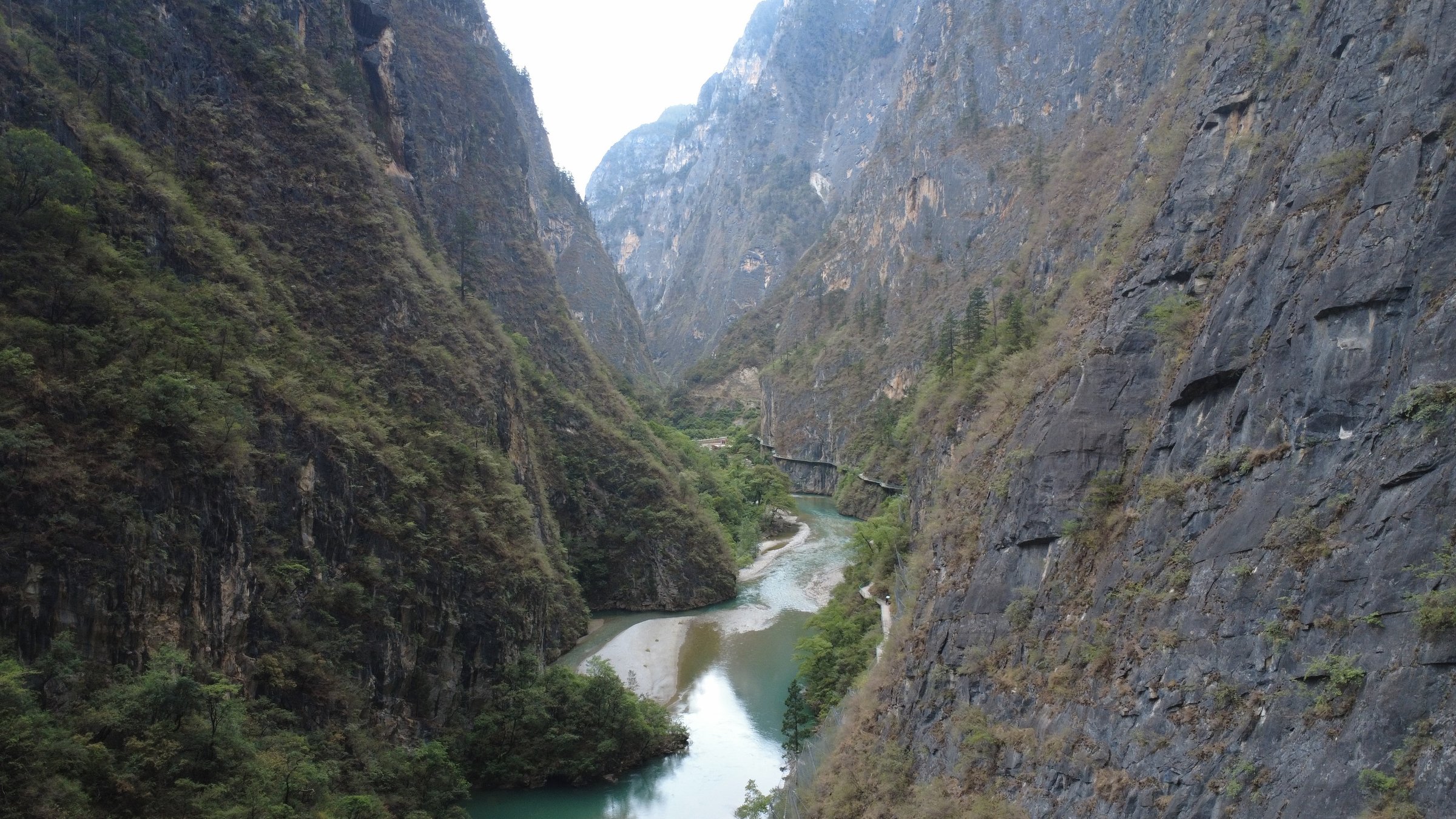
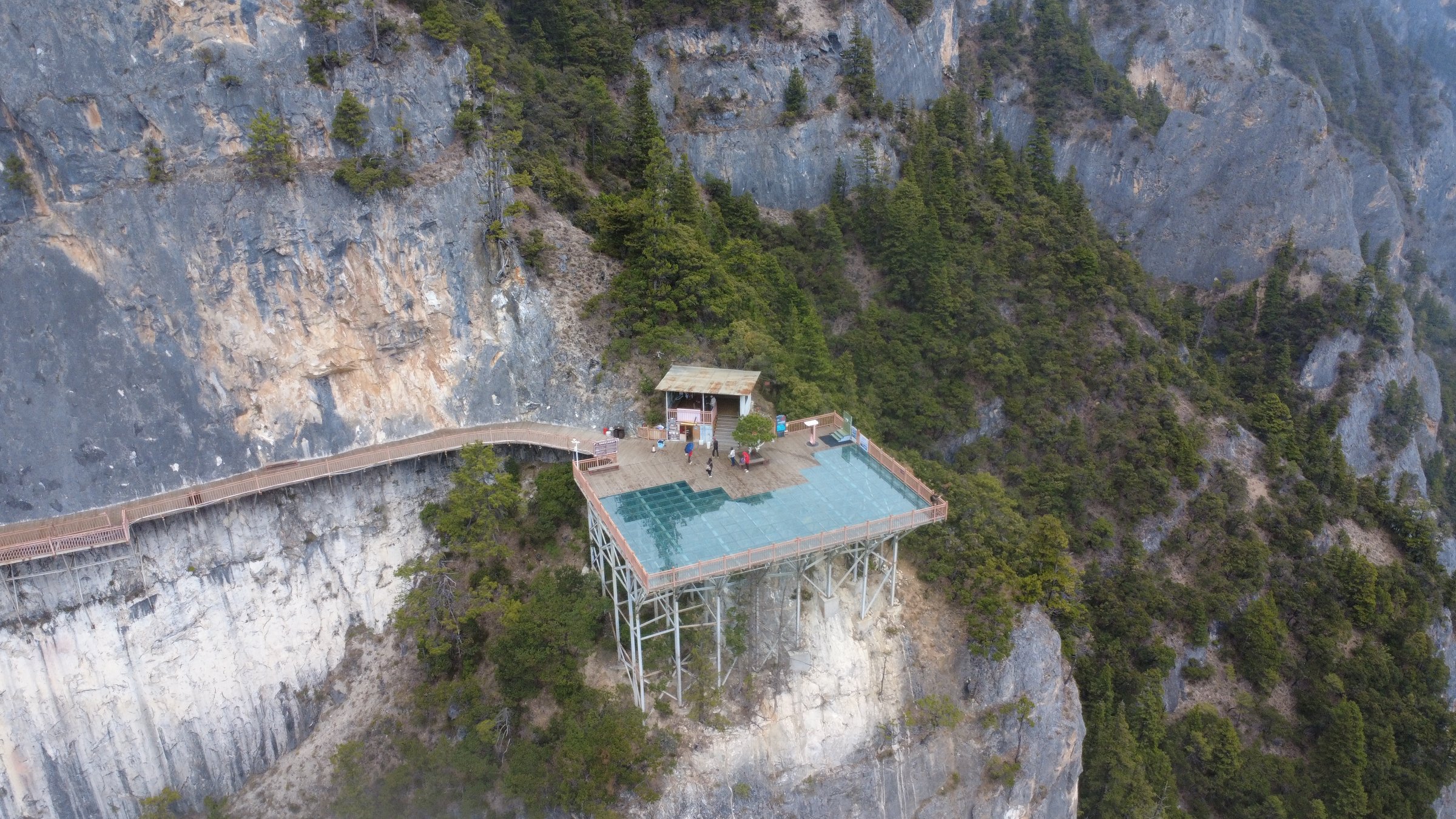
The Gangqu River from the air, jade-green water deep between sheer limestone walls at Balagezong

Balagezong's cliffside boardwalk ending at a glass-floored viewing platform hung out over the canyon

A road climbing the canyon wall at Balagezong in tight hairpin bends, seen from directly above

A Tibetan monastery with a row of eight white chortens in pine forest above the Balagezong canyon

Baishuitai — the terraces where the Naxi say it began (白水台)

Two hours south-east of town in Sanba, below Haba Snow Mountain, spring water heavy with calcium has built white travertine terraces down the hillside, holding pools of turquoise water. Locals call them “the fields the immortals left behind”. If you’ve been to Pamukkale, you’ll recognise the idea, on a smaller and quieter scale.

What makes Baishuitai more than a pretty hillside is who it belongs to. Baidi, the village below, is where the Naxi place the origin of Dongba, their old religion: the story goes that its founder, Ding Ba Shi Luo, stopped here on his way back from Tibet and stayed to teach. On the 7th and 8th days of the second lunar month, Naxi families and their neighbours come up to the terraces for the Er Yue Ba festival, with singing, picnics and offerings. And Naxi paper, the paper the Dongba wrote their scriptures on, is still made in the village; the craft has been on China’s national intangible heritage list since 2006.

Baishuitai sits on the back road between Tiger Leaping Gorge and Shangri-La, so the natural way to see it is on that drive, as our Tea Horse Road to Tibetan Shangri-La trip does: a walk on the boardwalks, tea, and on to town by late afternoon. If you’re already in Shangri-La, it’s a long day there and back.
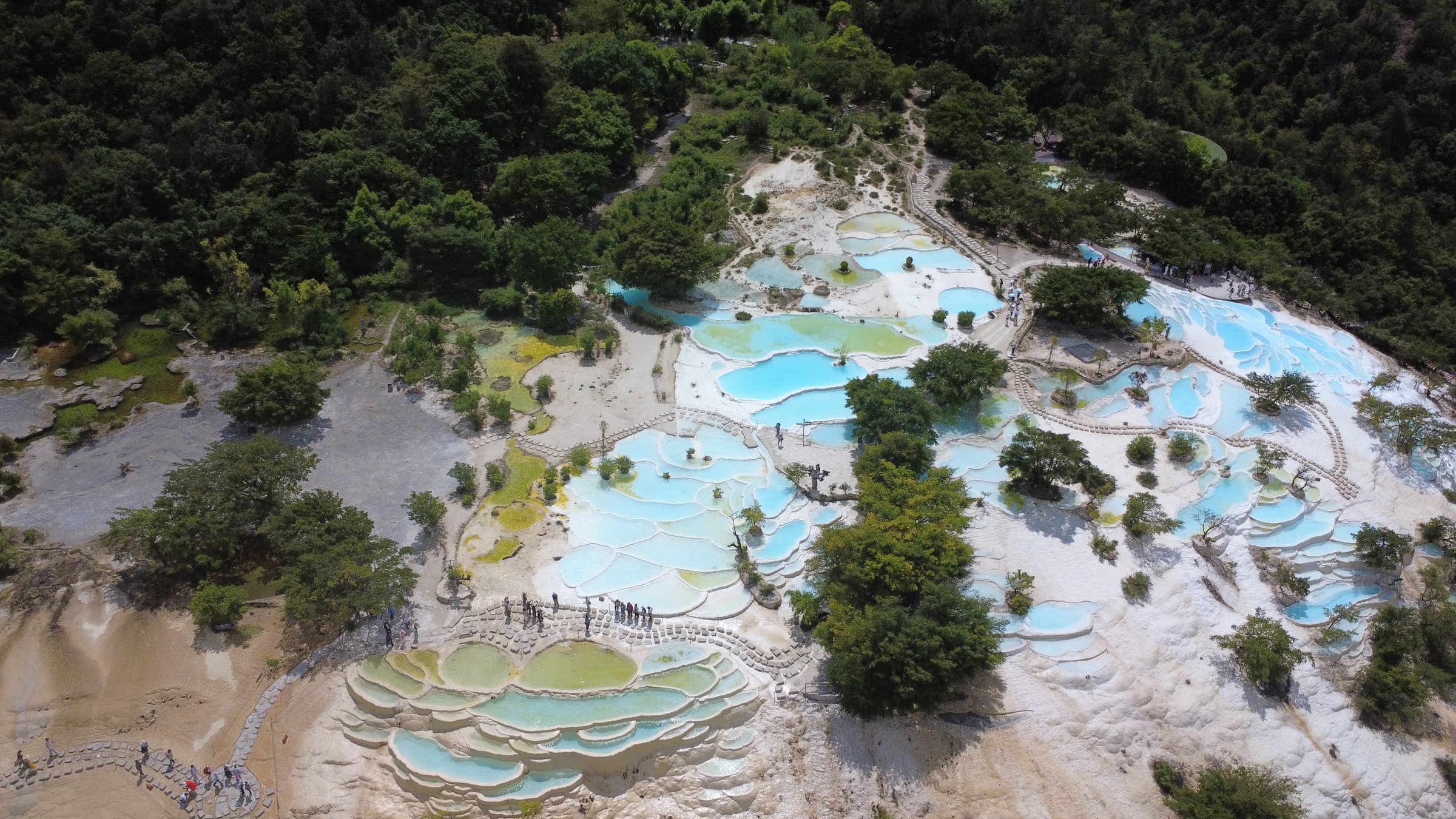
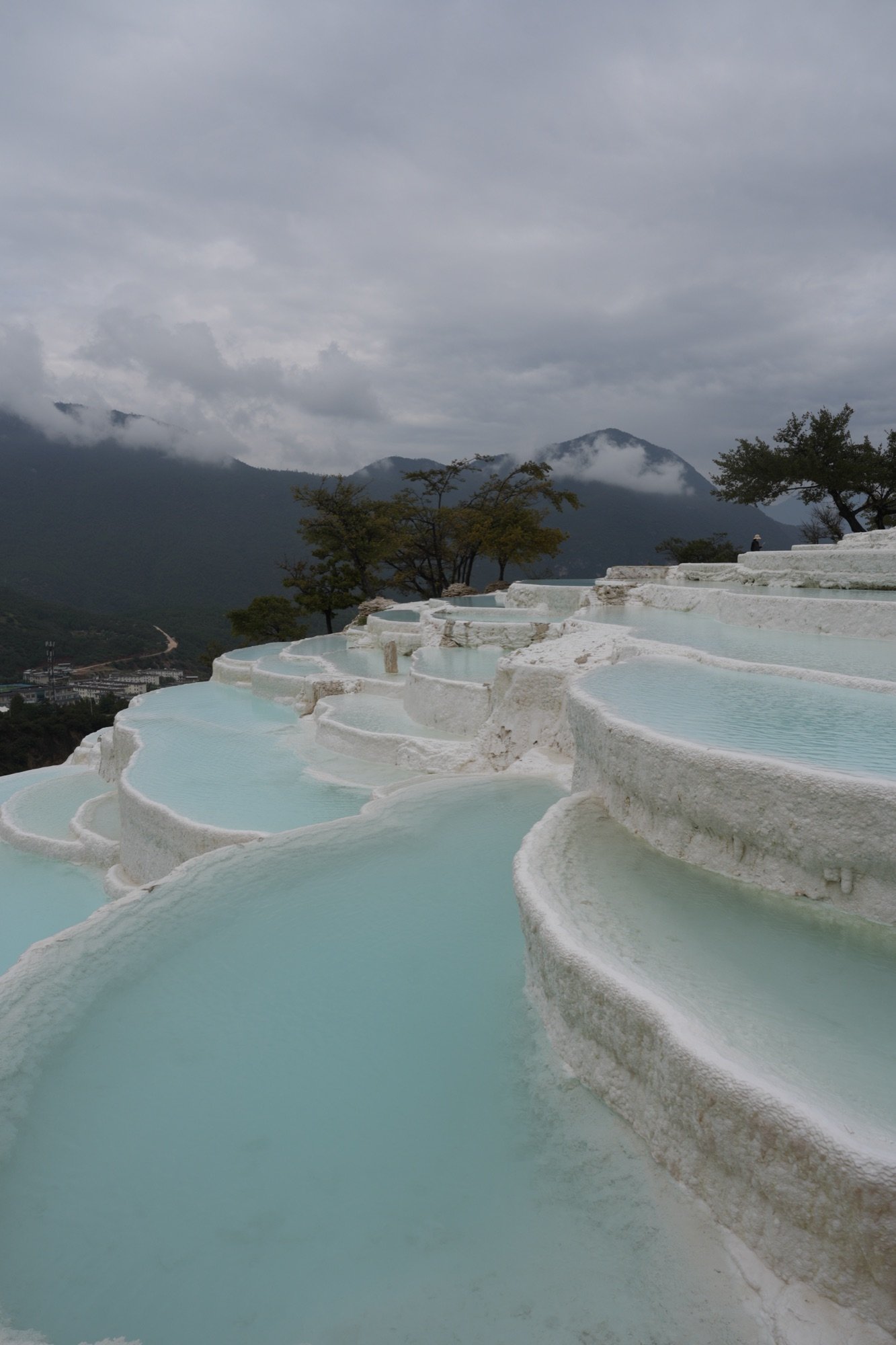
Baishuitai's white travertine terraces and turquoise pools from the air, with forest all around

Close up of Baishuitai's stepped travertine terraces, pale blue water in each white-rimmed pool

Shangri-La off the beaten path: how we’d fit it in

  • Arriving from Tiger Leaping Gorge: stop at Baishuitai on the drive up, and you’re in Shangri-La by late afternoon.
  • Four nights in Shangri-La: a gentle first day in town (Songzanlin and Dukezong), then Abujicuo once you’ve slept at altitude, Wudi Lake as the easy day or the bad-weather plan, and a summer evening in the Ren’an valley. Or move out of town for the last night or two and stay in the valley itself.
  • Heading north to Meili: leave via Balagezong, down into the canyon in the morning and on towards Benzilan in the afternoon.

In town we base people at Songtsam Lodge Shangri-La, beside Songzanlin, or at Arro Khampa. For the wider region, start with our Shangri-La guide. Our Meili Snow Mountain to the Nujiang Gorge trip already includes the Abujicuo day.

So which ones?

If you walk, Abujicuo, and nothing else here comes close. If you want one evening you’ll remember, the Ren’an valley at sunset, or better, a night there. If you’re coming from Tiger Leaping Gorge, Baishuitai costs you almost nothing. If you have a spare day and good weather, Balagezong for the scale of it. And Wudi Lake for an easy day, or for when the mountains say no to Abujicuo.

We build private trips around Shangri-La for two to eight travellers, with a driver who knows these roads and a guide who checks the trail before you set out. Tell us when you’re coming and we’ll plan it with you.
Quick answers

Common questions

01 What is there to see around Shangri-La beyond the old town?

Within two and a half hours of town: Abujicuo, a glacial lake at about 4,200 m reached on a day hike; the Ren'an valley, for a night in a Tibetan farmhouse or a summer sunset; Wudi Lake, an easy forest-and-meadow walk in the Geza hills; Balagezong, a limestone canyon on the jade-green Gangqu River; and Baishuitai, the white travertine terraces sacred to the Naxi.

02 Can you still hike to Abujicuo?

Yes, on the route from the Niguge pasture trailhead, about an hour's drive from Shangri-La: roughly 9 to 12 km there and back, five to seven hours, up to the lake at about 4,200 m. The other approach you'll see online, from Washbasin Pass (洗脸盆垭口), is one of the areas Diqing prefecture named in its October 2025 ban on hiking in undeveloped country. Go with a local mountain guide.

03 How far is Balagezong from Shangri-La?

About two to two and a half hours by car, north-west of town. The canyon floor sits at about 2,000 m, more than a thousand metres lower than Shangri-La, and private cars can drive into the park, so it makes a full day out or a stop on the road north towards Benzilan and Meili.

04 Is Baishuitai worth visiting?

Yes, if you're driving between Tiger Leaping Gorge and Shangri-La, which takes you right past it. The terraces are about two hours from Shangri-La, and Baidi, the village below them, is where the Naxi place the origin of their Dongba religion.

Keep reading

More from the journal

The Yunnan–Vietnam Railway: History & Where to Walk It
Yunnan

The Yunnan–Vietnam Railway: History & Where to Walk It

9 October 2026 · 8 min read

The French drove a metre-gauge railway from Haiphong to Kunming in 1910. The passenger trains have gone, but the tunnels, stations and bridges are still there — and you can walk the best of it.

Read article →
Day Trips from Kunming: Stone Forest, the Old Railway & Fuxian Lake
Yunnan

Day Trips from Kunming: Stone Forest, the Old Railway & Fuxian Lake

13 November 2026 · 9 min read

Most travellers leave Kunming the morning after they land. Give it two more days: within reach are a karst forest, a 1910 French railway you can walk, Yunnan's deepest lake and the markets Kunming actually shops at.

Read article →
The Caravan Table: Eating the Tea Horse Road in Yunnan
Yunnan

The Caravan Table: Eating the Tea Horse Road in Yunnan

9 November 2026 · 10 min read

Salt, ham and Bai cheese built the old caravan towns of western Yunnan. Here's the Tea Horse Road by the plate, from Xizhou to Tengchong, with the restaurants to book and the months that matter.

Read article →
Dali's Ancient Towns: Around the Lake, and the Ones Most People Miss
Yunnan

Dali's Ancient Towns: Around the Lake, and the Ones Most People Miss

8 November 2026 · 12 min read

Dali Old Town is the one everyone visits. Here are the ancient towns around Erhai Lake and in the valleys beyond — Shaxi, Fengyu, Nuodeng, Weishan and Midu's Mizhi — on one map, with honest drive times.

Read article →
Nujiang: The Valley Where Yunnan's Faiths Live Side by Side
Yunnan

Nujiang: The Valley Where Yunnan's Faiths Live Side by Side

13 October 2026 · 9 min read

A lamasery, French mission churches and Lisu hymns, all in one gorge at the end of the road to Tibet. The story of how Nujiang's faiths arrived, and the valley they live in.

Read article →
Fuxian Lake & the Yunnan Lakes Kunming Keeps for Itself
Yunnan

Fuxian Lake & the Yunnan Lakes Kunming Keeps for Itself

9 October 2026 · 8 min read

Everyone knows Erhai and Lugu. Kunming people spend their weekends at Fuxian, Yangzonghai and four quieter lakes south of the city. Here's what each is really like.

Read article →
Kunming's Parks & Temples: 7 Places the Locals Actually Go
Yunnan

Kunming's Parks & Temples: 7 Places the Locals Actually Go

9 October 2026 · 7 min read

Most travellers treat Kunming as an airport. Give it a day and see the city locals know: gulls on Green Lake, the Dragon Gate cliffs, a bronze temple and an old fishing village at sunset.

Read article →
Lijiang Ancient Towns: Why We Prefer Shuhe & Baisha
Yunnan

Lijiang Ancient Towns: Why We Prefer Shuhe & Baisha

28 July 2026 · 6 min read

Lijiang has three ancient towns, not one. The honest difference between Dayan, Shuhe and Baisha — and why we book our travellers into the quieter two.

Read article →
Pu'er Tea in Yunnan: Where to Go and What to Taste
Yunnan

Pu'er Tea in Yunnan: Where to Go and What to Taste

8 July 2026 · 11 min read

Where Pu'er tea actually comes from — Menghai, Yiwu, UNESCO-listed Jingmai and Lincang — the five villages collectors chase, and how to taste them properly.

Read article →
Meili Snow Mountain Travel Guide: A Yunnan North Highlight
Yunnan

Meili Snow Mountain Travel Guide: A Yunnan North Highlight

6 May 2026 · 12 min read

A Meili Snow Mountain travel guide built from a recent client trip — sunrise on Kawagarbo, the Yunnan North circuit, and why we booked Poodom over Songtsam.

Read article →
Shangri-La Hiking: 9 Trails Beyond Tiger Leaping Gorge
Yunnan

Shangri-La Hiking: 9 Trails Beyond Tiger Leaping Gorge

10 April 2026 · 12 min read

Tiger Leaping Gorge is only the start. Nine alpine routes across Shangri-La's high country, from day hikes to multi-day treks.

Read article →
Yunnan Travel Guide: Six Regions Explained
Yunnan

Yunnan Travel Guide: Six Regions Explained

23 March 2026 · 9 min read

A complete orientation to Yunnan for first-time travellers — what each region is famous for, how long to spend, and when to go.

Read article →
Five Days in the Pu'er Tea Mountains: Mario & His Guest
Guest Stories

Five Days in the Pu'er Tea Mountains: Mario & His Guest

10 July 2026 · 6 min read

Two European guests, five green-season days across Nannuo and Jingmai — the monsoon that couldn't stop the tea, a cake pressed by hand, and a fire-pit evening inside the UNESCO landscape. A guest story.

Read article →
When Xin & Lorraine Walked Dali to Shangri-La — Their 14 Days in Yunnan
Guest Stories

When Xin & Lorraine Walked Dali to Shangri-La — Their 14 Days in Yunnan

21 April 2026 · 11 min read

A case study in private Yunnan travel — Xin and Lorraine's April 2026 trip, day by day. Dali courtyards, Shaxi market mornings, the Tiger Leaping Gorge upper trail, Songzanlin, and three days at the foot of Meili Snow Mountain. What ran, what we changed mid-trip, and the calls they never saw.

Read article →
Little Chinese Everywhere Tours — Built With Boutique China
News

Little Chinese Everywhere Tours — Built With Boutique China

14 July 2026 · 3 min read

We're partnering with Little Chinese Everywhere on small-group Yunnan tours. Two journeys, groups of up to 8, first departure 10 September.

Read article →
What a Private Guide Does in Yunnan and Sichuan
Travel Advice

What a Private Guide Does in Yunnan and Sichuan

17 April 2026 · 8 min read

A private guide in Yunnan and Sichuan solves permits, altitude, weather, and access group tours can't reach. Here's what they do — and why it pays back.

Read article →
Yunnan's Ethnic Minorities: 7 Cultures You'll Actually Encounter
Culture

Yunnan's Ethnic Minorities: 7 Cultures You'll Actually Encounter

7 April 2026 · 6 min read

A grounded introduction to the Bai, Naxi, Dai, Yi, Tibetan, Hani and Miao people you'll meet on our Yunnan tours.

Read article →
Best Boutique Hotels in Dali, Yunnan (2026)
Stays

Best Boutique Hotels in Dali, Yunnan (2026)

29 March 2026 · 6 min read

Our favourite boutique stays in Dali for 2026 — from lakeside courtyards on Erhai to restored Bai mansions in the old town.

Read article →
Wild Great Wall: Jinshanling vs Jiankou vs Mutianyu vs Badaling
Travel Advice

Wild Great Wall: Jinshanling vs Jiankou vs Mutianyu vs Badaling

27 September 2026 · 7 min read

Four Great Wall sections near Beijing, compared honestly — which is crowded, which is risky, and why the wild wall we build walks around is Jinshanling.

Read article →
China Visa-Free in 2027: What We Know, and What It Means for Your Trip
Practical

China Visa-Free in 2027: What We Know, and What It Means for Your Trip

16 November 2026 · 4 min read

China's 30-day visa-free entry runs until 31 December 2026, and the decision on 2027 hasn't been announced yet. Here's where it stands, what it means if you're travelling with us, and what to do if it isn't renewed.

Read article →
Gubeikou to Simatai: Three Days on the Wild Great Wall
Guest Stories

Gubeikou to Simatai: Three Days on the Wild Great Wall

2 November 2026 · 7 min read

A real Gubeikou to Simatai hike, walked in mid-October: original Ming brick, a village farm-stay under Jinshanling's gate, and a wall with almost nobody on it. What the three days were actually like.

Read article →
China Visa-Free for Australians: What We Actually Get Asked
Practical

China Visa-Free for Australians: What We Actually Get Asked

17 April 2026 · 6 min read

China's 30-day visa-free policy for Australian passports is now approaching two years old. Here's what it means, what to ignore, and what the border actually feels like.

Read article →
Jiuzhaigou 2026: Crowds, Permits & Quiet Alternatives
Sichuan

Jiuzhaigou 2026: Crowds, Permits & Quiet Alternatives

7 April 2026 · 6 min read

Everything you need to know about visiting Jiuzhaigou in 2026 — daily quotas, booking windows, and the lesser-known parks most travellers miss.

Read article →
West Sichuan Travel Guide: Beyond Jiuzhaigou
Sichuan

West Sichuan Travel Guide: Beyond Jiuzhaigou

2 April 2026 · 9 min read

The real West Sichuan is the sky road west of the park: Tibetan monasteries, alpine lakes, and villages where tourism barely touches the edges.

Read article →
Essential Apps for Travelling in China (2026 Guide)
Practical

Essential Apps for Travelling in China (2026 Guide)

25 March 2026 · 3 min read

The 2026 China app kit — payments, maps, translation, what replaced Uber, and the tricks to make it all work on a foreign phone.

Read article →