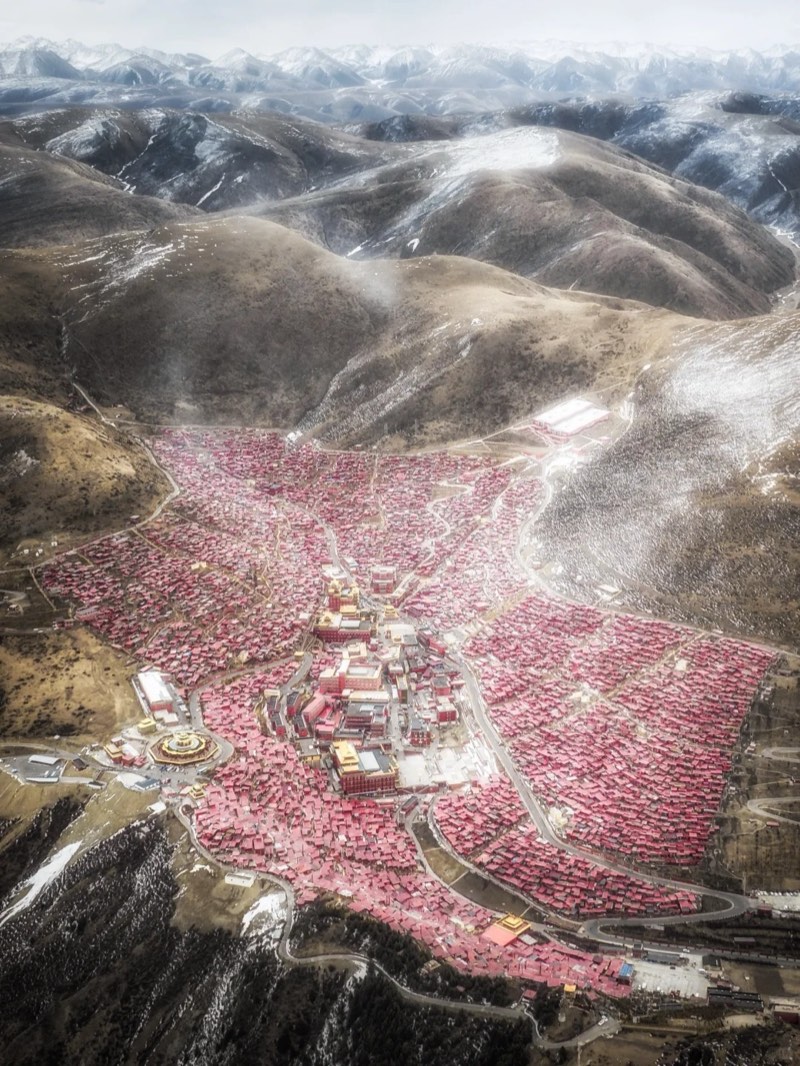
Most people treat Kunming as a place to land. They sleep, then fly on to Dali or Lijiang the next morning. Kunming people would tell you they’ve missed the best of it, because the best Kunming attractions aren’t in the city at all. They’re out of town: a forest of limestone pinnacles, a French railway with grass between the sleepers, a lake so deep and clear it looks like the sea, and a flower market that handled more than 15 billion stems last year.
Here are the day trips from Kunming we’d actually take, what each one is really like, and how to fit them around the city. For the parks and temples inside Kunming itself, see our guide to where Kunming locals go.
When to go: Kunming sits at 1,890 metres, and most of these day trips share its mild climate. The dry season, roughly November to April, is best: clear skies, firm ground for walking, and the black-headed gulls back on the lakes. From about June to September the rains bring mud on the railway and cloud on the lake. Dongchuan Red Land has its own season, late September to November, when the harvest leaves the hills striped red and gold. Avoid all of them on Chinese public holidays, when the Stone Forest in particular is packed.
| Day trip | What it is | Getting there | Best for |
|---|---|---|---|
| Railway walk 滇越铁路 | 16 km of the 1910 metre-gauge line, tunnels and roast duck | The 7:45 slow train | Walkers |
| Stone Forest 石林 | UNESCO karst pinnacles in Sani Yi country | About 1½ hours by road | First-timers |
| Jiuxiang 九乡 | Show caves and gorges | 35 km from the Stone Forest | Pairing with Shilin |
| Fuxian Lake 抚仙湖 | Yunnan’s deepest lake, a cliff boardwalk | A couple of hours by road | A night by the water |
| Dounan 斗南 | China’s biggest flower market | Metro Line 1 | An evening |
| Village markets 街子天 | The countryside market day | Depends on the day | Food lovers |
| Dongchuan Red Land 东川红土地 | Red-earth farmland at 2,000–2,800 m | A long drive north | Photographers, with a night |
East: the railway, the Stone Forest and the caves
Walk the Yunnan–Vietnam Railway (滇越铁路)
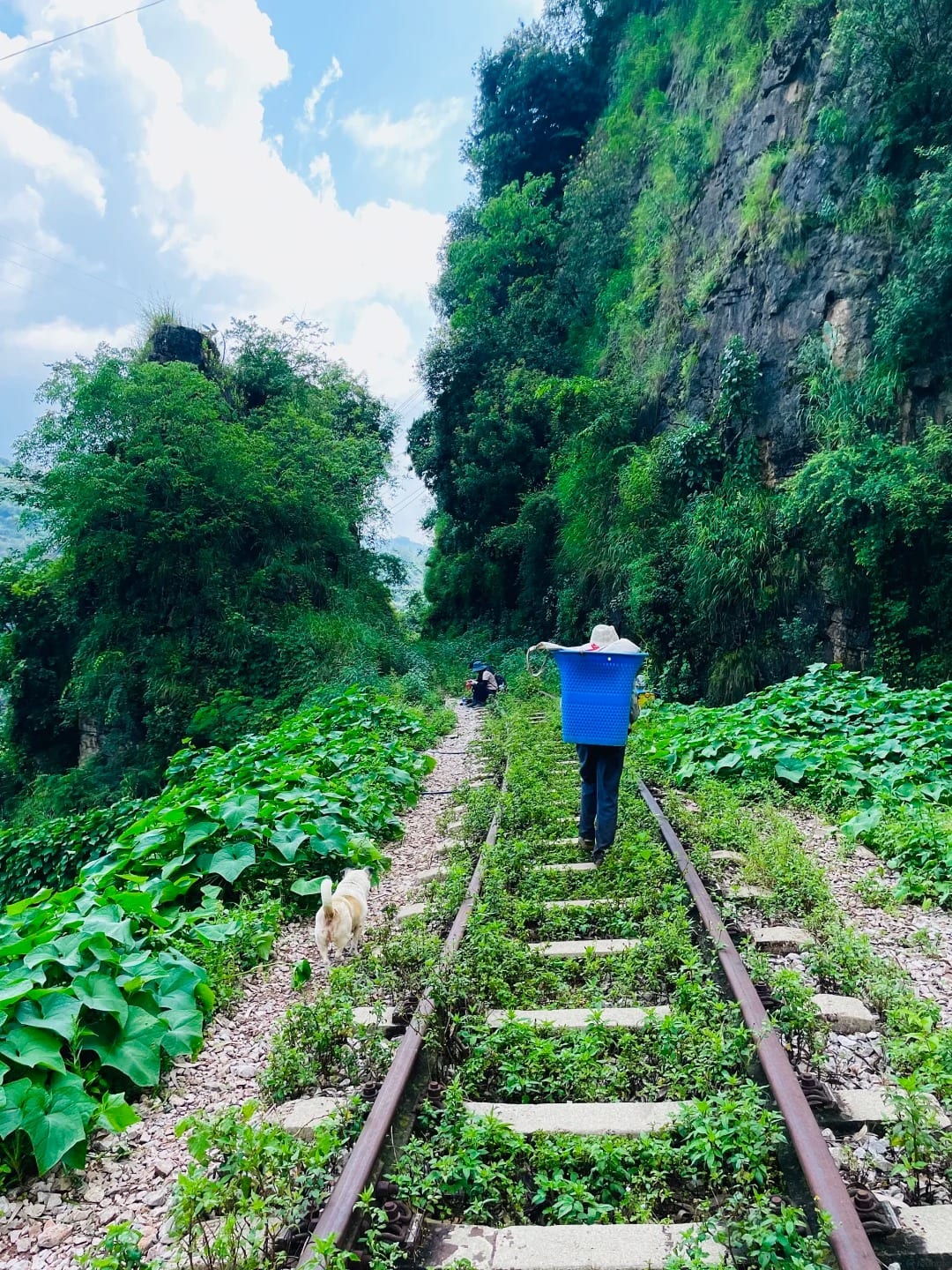
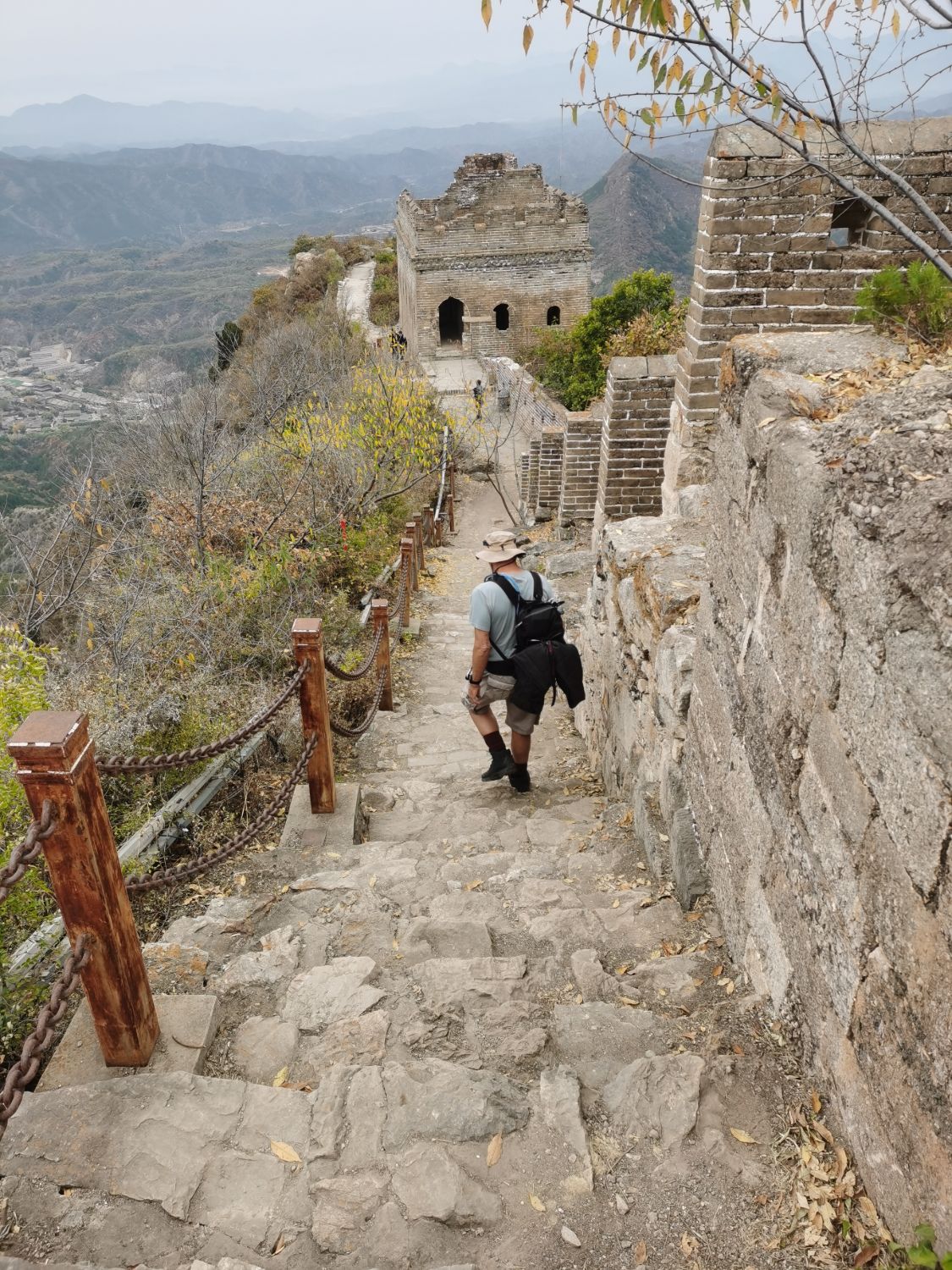
This is the one we’d do first, and the one no coach tour does. In 1910 the French finished a metre-gauge railway from the port of Haiphong to Kunming. Regular passenger trains on the Chinese side stopped in 2003, and east of the city the line has gone quiet. Between Kebao village and the county town of Yiliang it follows the gorge of the Tangchi River through stone tunnels and cuttings, past the yellow station house at Shuijingpo, for about 16 kilometres. In 2024 Yunnan’s sports bureau named it one of the province’s classic hiking routes.
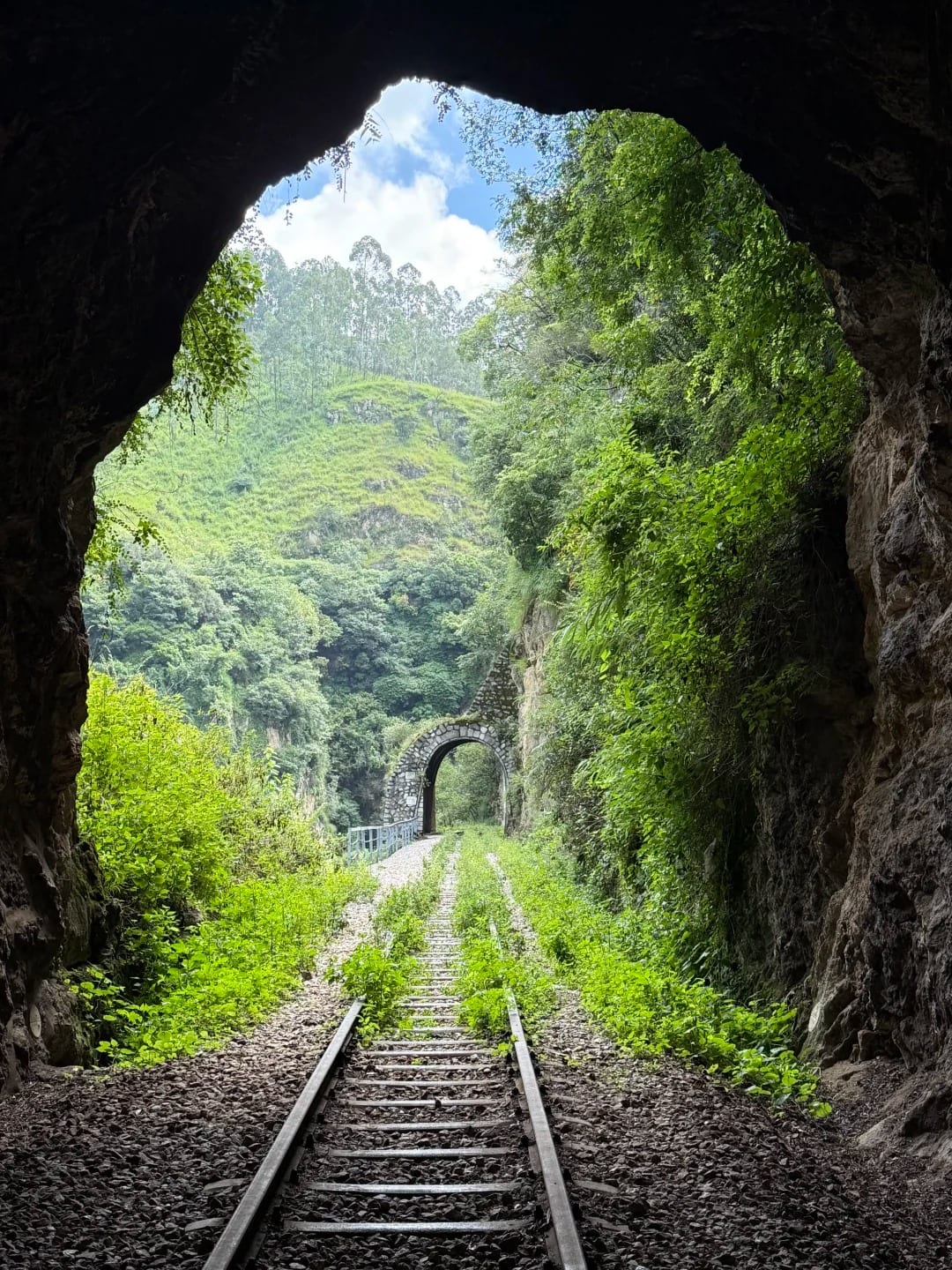
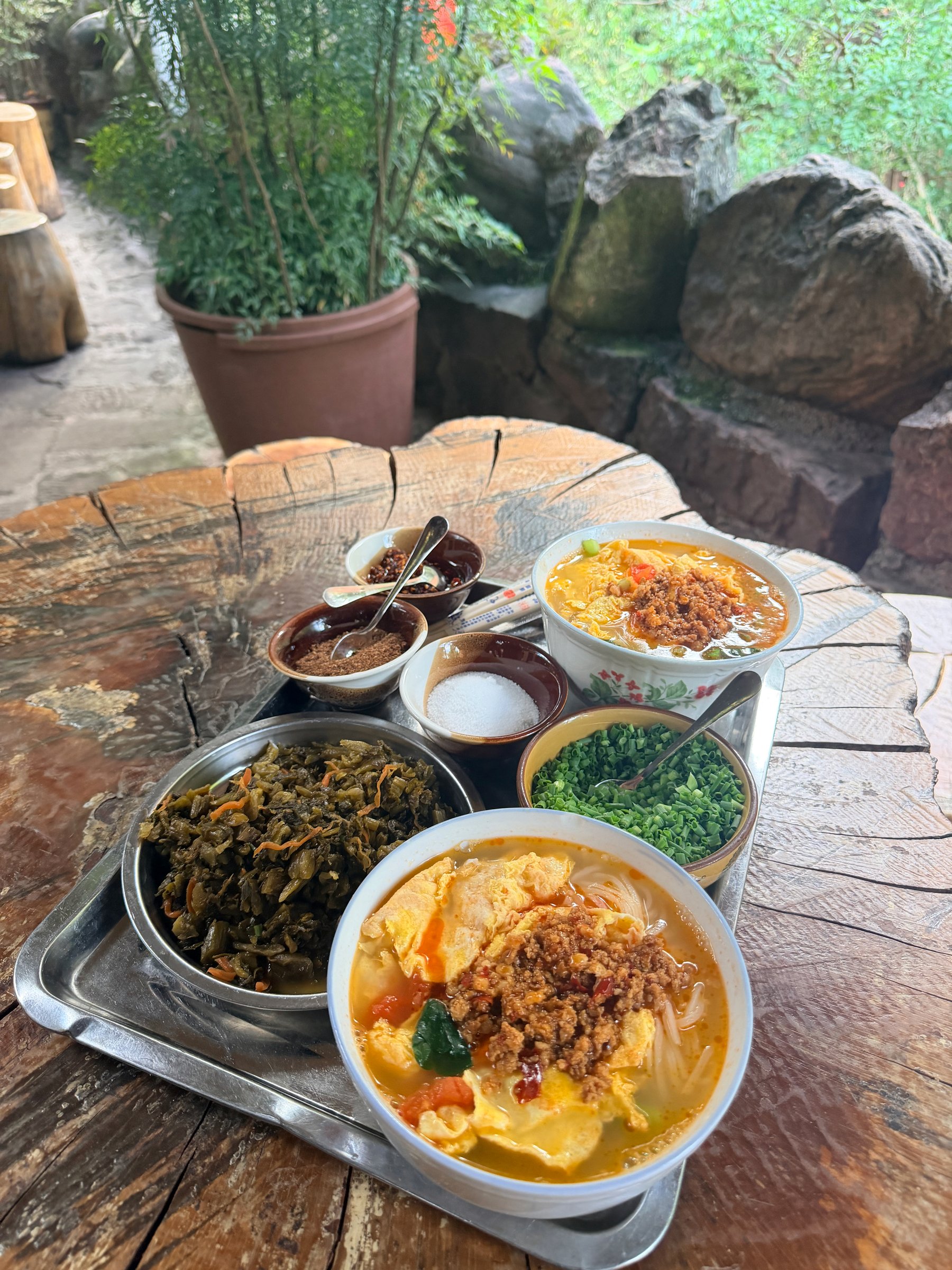
Getting there is part of it. Train 7452, the 7:45 slow train from Kunming Station, takes just over an hour and a half to Yongfengying, and a hard seat costs ¥7. From the station it’s a short walk to Kebao, where you join the old line. It’s nearly flat, but it’s sleepers and ballast all the way, so wear proper boots and bring a head torch for the longer tunnels. The walk ends among the French-era railway buildings at Yiliang, and lunch is the reason to finish there: Yiliang roast duck, glazed and roasted over pine needles, a technique on Yunnan’s provincial heritage list since 2009.
One more thing to know. The line is still railway property, and walking on railway lines is otherwise prohibited in China, so go with a guide who knows which stretches are open. Our history of the railway and where to walk it has the full story.
The Stone Forest (石林)
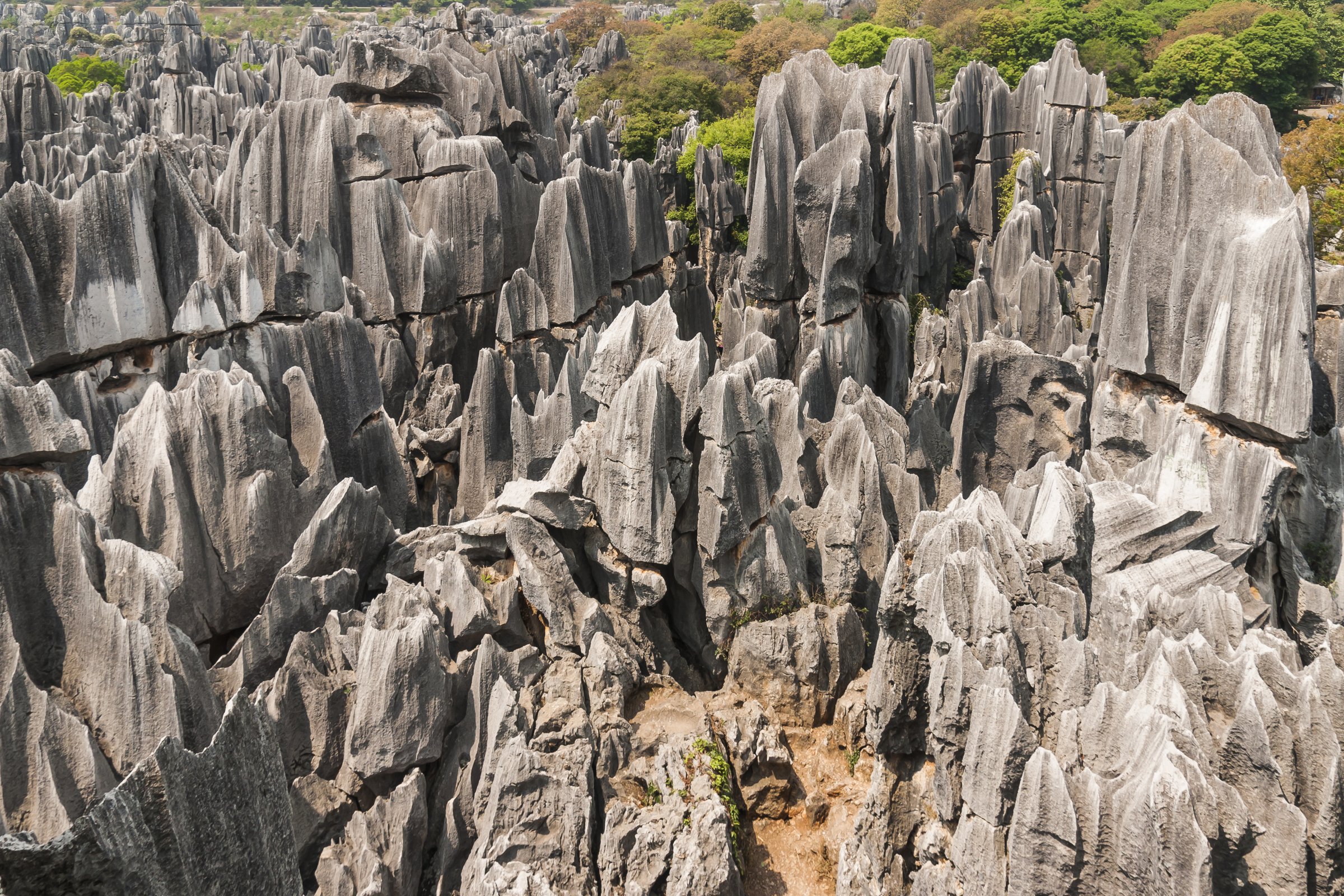
The Stone Forest is the day trip every Kunming hotel will sell you, and it’s worth it if you do it right. About 78 kilometres south-east of the city, roughly an hour and a half by road, rain has dissolved 270-million-year-old limestone into a maze of grey pinnacles, the tallest more than 40 metres high. In 2007 UNESCO listed it as part of the South China Karst World Heritage site. This is the home country of the Sani, a branch of the Yi people. Their epic of Ashima, the girl who turned to stone, was on China’s first national list of intangible heritage.
The catch is the crowds: 1.68 million visits in the first half of 2026 alone, and the paved loops of the Major Stone Forest take most of them. So arrive early, walk the Major and Minor Stone Forest first, then drive 8 kilometres to Naigu (乃古石林). It’s darker and quieter, its towers are dolomitic limestone, and there are more than 6 kilometres of stone paths through it, with far fewer people on them.
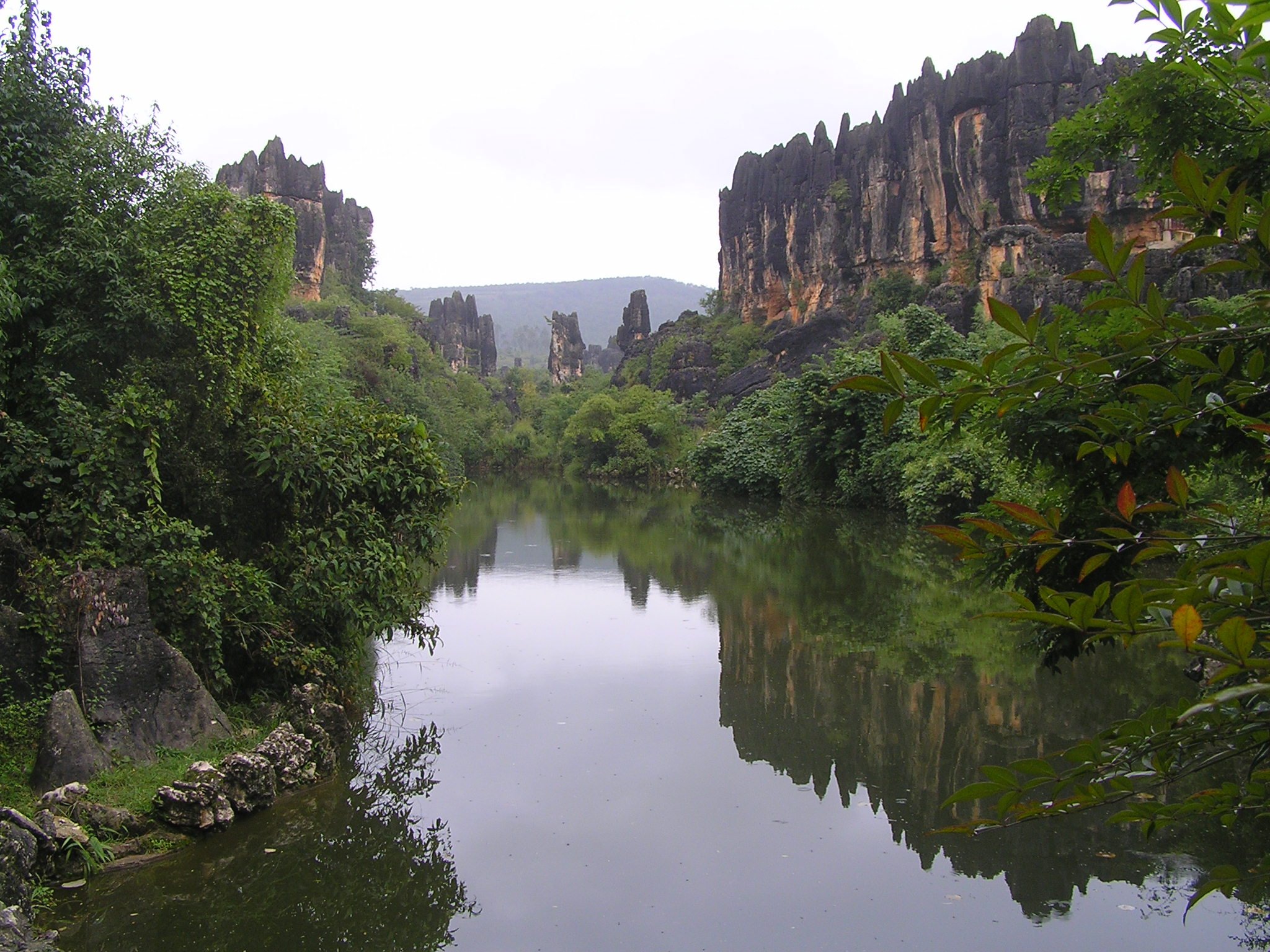
The main ticket is ¥130, plus ¥25 for the electric cart, and Naigu has its own ¥25 ticket. Tickets have been real-name since 2025, and foreign visitors buy theirs in person at a staffed ticket office rather than online, so bring your passport. If your dates are flexible, come for the Torch Festival on the 24th day of the sixth lunar month (late July or August), when the Sani light bonfires across the county.
Jiuxiang (九乡)
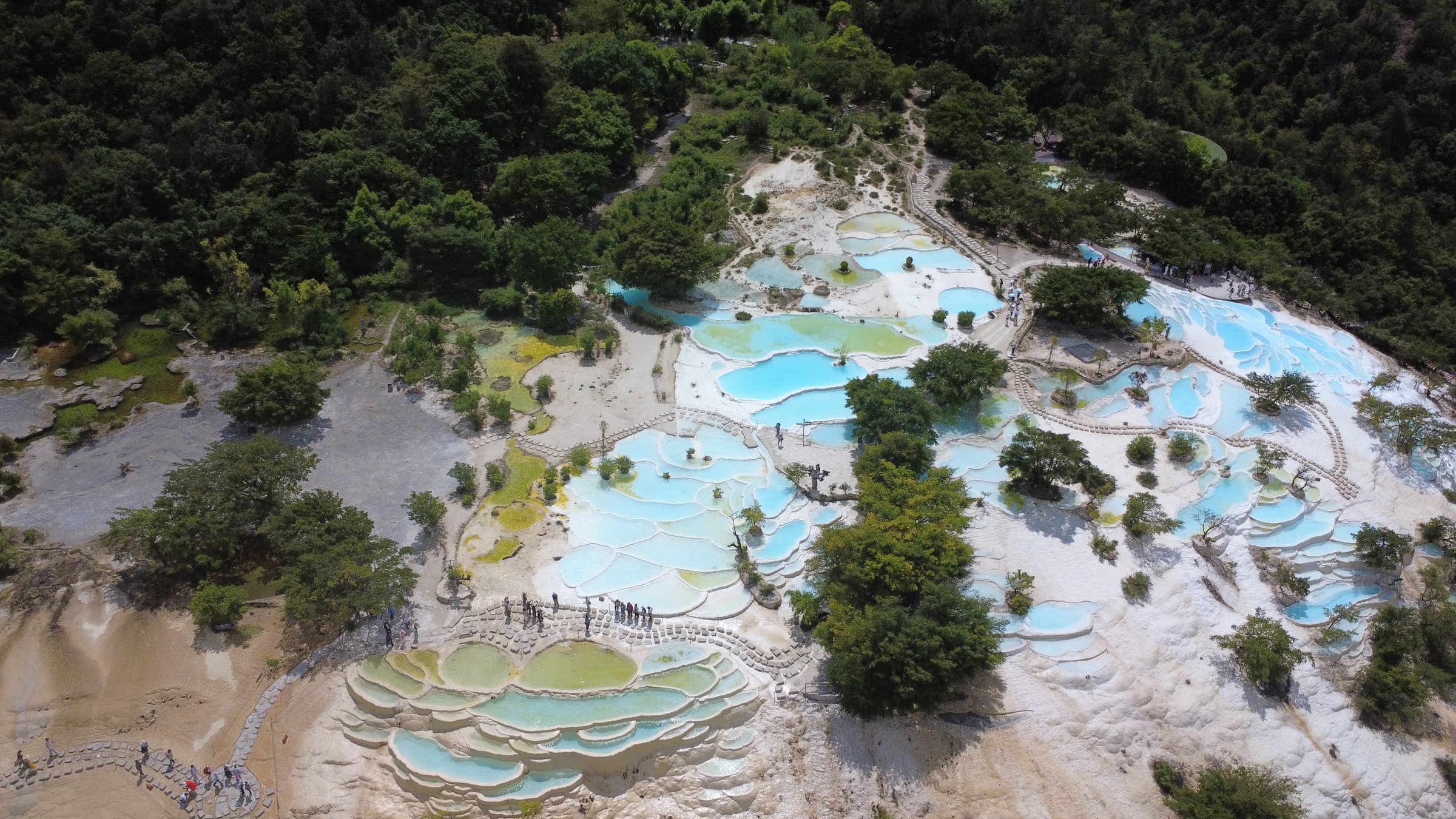
Thirty-five kilometres from the Stone Forest, in Yiliang county, Jiuxiang is a cave system run as a full-scale show. A boat takes you through Yincui Gorge. A walkway follows Jinghun Gorge, where the cave roof is nearly 100 metres overhead, past twin waterfalls more than 30 metres high, to the rimstone pools the Chinese call 神田, the “fields of the gods”. Since 2024 there’s also a 53-metre lift, a little sightseeing train and a cable car. The cave walk takes about two hours.
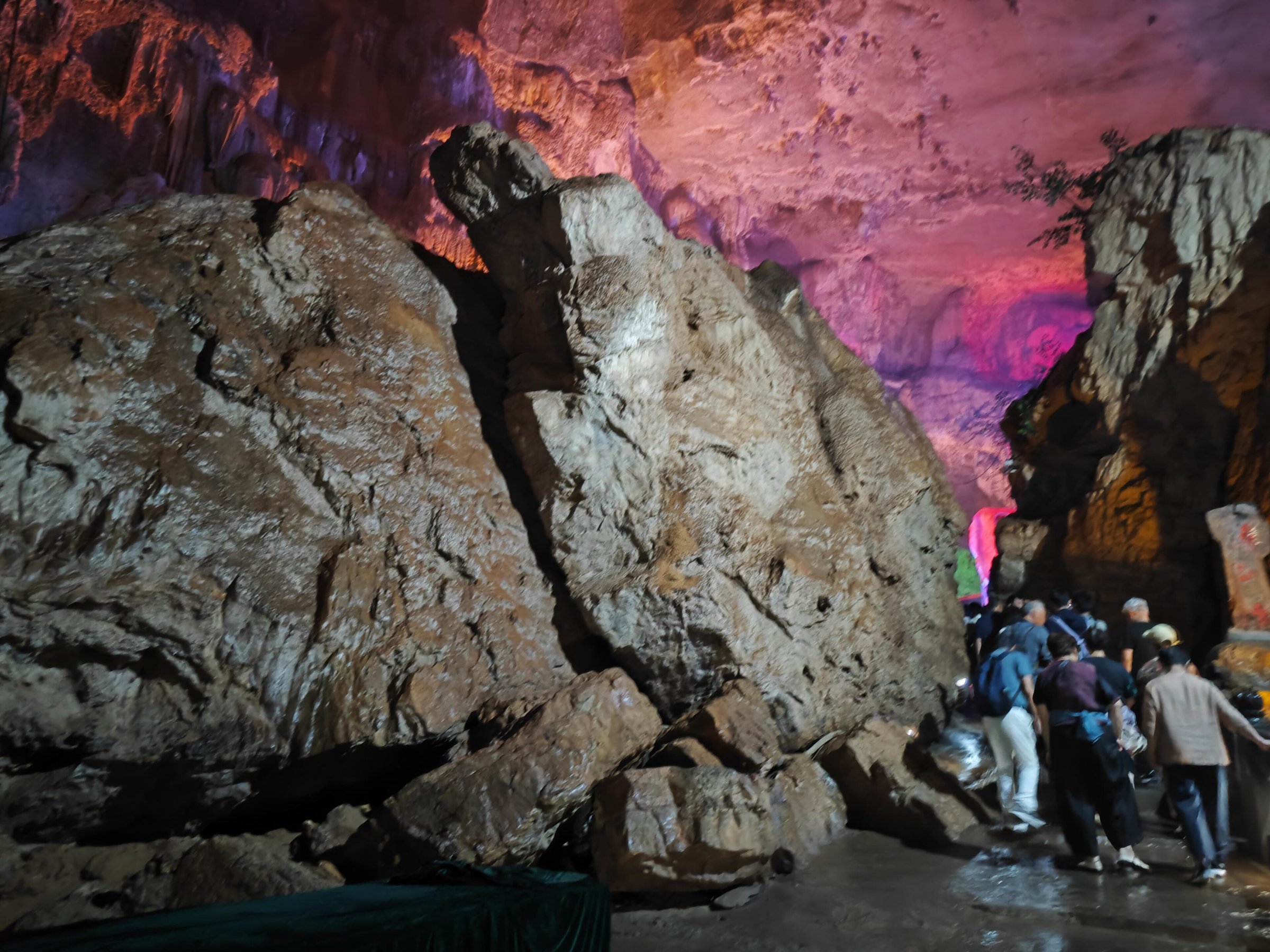
Be warned that the lighting is very much in the Chinese show-cave style: purple, green and pink. A shuttle bus runs between Jiuxiang and the Stone Forest, so it’s the natural second stop of the day. But if you’ve seen good caves elsewhere, spend the afternoon at Naigu instead.
South: Fuxian Lake (抚仙湖)
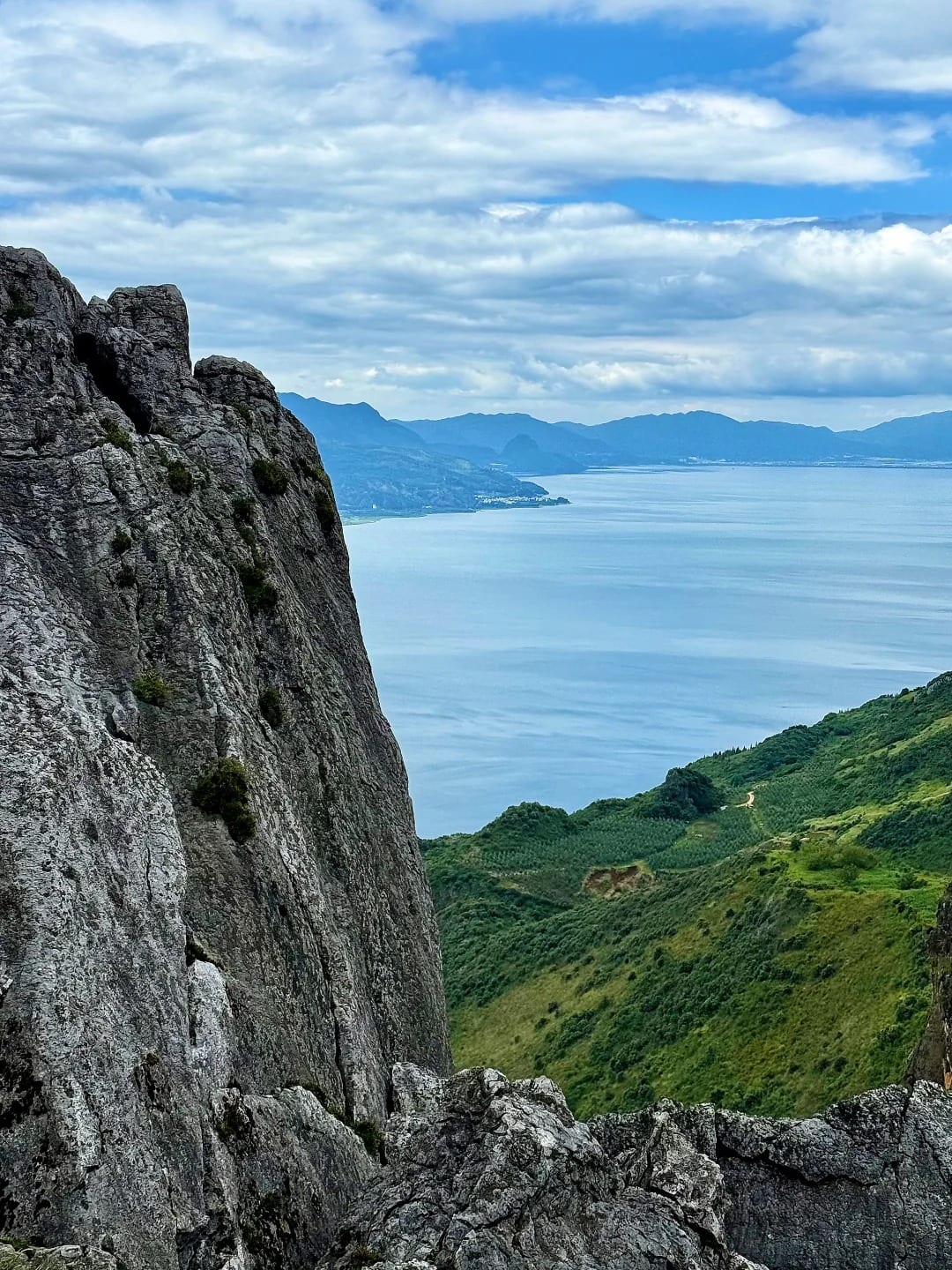
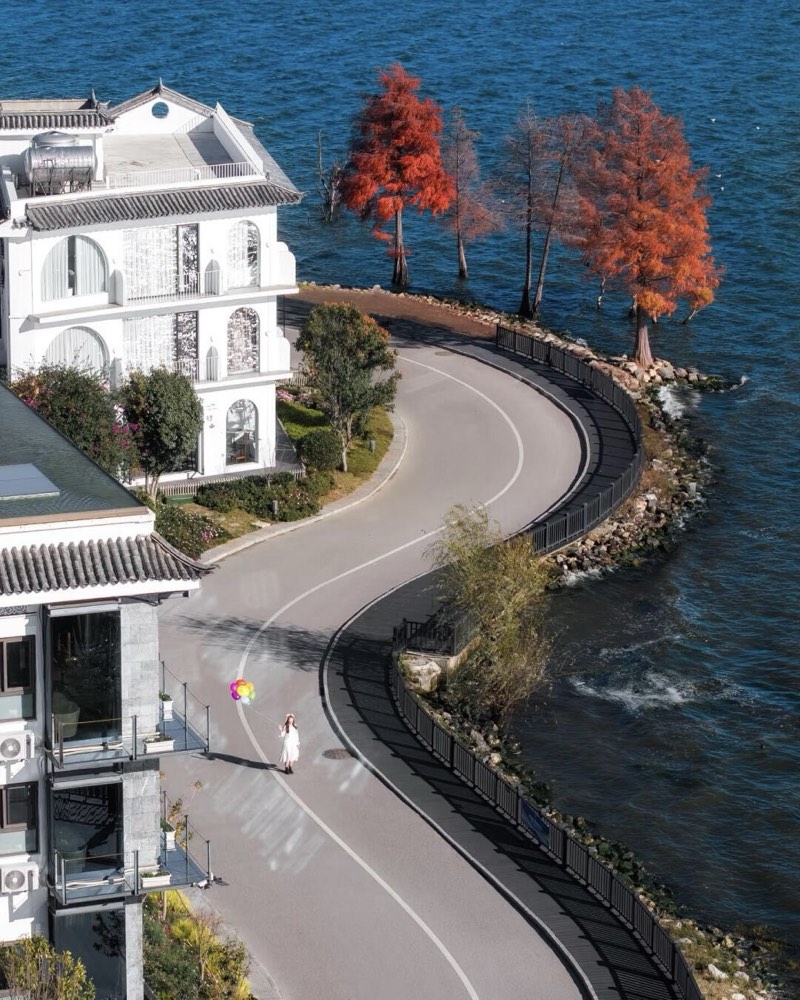
Kunming’s own lake, Dianchi, is big, shallow and better for gulls and sunsets than for the water. For clear water, Kunming drives a couple of hours south to Fuxian. It’s 158.9 metres at its deepest, Yunnan’s deepest lake, and it holds about 13 times as much water as Dianchi. On a still morning you can see five or six metres down, blue water over pale limestone, with the mountains standing straight out of it.
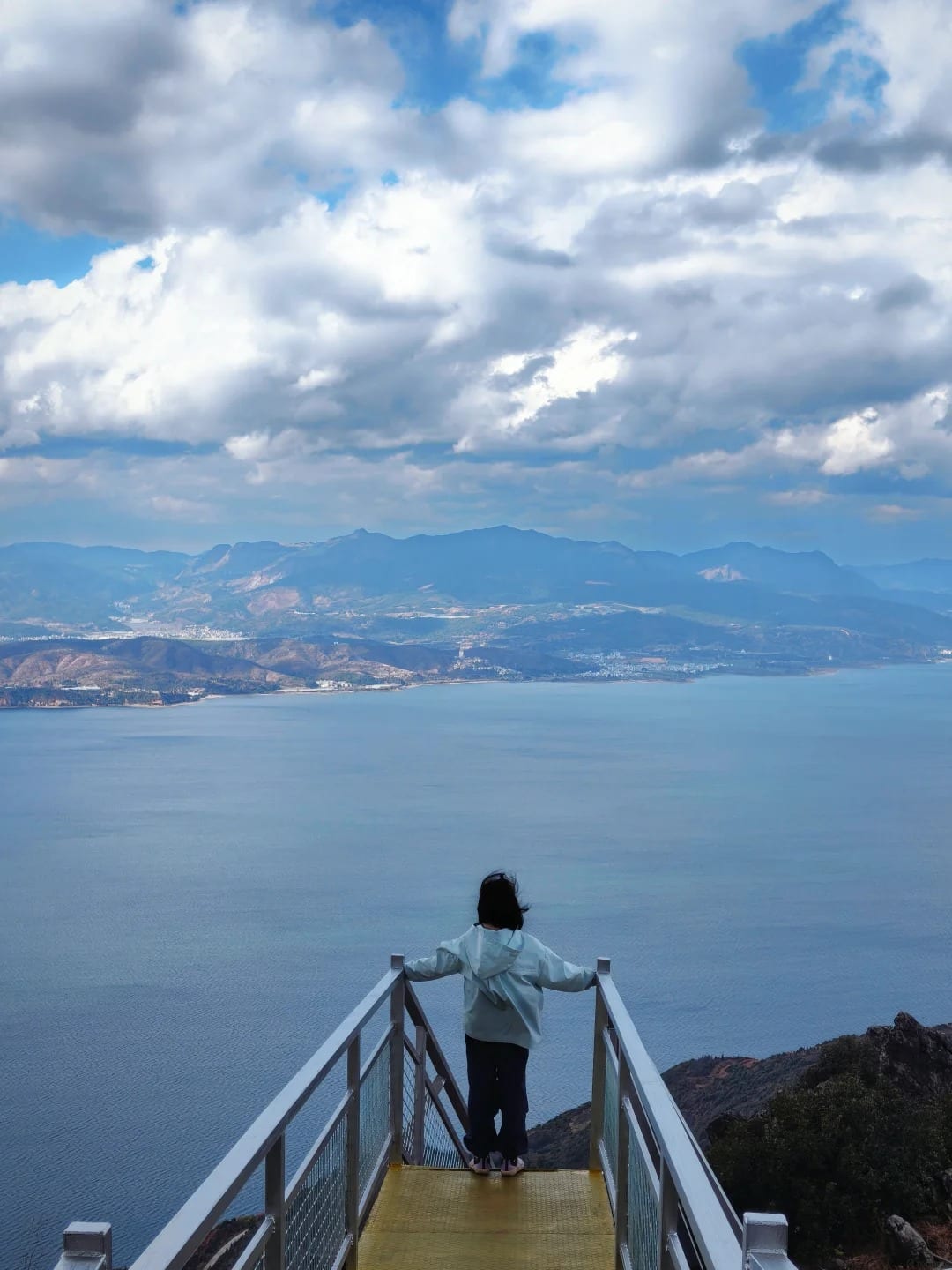
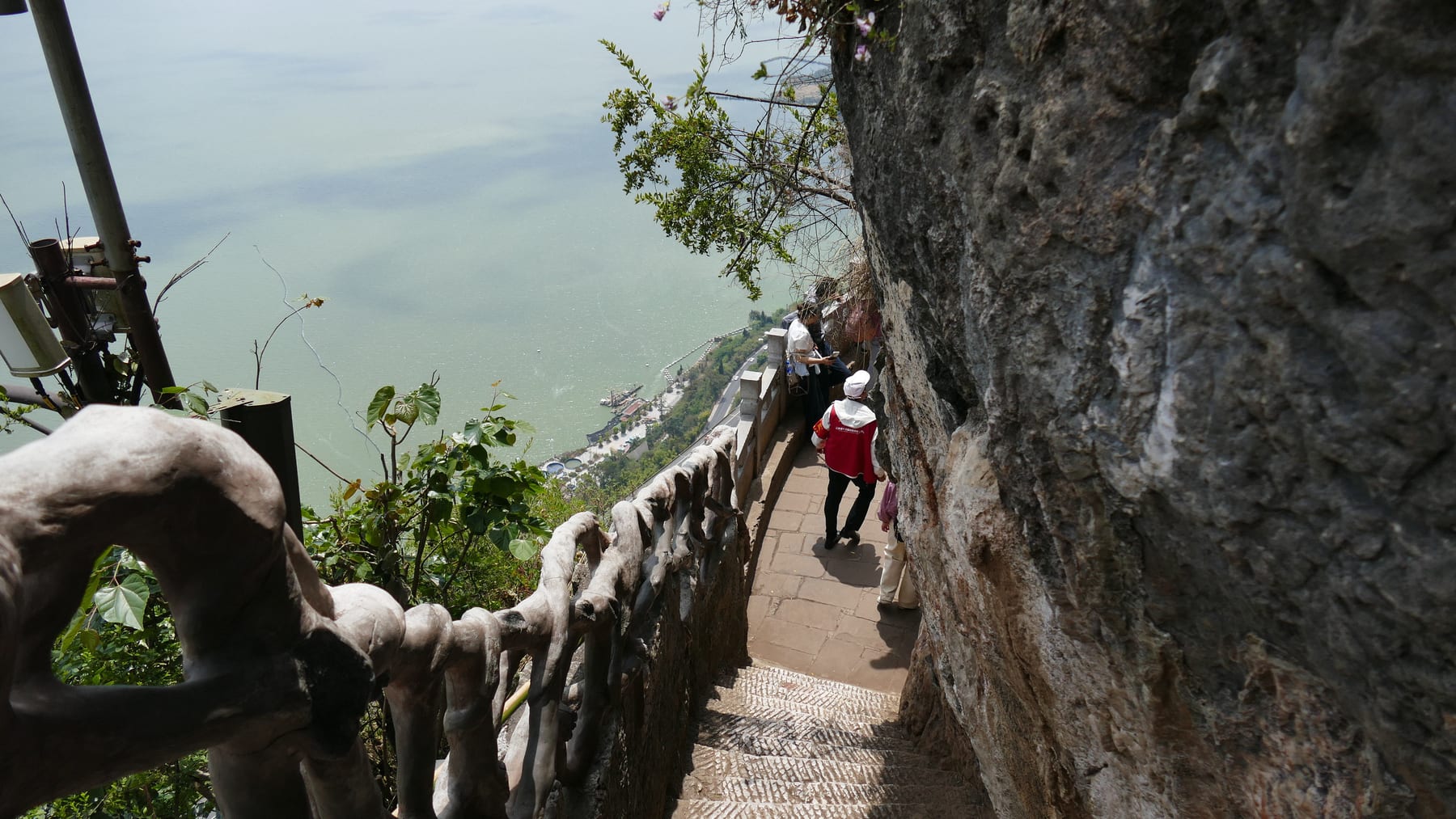
Skip the busy west shore and go round to the east side, to Leidashi (雷打石), where a boardwalk and stone steps run along the cliffs high above the water. Then lunch, which is half the point: stone-pot fish (石锅鱼), cooked at the table in stone pots heated by steam, the broth first, then the fish, then the greens. The lake is closed to fishing from January to June, so most of what goes in the pot is farmed nearby. Agree the price per jin (500 g) before it goes in.
On the way down, stop at the Chengjiang fossil museum (澄江化石地世界自然遗产博物馆), just north of the lake. The fossil beds here, UNESCO-listed in 2012, preserve animals from 518 million years ago, at the dawn of complex life, and the museum holds more than 60,000 fossils.
Fuxian works as a long day out, but it’s better with a night by the water and the cliffs in the morning. That’s how our two-day railway and Fuxian Lake departure does it: the railway walk on day one, the lake on day two. For the other lakes south of Kunming, see our guide to Fuxian and the Yunnan highland lakes.
Markets: where Kunming actually shops
Dounan flower market (斗南花卉市场)
Yunnan grows China’s flowers, and Kunming sells them. Seven of every ten cut flowers sold in China pass through Dounan, in Chenggong on the south-east edge of the city. In 2025 it traded 15.5 billion stems, with exports to 64 countries and regions. It’s three markets in one day. In the daytime the retail halls sell roses by the armful, dried flowers, orchids and succulents. In the afternoon the Kunming International Flower Auction runs Dutch-clock style: buyers at more than 900 seats bid against a falling price. And from about 8:30 in the evening the growers’ trucks arrive and the wholesale floor fills, running until one or two in the morning.

Go after dinner, when the wholesale floor is at its busiest. Take Metro Line 1 to Dounan station, or have your driver drop you there. Our edible-flower journey spends an evening here.
A village market day (街子天)
Out in the countryside, Yunnan still shops the old way, on the 街子天, the market day. Some towns still go by their old market-day names, such as Jijie (Chicken Street), Goujie (Dog Street) and Majie (Horse Street). The animals come from the twelve-day earthly-branch calendar, not from what was sold. Some markets still rotate around the villages on a fixed cycle; others have settled on a weekday. Majie, on Kunming’s western side, now holds its market on Sundays with more than 3,000 stalls.
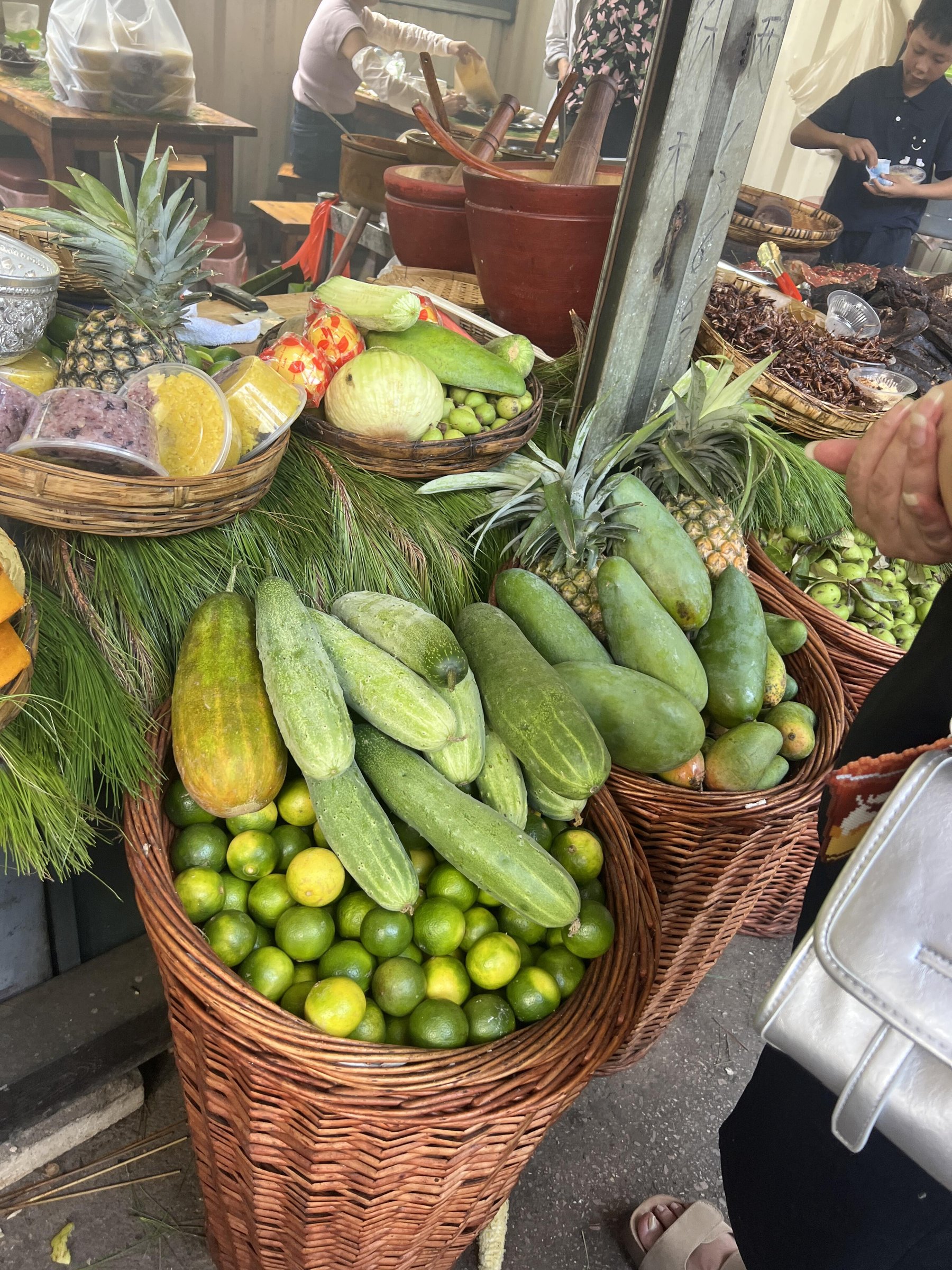
The ones we like best are in the Yi villages in the hills around the city. The produce is laid out on beds of pine needles, smoke rises from the corn and meat grills, and in the rainy season the wild mushrooms come down from the hills. Which market to go to depends on the day you’re free, and that’s exactly what a local guide is for. Pair a morning market with our day eating all of Yunnan in the city.
North: Dongchuan Red Land (东川红土地)
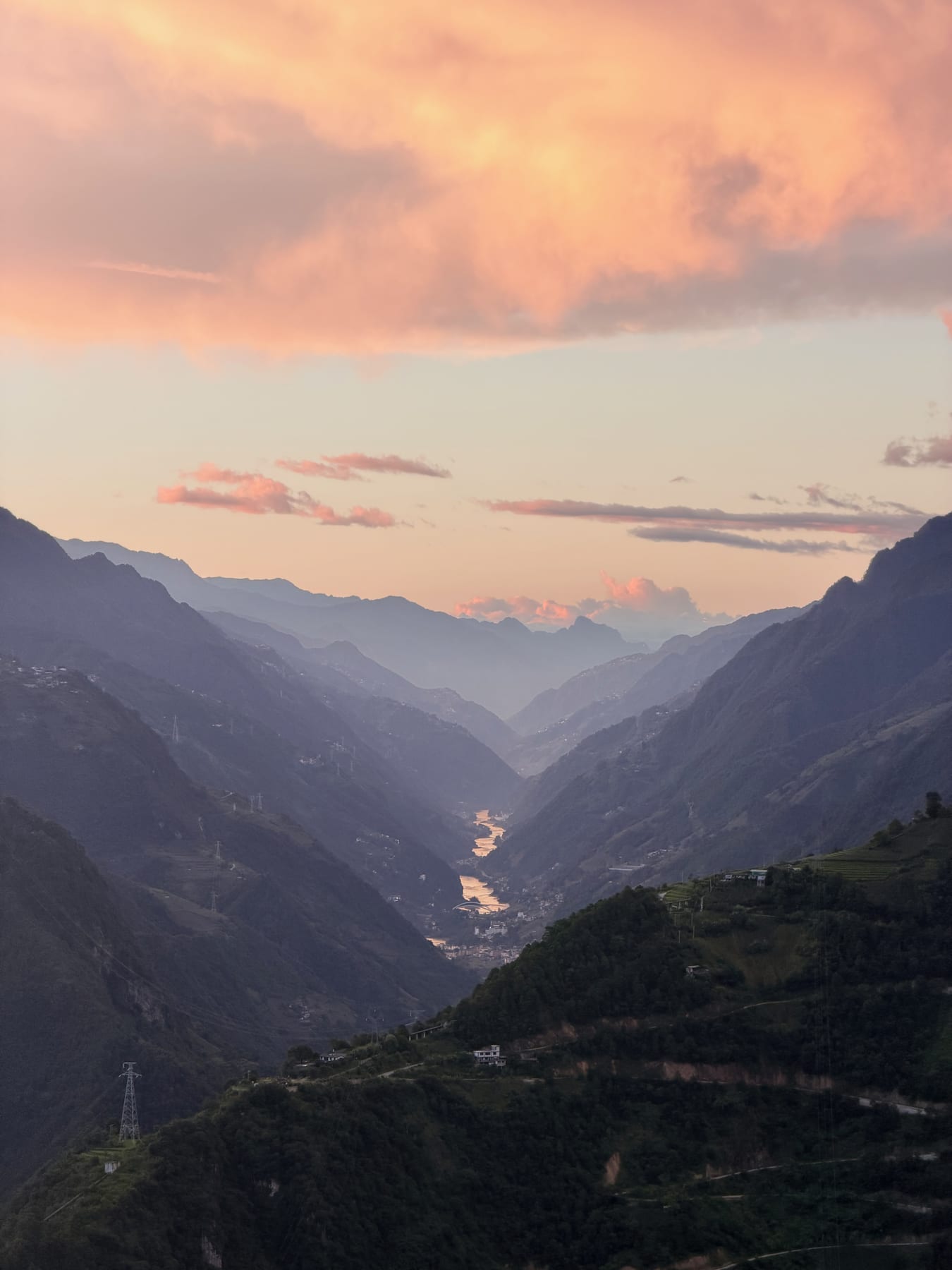
North of Kunming, in the hills of Dongchuan, the soil is iron-rich and brick-red. The farmers plant it in strips of potato, wheat, buckwheat and rapeseed, so the hills become a patchwork of red, green, white and gold. It’s working farmland, not a park. There’s no ticket for the area, though some viewpoints charge. The fields lie between about 2,000 and 2,800 metres, around Huashitou village in Hongtudi town. The colour is best from late September to November. The viewpoints to know are Damakan (打马坎) for sunrise and Jinxiuyuan (锦绣园) for sunset.
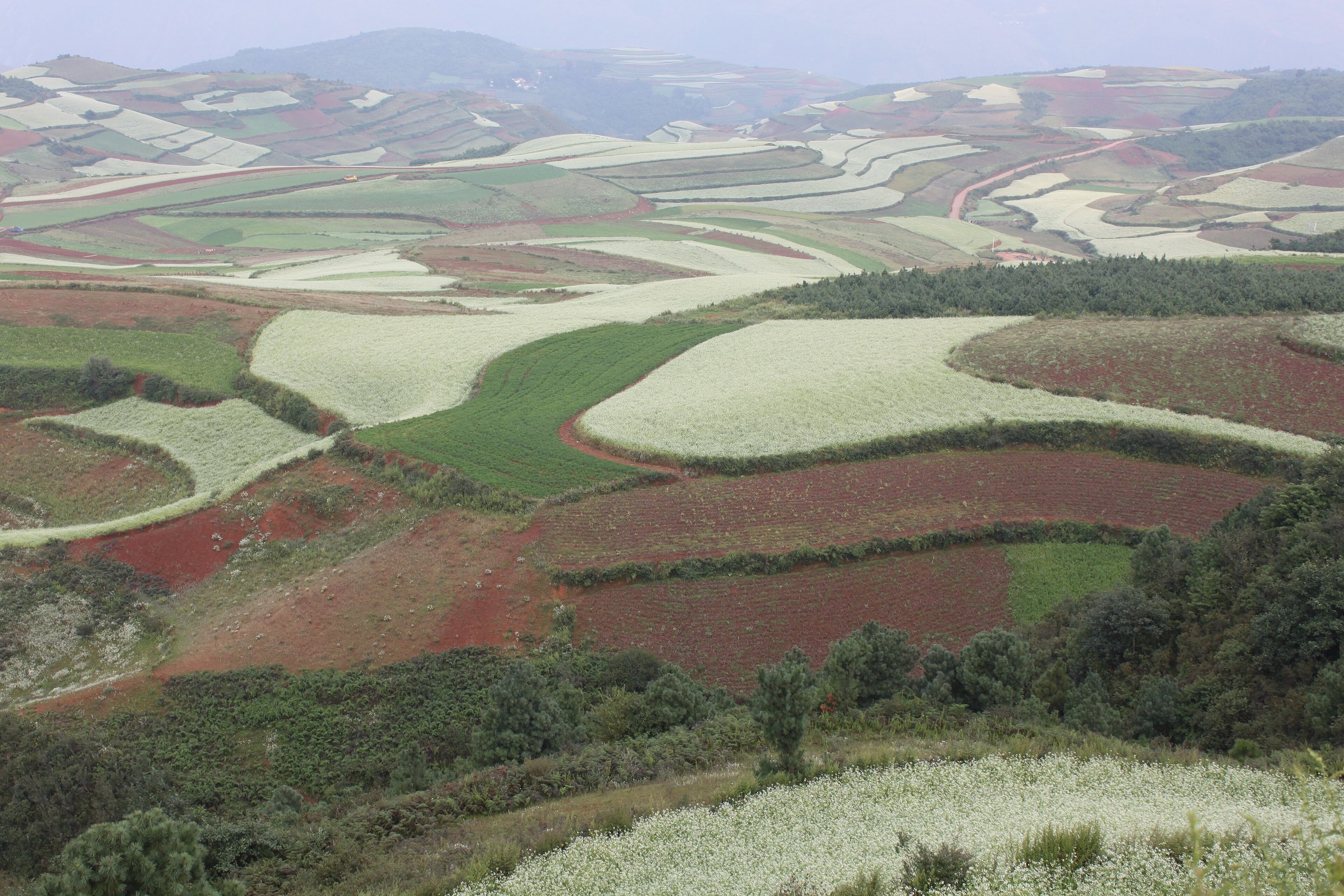
Be honest with yourself about the distance. It’s a long drive north, and the good light is at either end of the day. So treat it as an overnight: drive up in the afternoon for the sunset, stay for the sunrise, and be back in Kunming by the next afternoon.
Before you go
- A car and a driver. Apart from the railway and Dounan, every one of these is far easier by road than by public transport. A guide who knows the back roads turns two sights into one easy day. Here’s what a private guide actually does.
- Bring your passport. Scenic areas in China sell real-name tickets. At the Stone Forest, foreign visitors buy theirs in person at a staffed ticket office.
- Weekends and holidays. Kunming goes out of town at weekends too. Do the Stone Forest on a weekday, and avoid the first week of May and of October altogether.
- Altitude. Kunming is at 1,890 metres, and only Dongchuan climbs much higher. Most people notice nothing more than a little breathlessness on stairs.
- Apps and entry. Check China’s visa-free entry rules and set up your China travel apps before you fly.
So which day trip should you take?
- One extra day, and you like to walk: the railway, Kebao to Yiliang, then the duck. Nothing else near Kunming feels like it.
- One extra day, first time in China: the Stone Forest, early, with Naigu in the afternoon.
- Two extra days: the railway, a night on Fuxian Lake, and the Leidashi cliffs in the morning.
- Food lovers: a village market in the morning, the city’s food in the afternoon, Dounan after dark.
- Photographers: Dongchuan Red Land, with a night up there for the light.
The railway and Fuxian Lake are our two-day small-group departure, for two to eight guests on any day you choose. Or tell us your dates and we’ll build the day trips into a private Yunnan trip, before you head on to Dali, Lijiang or the Yuanyang rice terraces. For the bigger picture, start with our Yunnan travel guide.
Photos via Wikimedia Commons: the Stone Forest by CEphoto, Uwe Aranas, CC BY-SA 3.0; Naigu Stone Forest by ogwen, CC BY-SA 3.0; Jiuxiang by Zhangzhugang, CC BY-SA 4.0; Dongchuan Red Land by Dgbouma, CC BY 3.0.