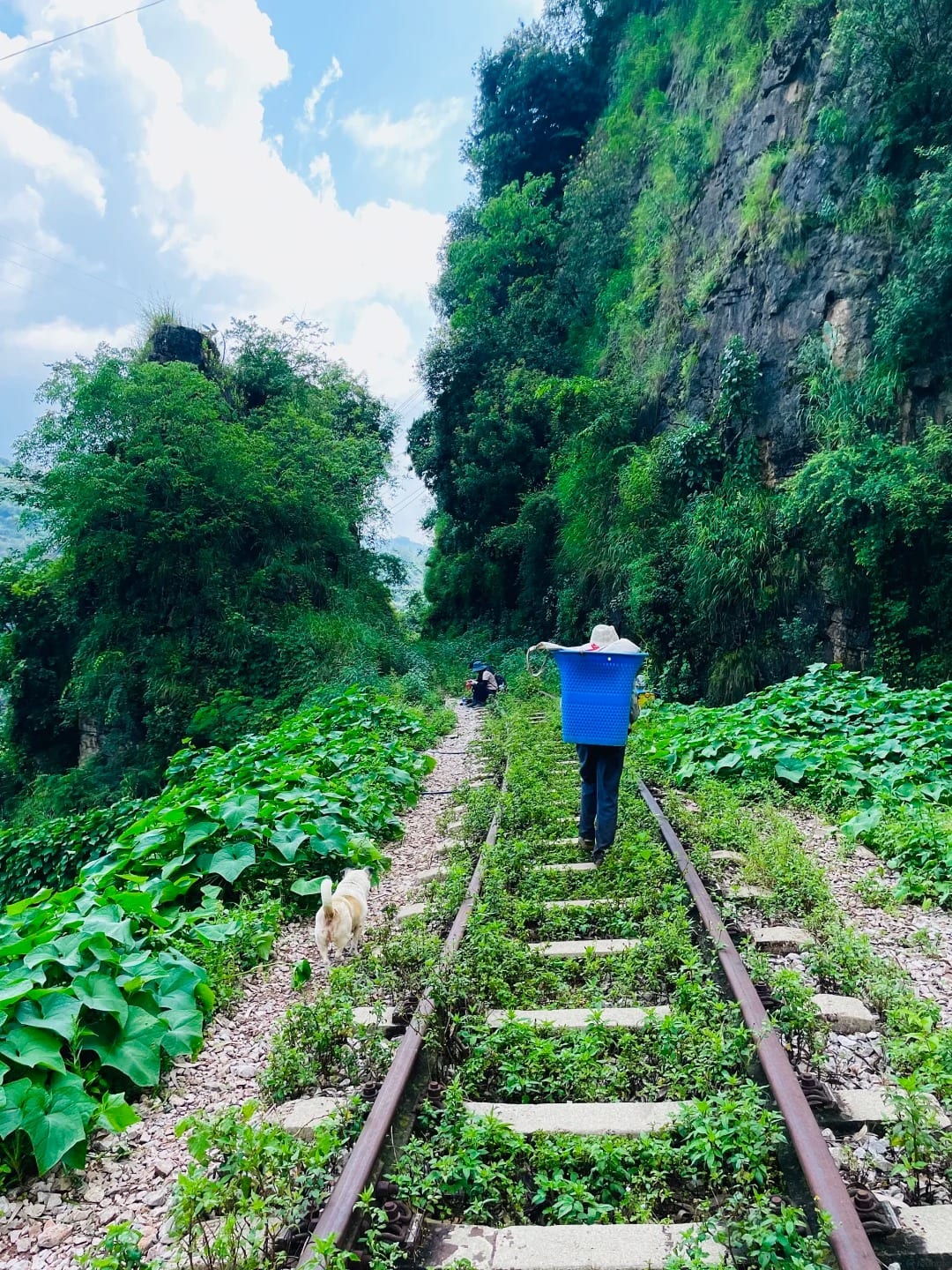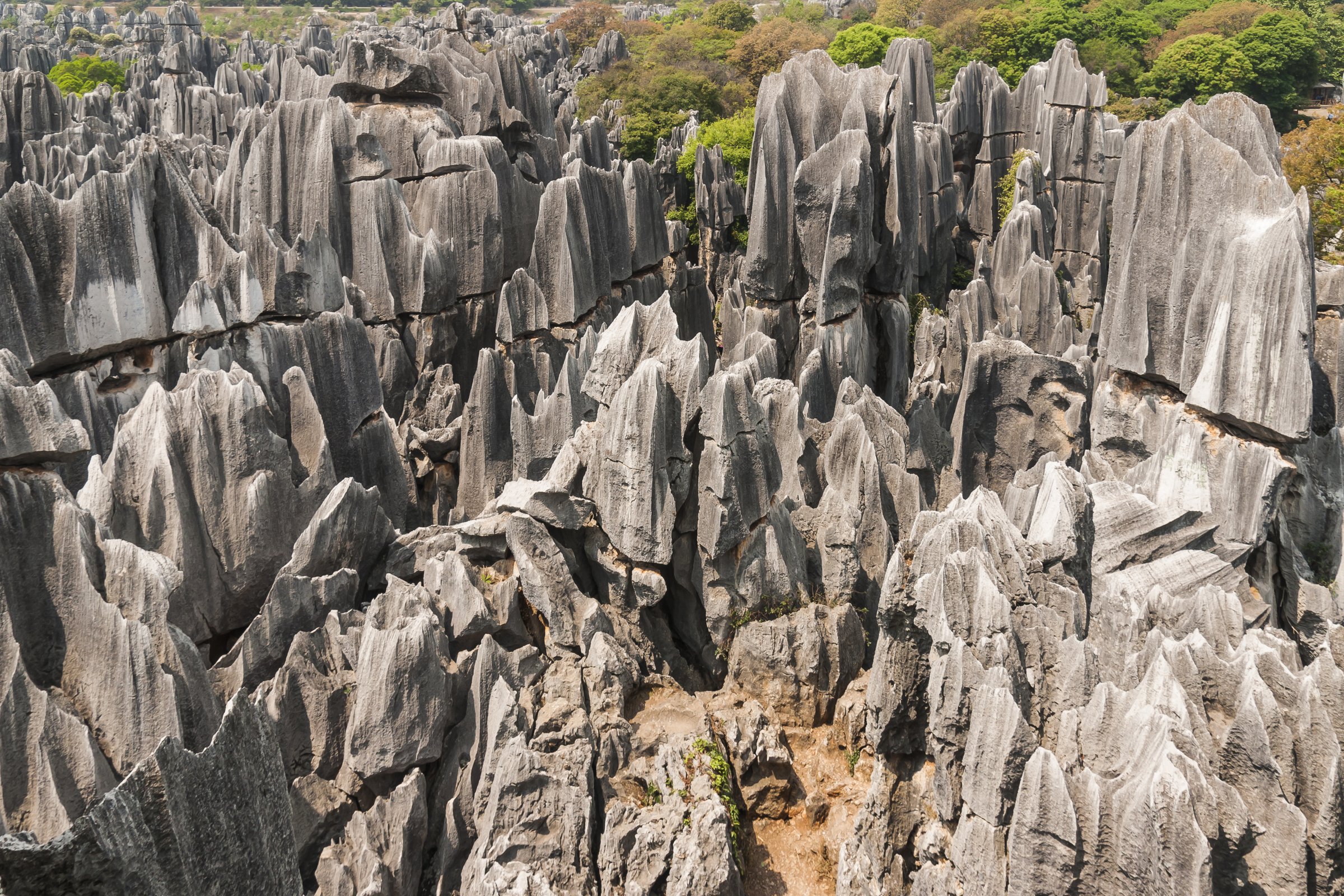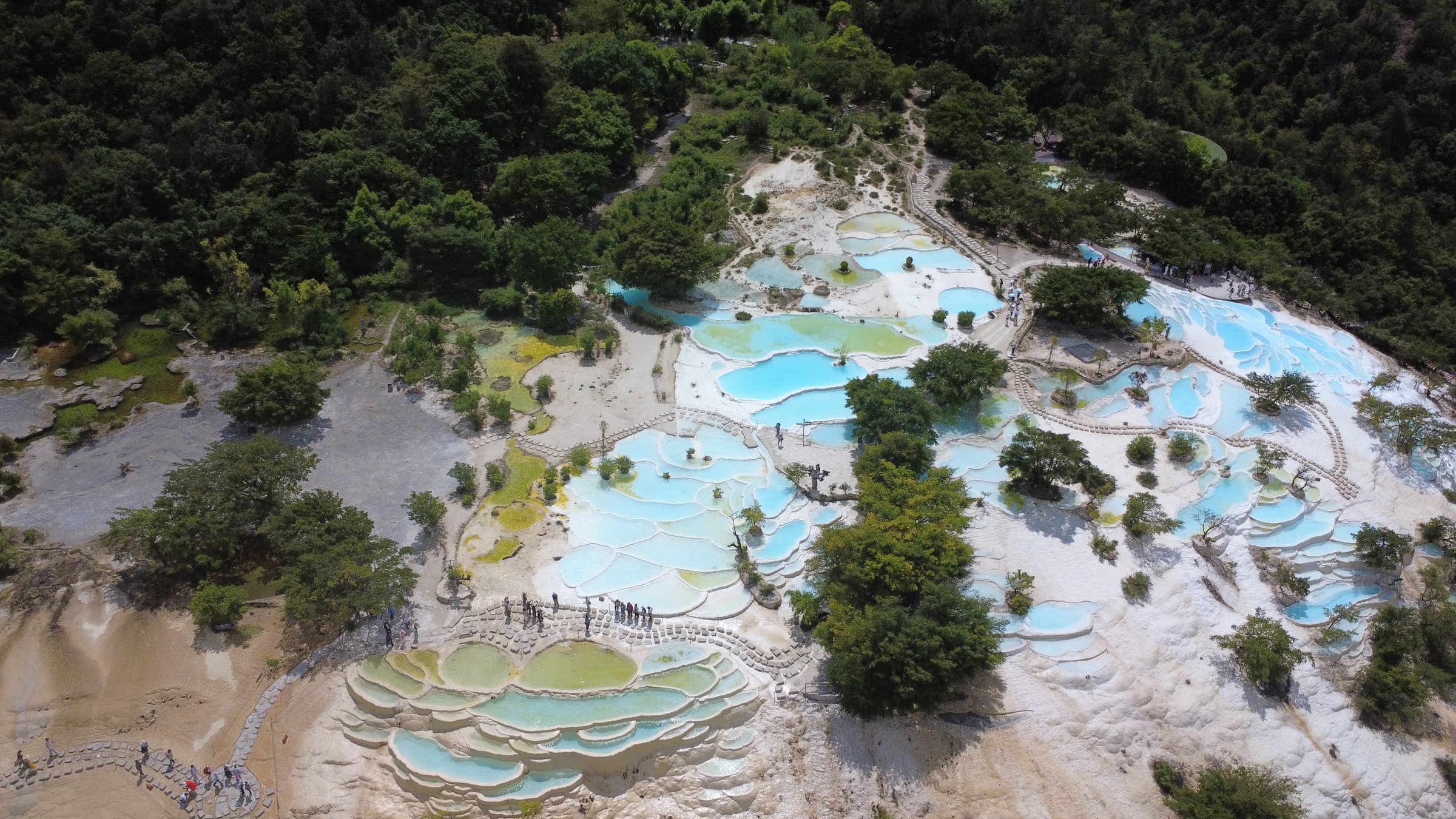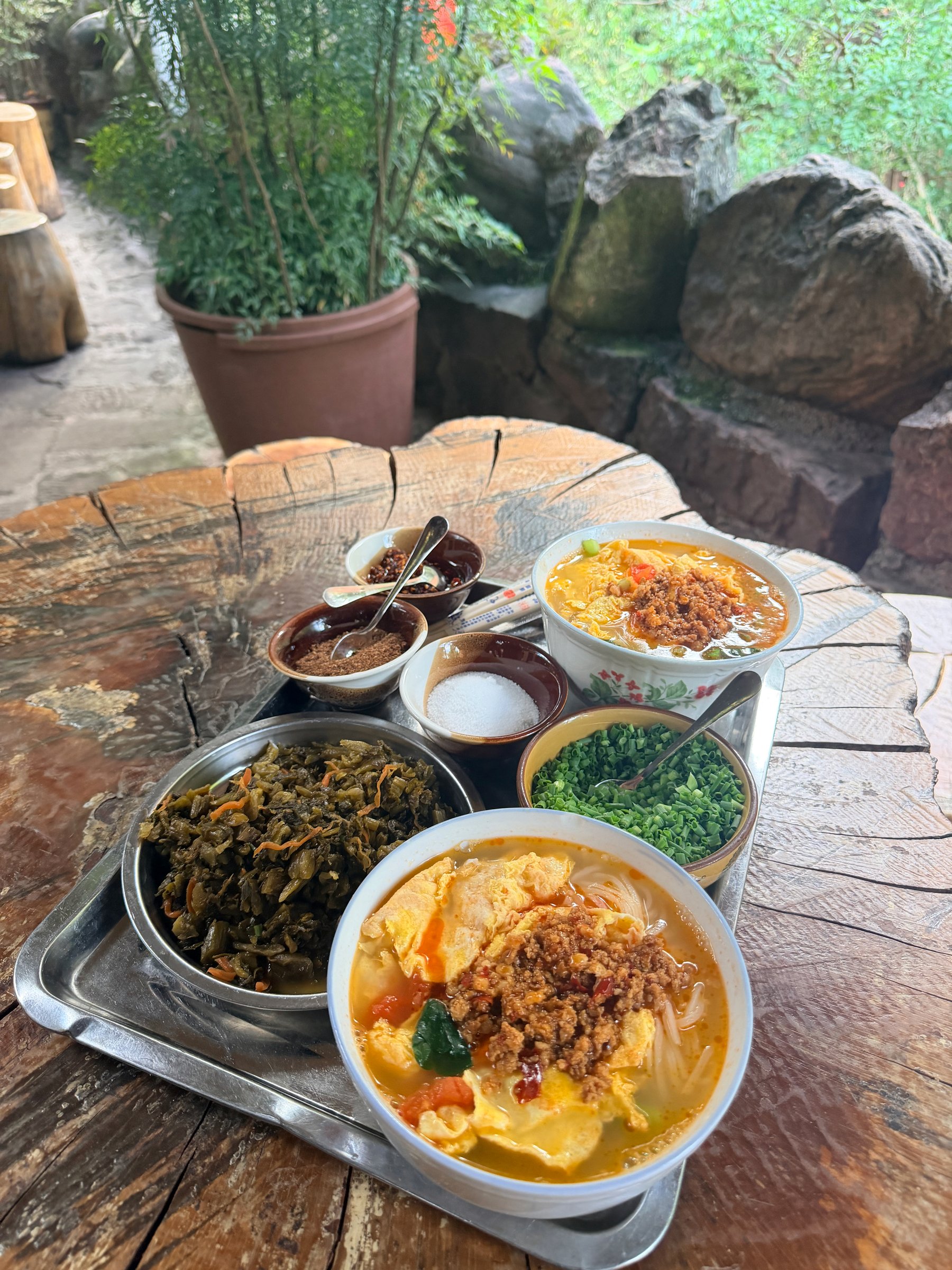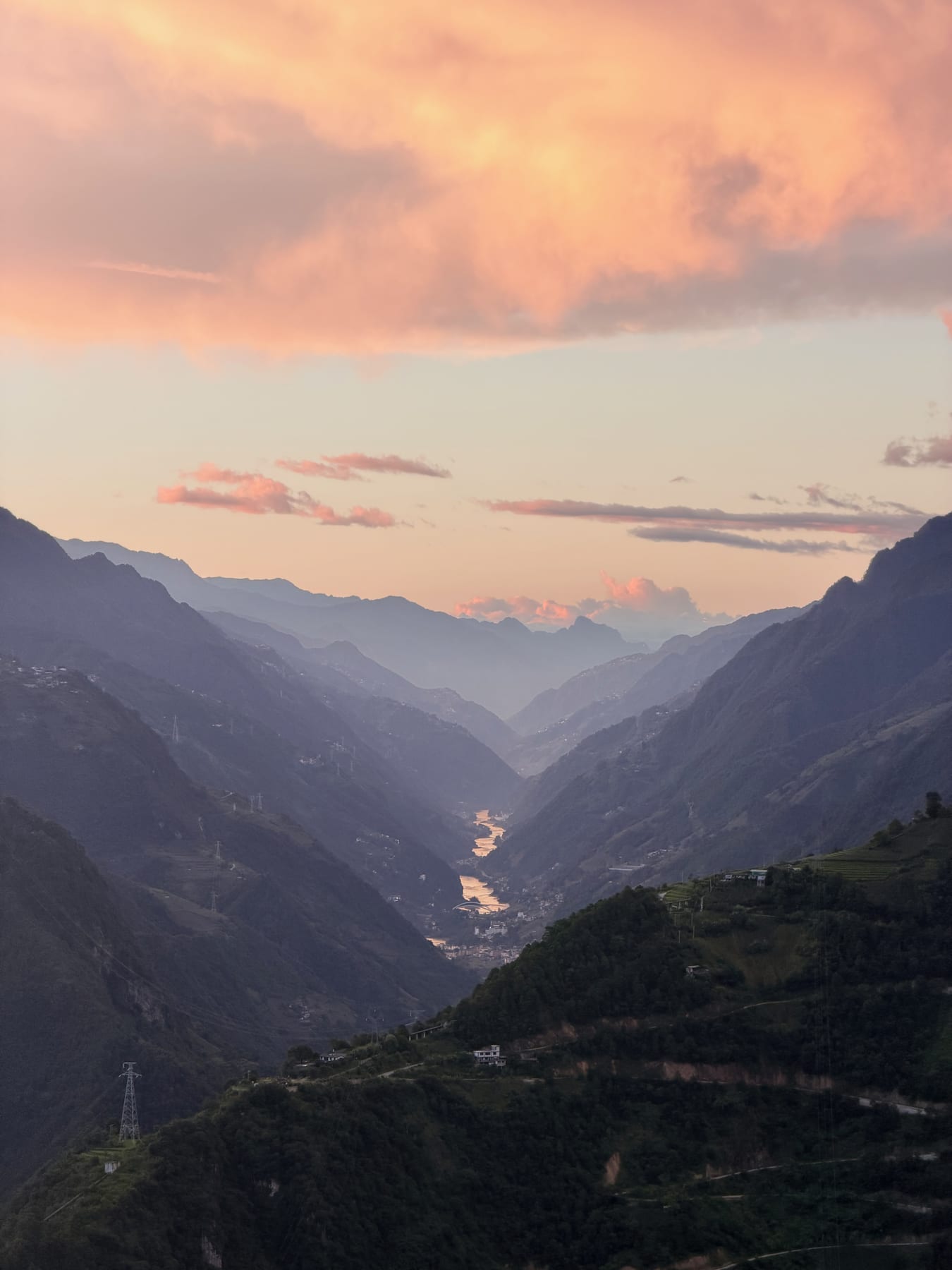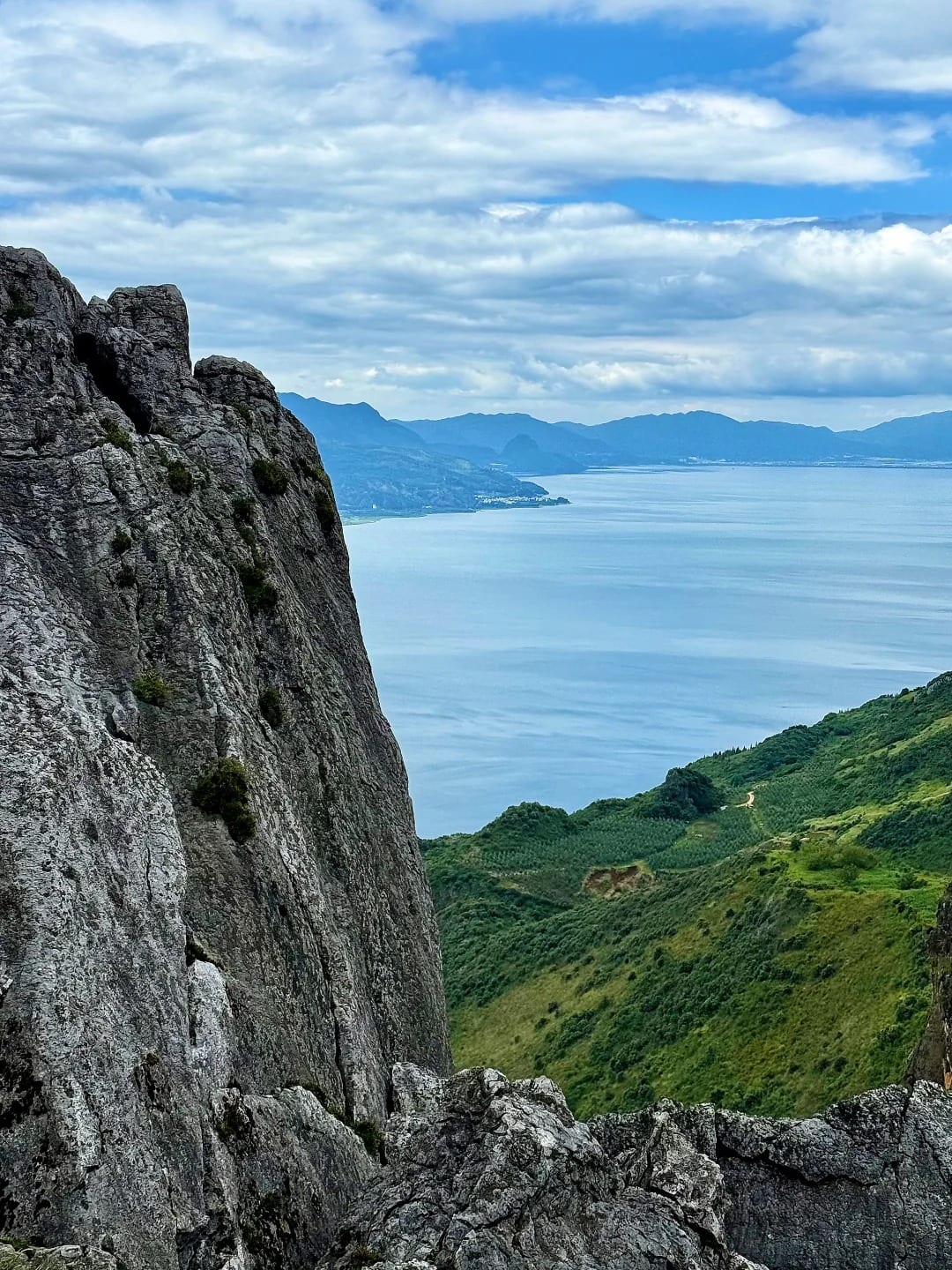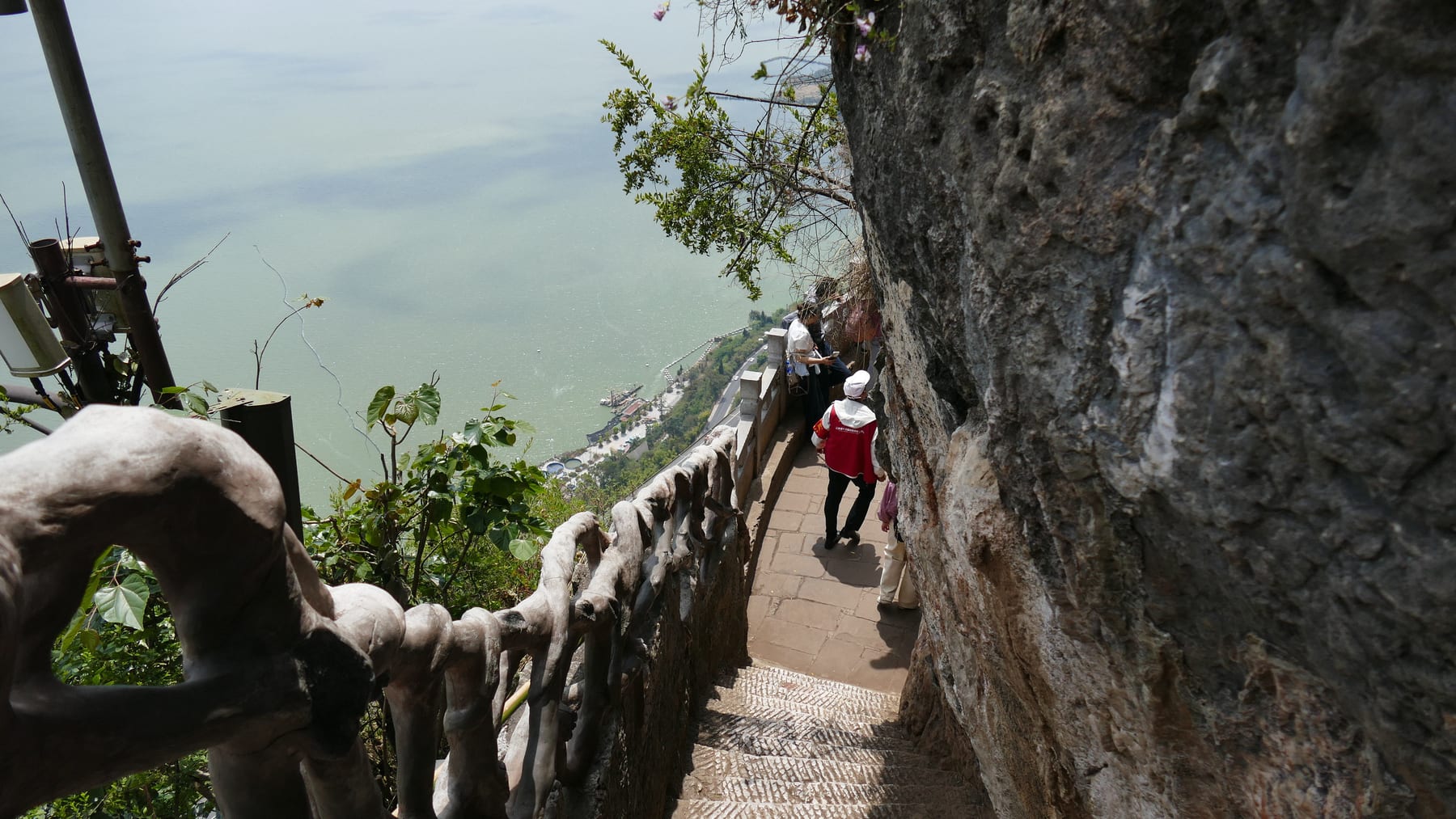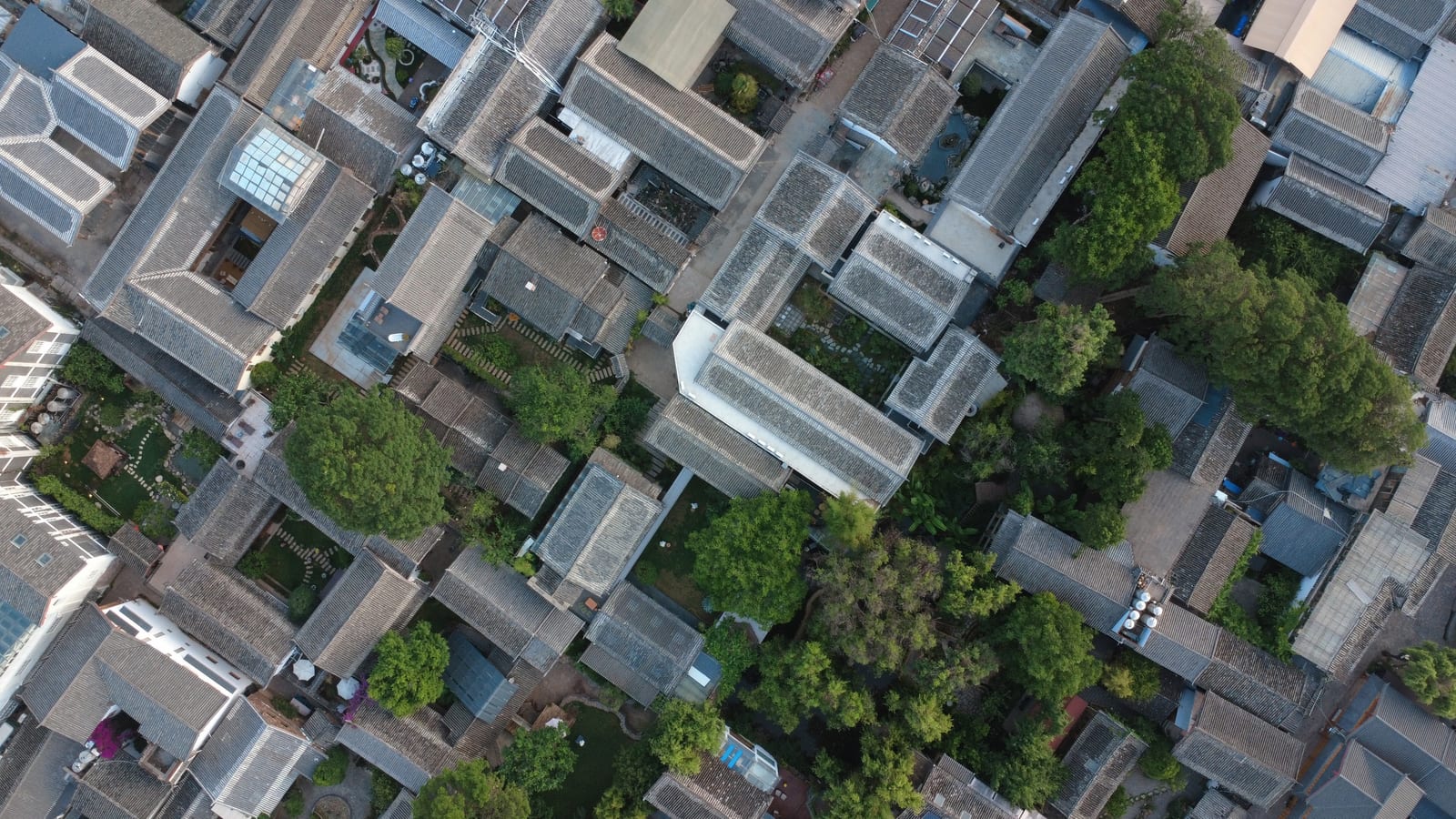
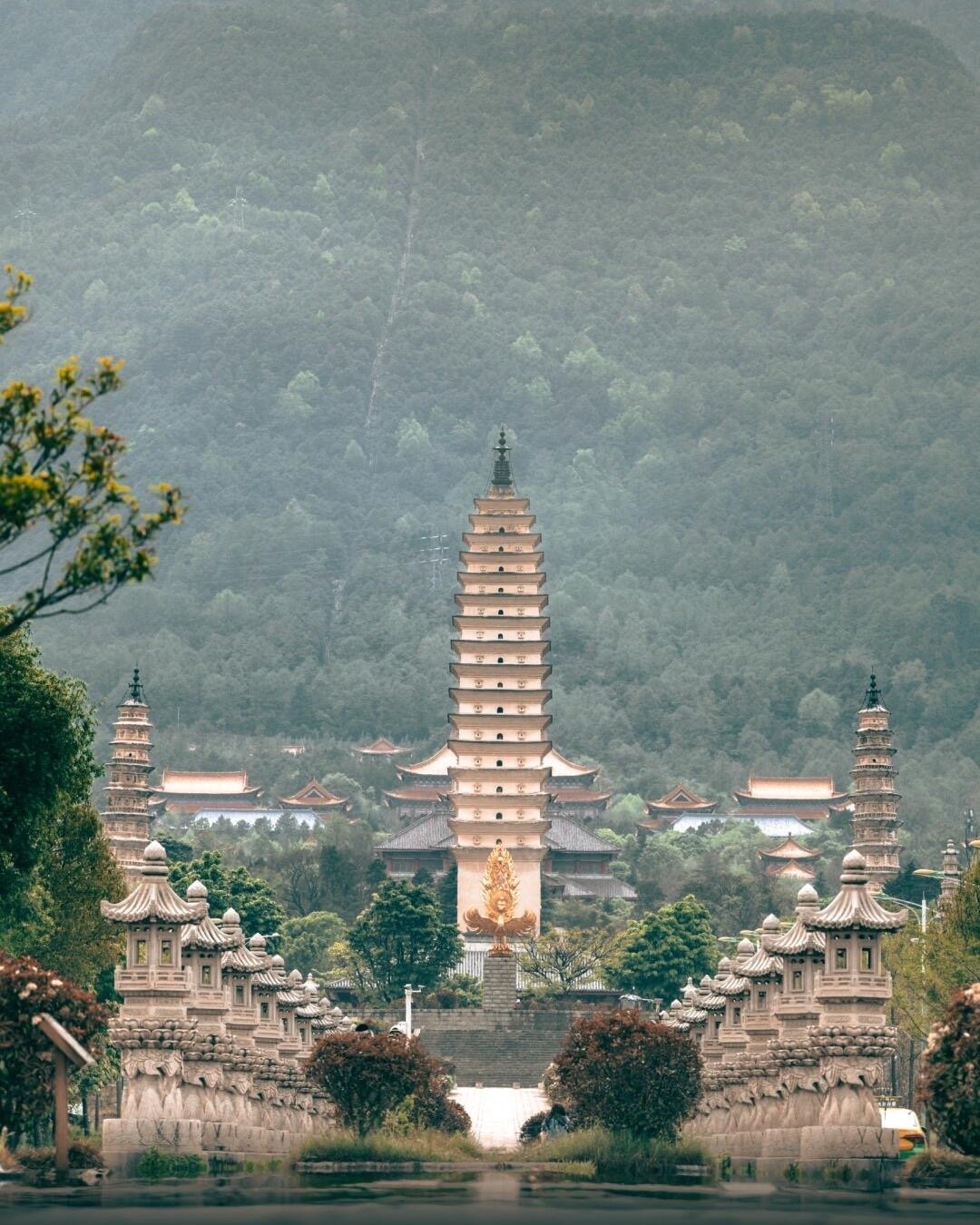
Say “Dali” and most people mean one place: Dali Old Town (大理古城), the walled grid under Cangshan with Wuhua Tower in the middle and the Three Pagodas just to the north. It’s lovely at eight in the morning. It’s also had more than 22 million visitors in the first seven months of 2026 alone.
But Dali is a whole prefecture, a city and eleven counties of farming valleys, and the old towns in them are older, quieter and far more interesting than the one on the postcards. Some sit on the shore of Erhai Lake. The best of the rest are one to two hours out: a Tea Horse Road market town, a salt village that turns up in a Tang-era text, a valley a Ming traveller compared to paradise, and the street a famous folk song came from. Here are Dali’s ancient towns on one map, what each one is honestly like, and how we’d put them together.
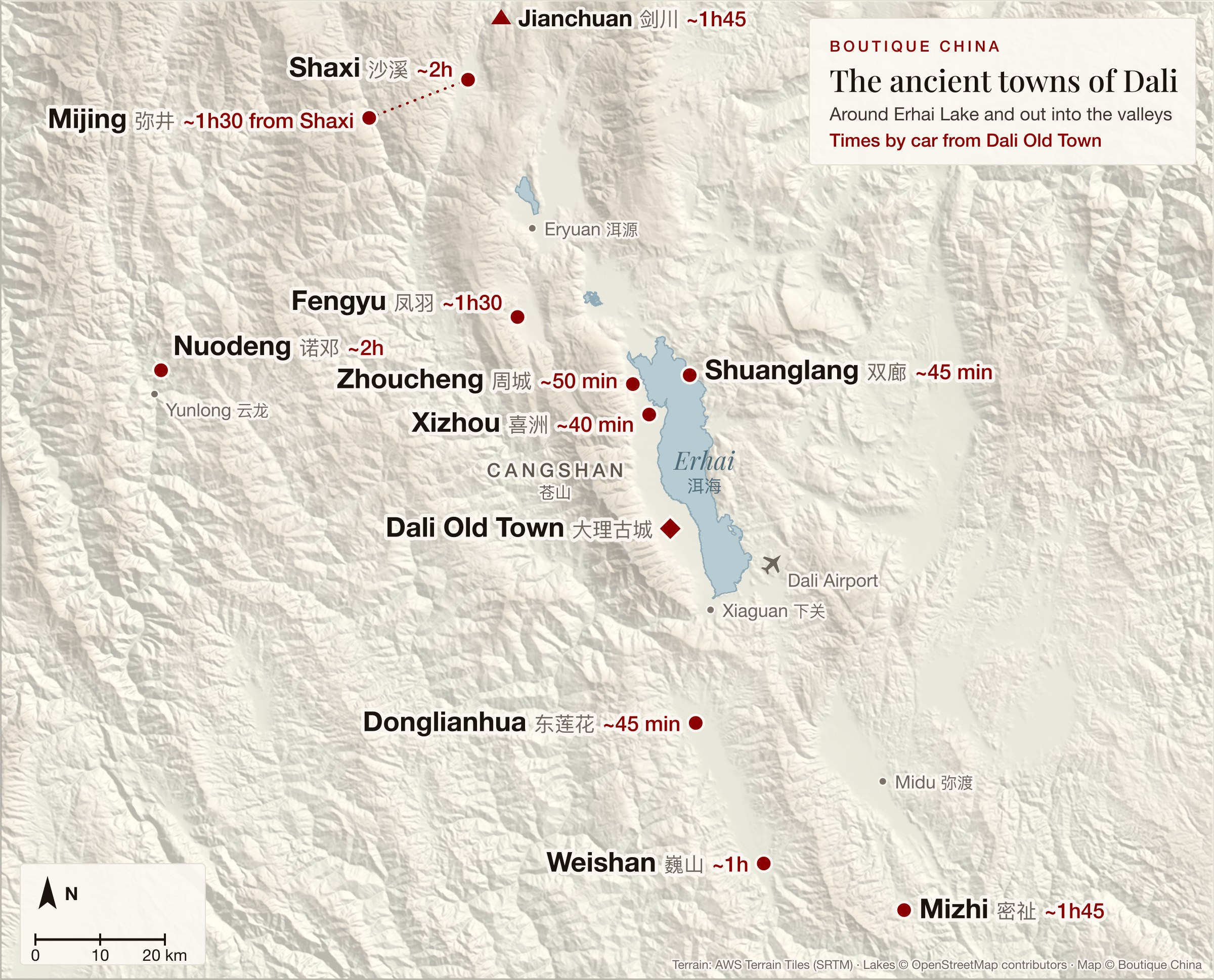
When to go: October to May is the dry season: clear skies, Cangshan sharp behind the lake, cold nights. March to May and October to November are the sweet spots. June to September brings the rain, but also green rice and the wild-mushroom season. None of these towns is high: most sit at around 2,000 metres, comfortable for almost everyone. Avoid Golden Week (1–7 October) and Chinese New Year, when the lake towns fill up. Every time below is by car from Dali Old Town, door to door, unless it says otherwise.
| Town | Where | By car | Best for |
|---|---|---|---|
| Xizhou 喜洲 | West shore of Erhai | ~40 min | Bai merchant mansions, the morning market |
| Zhoucheng 周城 | Next to Xizhou | ~50 min | Indigo tie-dye |
| Shuanglang 双廊 | East shore of Erhai | ~45 min | A night on the water |
| Fengyu 凤羽 | Eryuan, north | ~1h30 | Fields, temples, no crowds |
| Jianchuan 剑川 | North, on the Shaxi road | ~1h45 | Woodcarving |
| Shaxi 沙溪 | Jianchuan county | ~2h | The Tea Horse Road, 2–3 nights |
| Mijing 弥井 | Over the mountain west of Shaxi | ~1h30 from Shaxi | A salt village, a covered bridge |
| Nuodeng 诺邓 | Yunlong, far west | ~2h | Salt, ham, an overnight |
| Weishan 巍山 | South | ~1h | Food, where Nanzhao began |
| Mizhi 密祉 | Midu, south-east | ~1h45 | The folk-song street |
Around the lake
Dali Old Town — go early, then leave (大理古城)
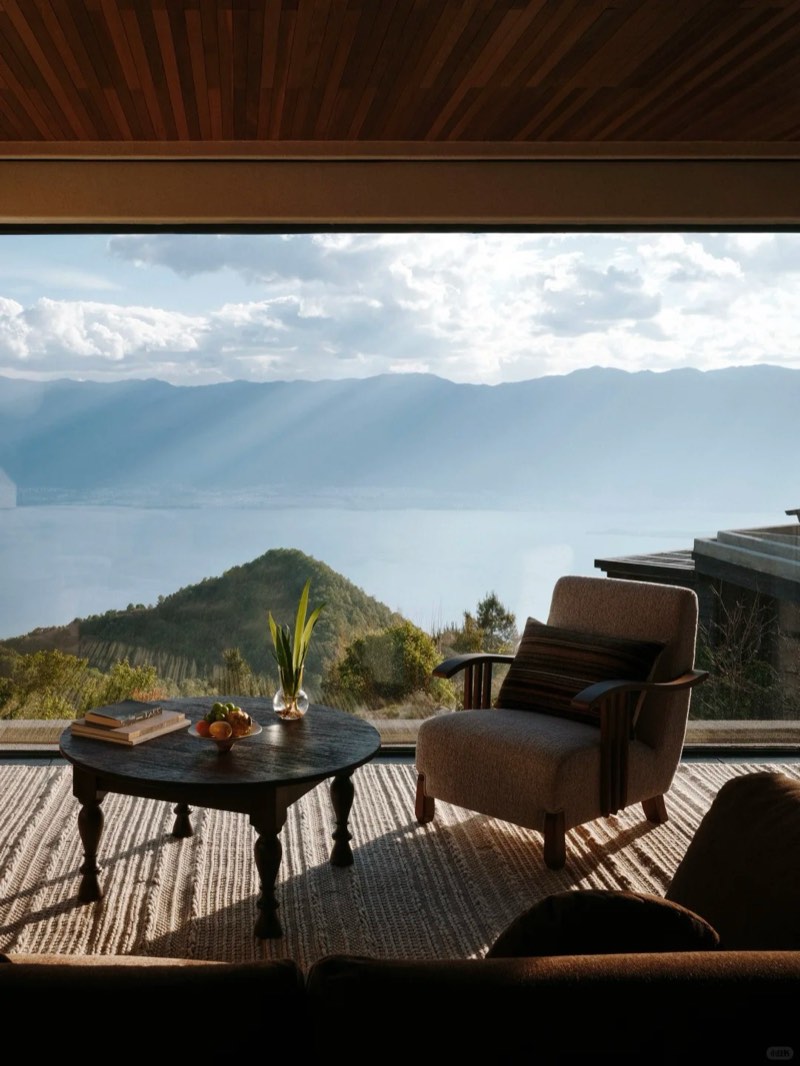
It’s a genuine old city, one of China’s first 24 national historic cities, named in 1982. But know what you’re looking at. The Ming built the walled town after conquering Yunnan in the 1380s, and only about 300 metres of the original wall survives; the gates were rebuilt between 1984 and 2002. Walk it before nine, see the Three Pagodas of Chongsheng Temple in the morning light, then head up the lake. If you do want to sleep inside the walls, Porcelain Inn is a small, personal base. For space, a spa and the whole lake in view, The Dali EDITION sits up on the Cangshan slopes.
Xizhou — the merchant town (喜洲)
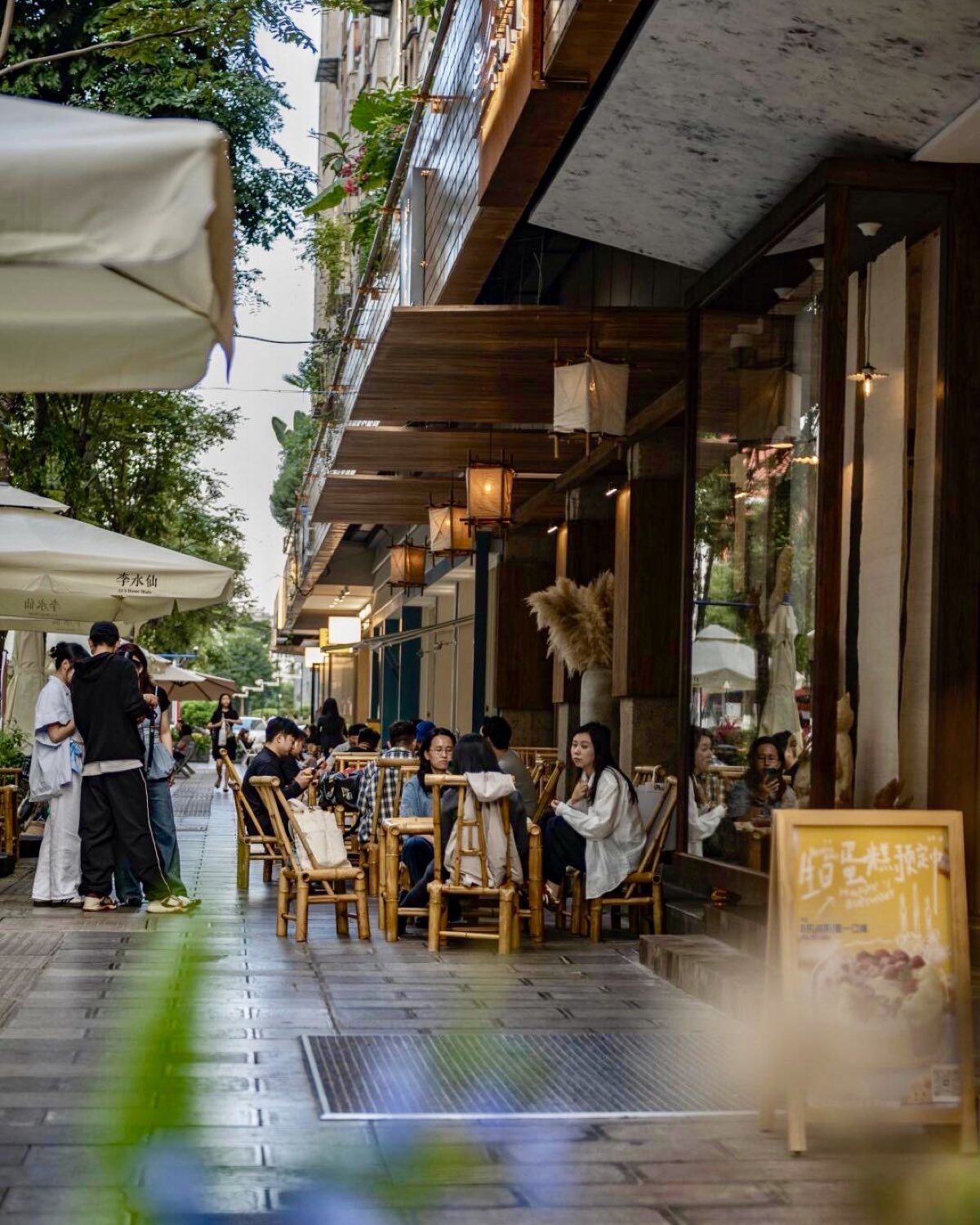
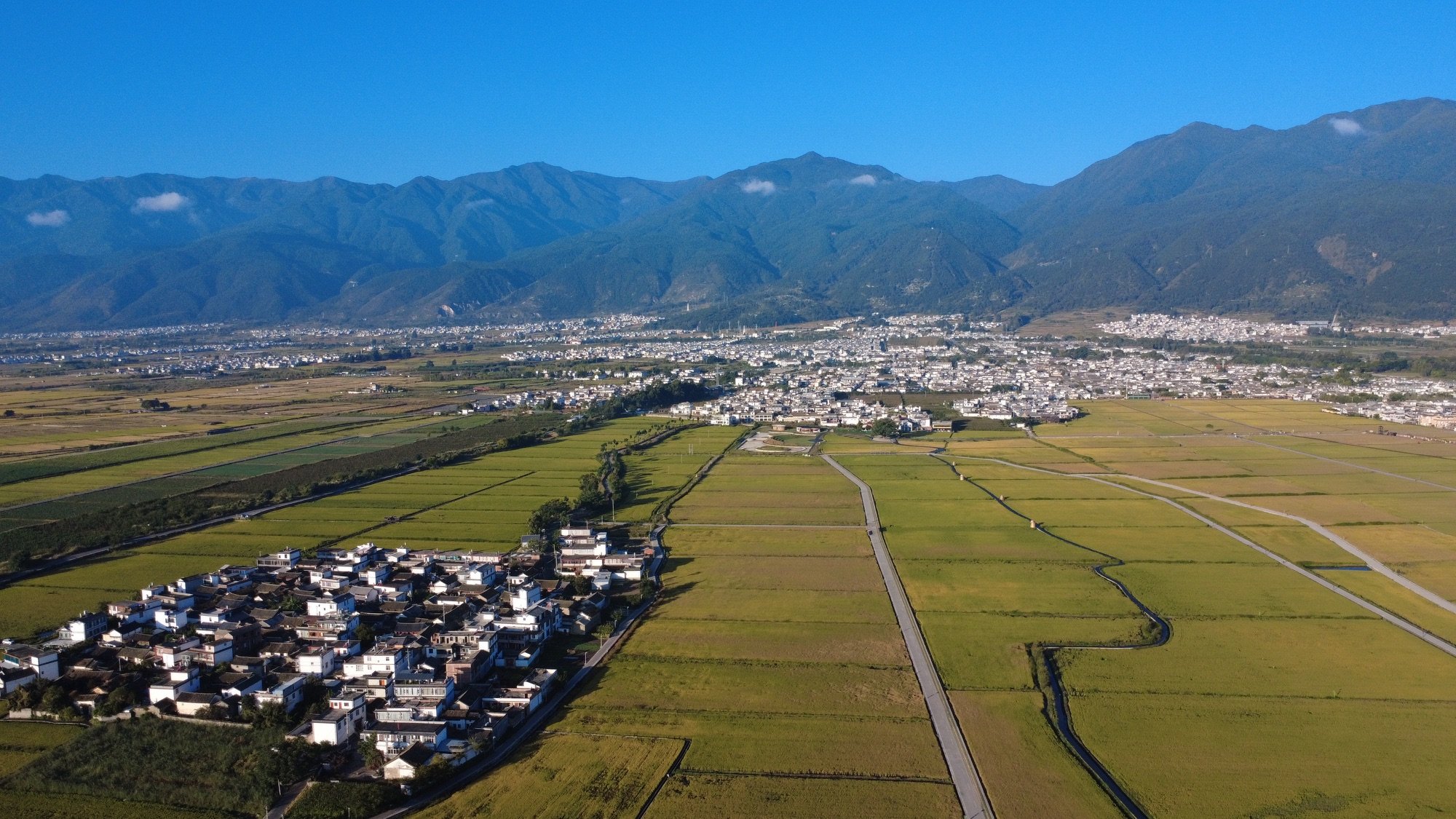
Forty minutes north, between the mountain and the lake, Xizhou is where Dali’s money was made. Its Bai merchant clans grew rich trading from the late Qing, and by the Republican era four families led them: the Dong, Yan, Yang and Yin. Yan Zizhen’s firm, Yongchangxiang, ran more than 70 branches. His house, the Yan family compound built in 1920, has been a museum since 2013. It’s part of a group of Xizhou mansions protected at national level, with carved timber, painted gables and courtyard after courtyard. A wartime university even moved here from Wuhan in 1939.
Come in the morning for the market and Xizhou baba, the flaky bread baked over charcoal. Then walk out into the rice fields towards the lake: green through summer, gold from late September, at their best in mid to late October. We base people at Kasion Erhai, a courtyard hotel a short walk from the lakeshore.
Zhoucheng — the indigo village (周城)
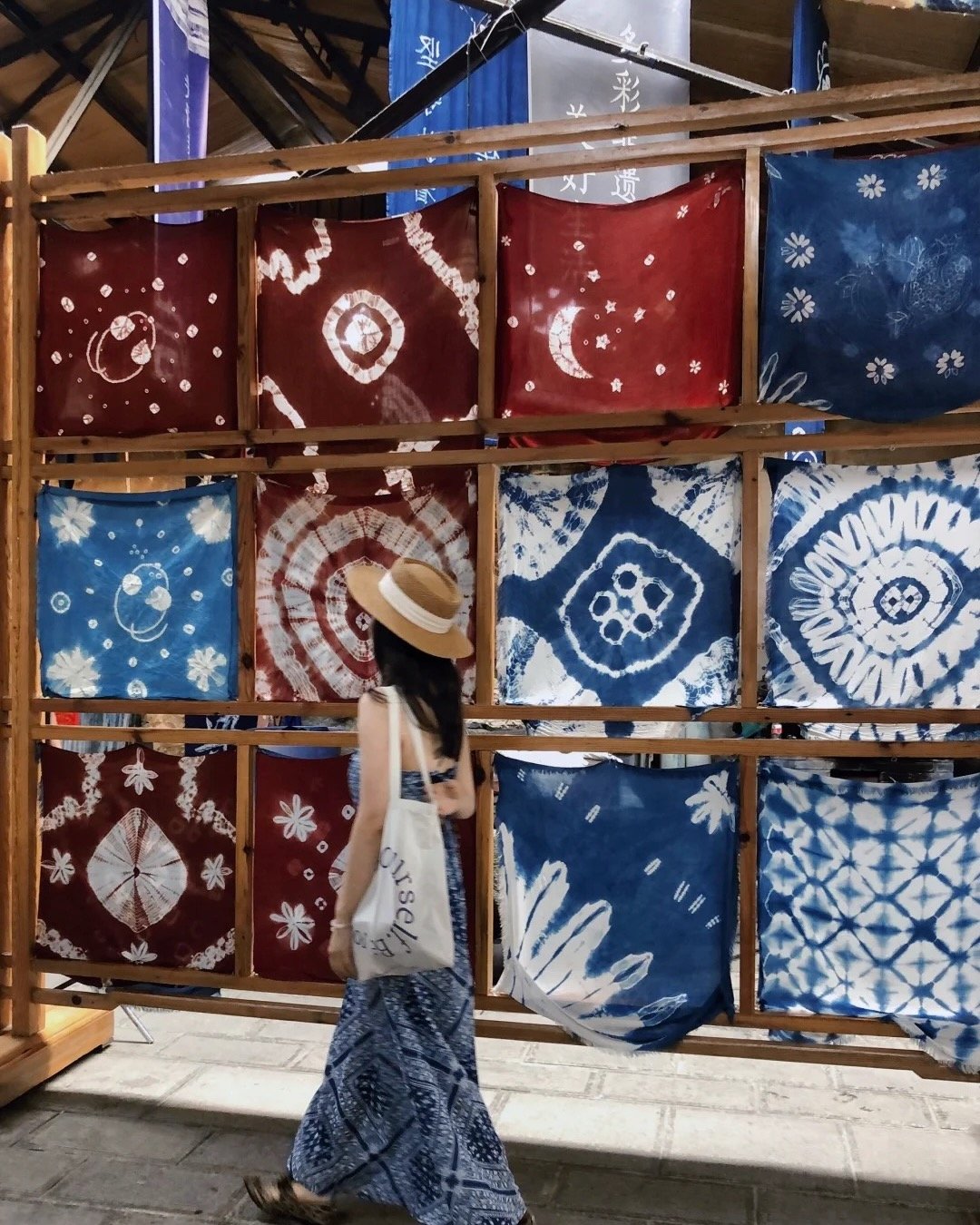
Ten minutes on from Xizhou, Zhoucheng is the tie-dye village. Bai tie-dye has been on China’s national intangible-heritage list since 2006, and the Ministry of Culture named Zhoucheng the home of the craft. Locals will tell you it’s the largest Bai village in China. Skip the souvenir stalls on the main road and spend an hour in a family workshop, stitching and binding your own cloth before it goes in the vat.
Shuanglang — the night on the water (双廊)
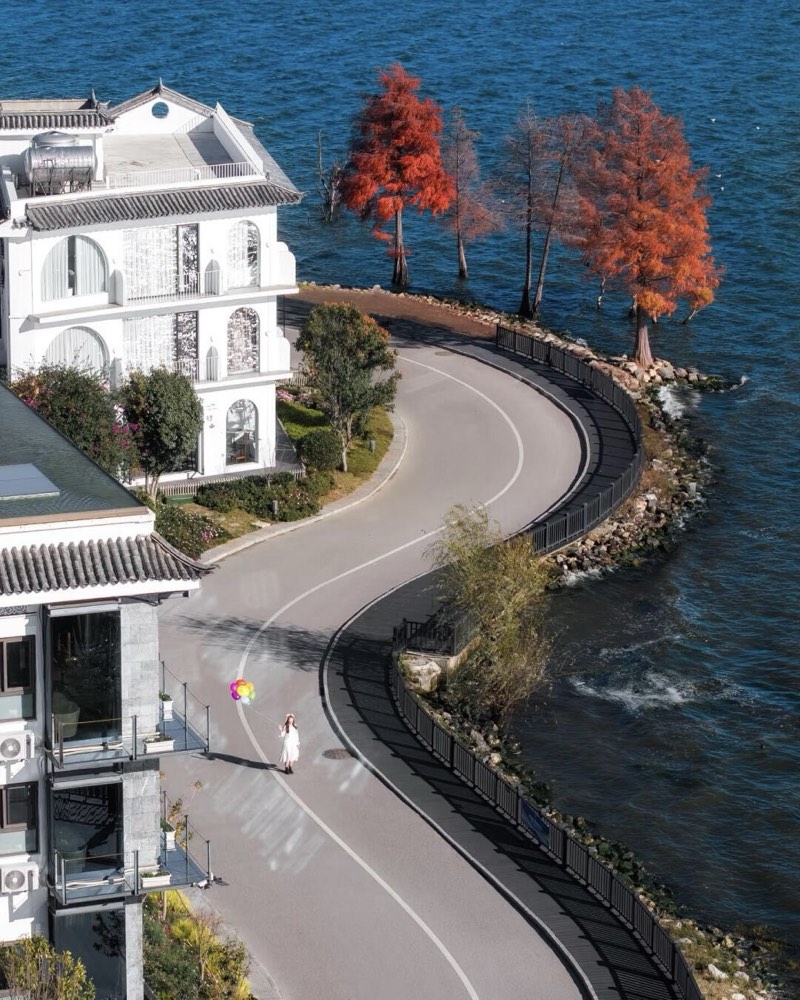
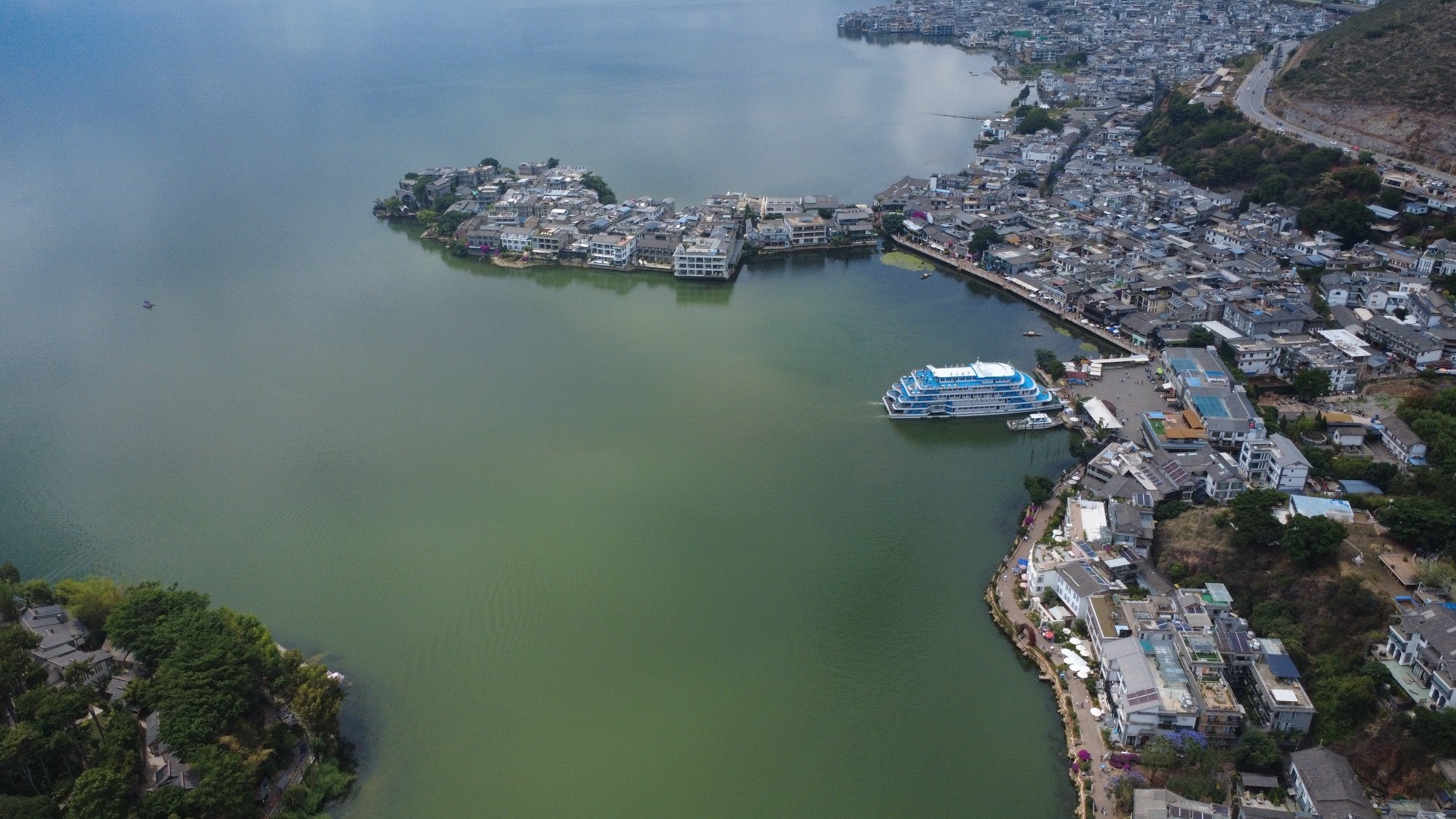
Across the lake on the east shore, Shuanglang is a Bai fishing town on a little peninsula, with Yuji Island just off it. The dancer Yang Liping built her home and an art hotel on the island, and through the 2010s the waterfront filled with guesthouses. Then in 2017 the government shut the lakefront businesses to clean up Erhai, and from 2018 it pulled buildings back from the shore to make a 129-kilometre lakeside greenway. Shuanglang came out calmer, and it’s the one lake town where we’d spend the night: watch the sun go down behind Cangshan from Xishang Shuanglang, a restored Bai inn in the old town.
North of the lake
Fengyu — the valley a Ming traveller called paradise (凤羽)
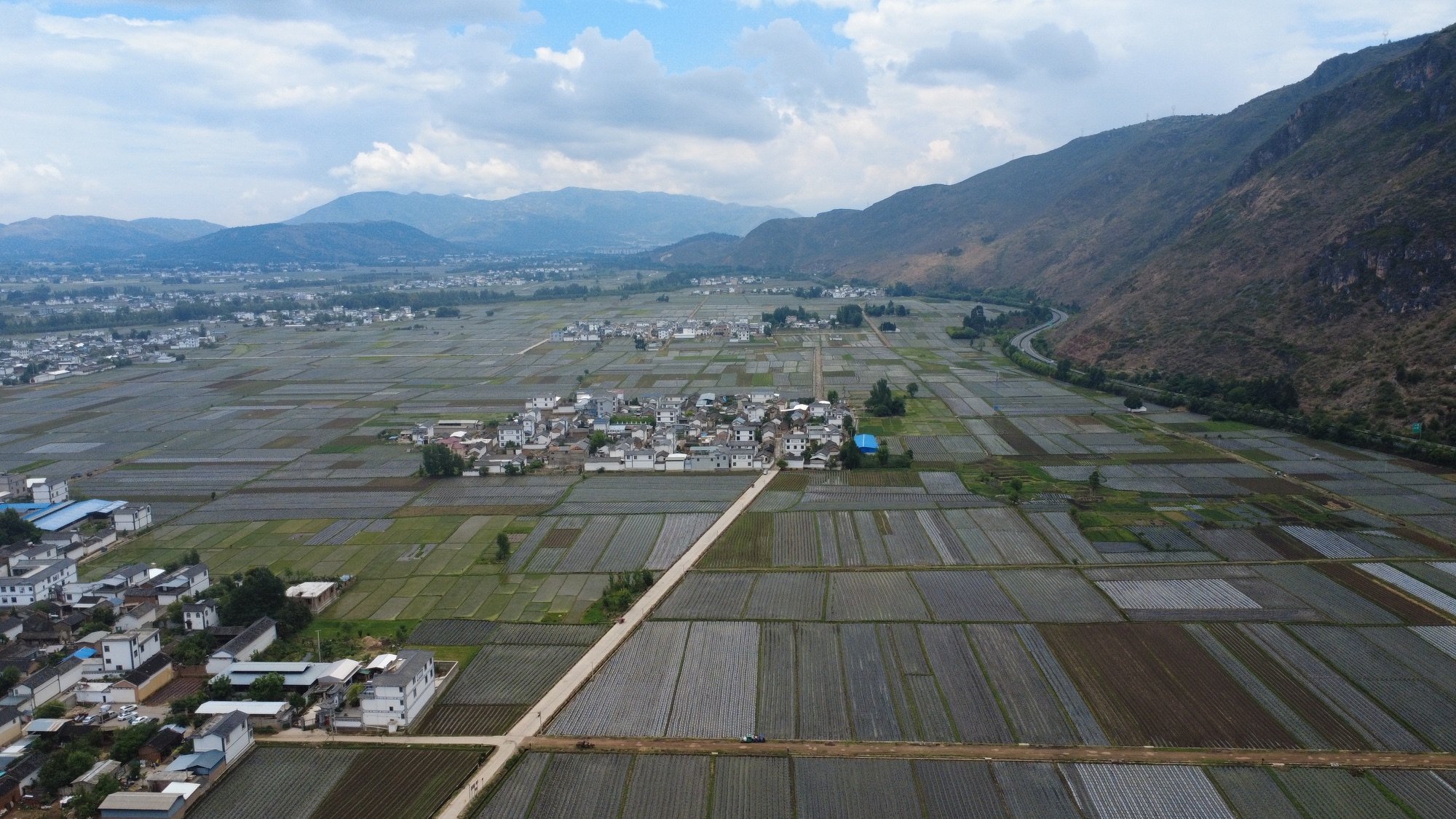
North of Erhai, in Eryuan county, Fengyu is a Bai farming town in a wide valley of rice and rapeseed, and almost nobody has heard of it. The name means “phoenix feather”: legend has it a phoenix died on the mountain above, and every year the birds came back to mourn it. The great Ming traveller Xu Xiake stayed here in the spring of 1639. He wrote about the thousands of birds and compared the valley to the Peach Blossom Spring, the hidden paradise of Chinese literature.
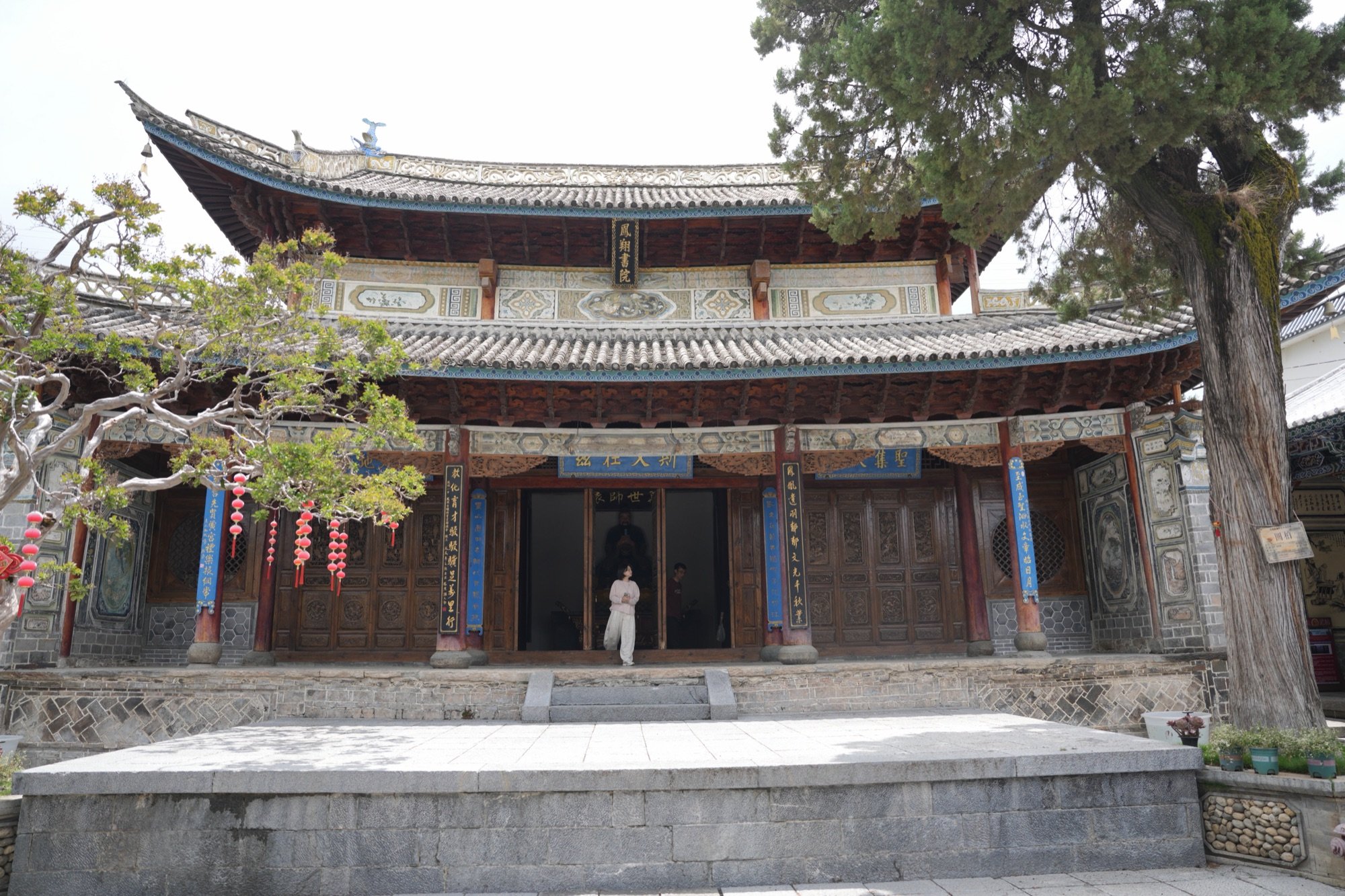
Fengyu has been a national historic town since 2010. Its lanes still hold a cluster of old temples, a Confucian temple and a flagstone post road, with very few visitors. Since 2018 the village of Fotang has been reinvented: rice-paddy and rapeseed “land art” on the fields, dozens of old courtyards bought up by the town, a farm shop and a couple of garden cafés. Come for the fields and a long lunch. Two things to know: the Bird-Mourning Mountain itself has been closed to visitors since August 2025 to protect the migration route, and Eryuan is where Dali’s famous rushan, a dried milk “fan” grilled on charcoal, comes from. If you want to stay in the area, Pushan is a forest hot-spring retreat above Eryuan.
Jianchuan — the woodcarvers’ town (剑川)
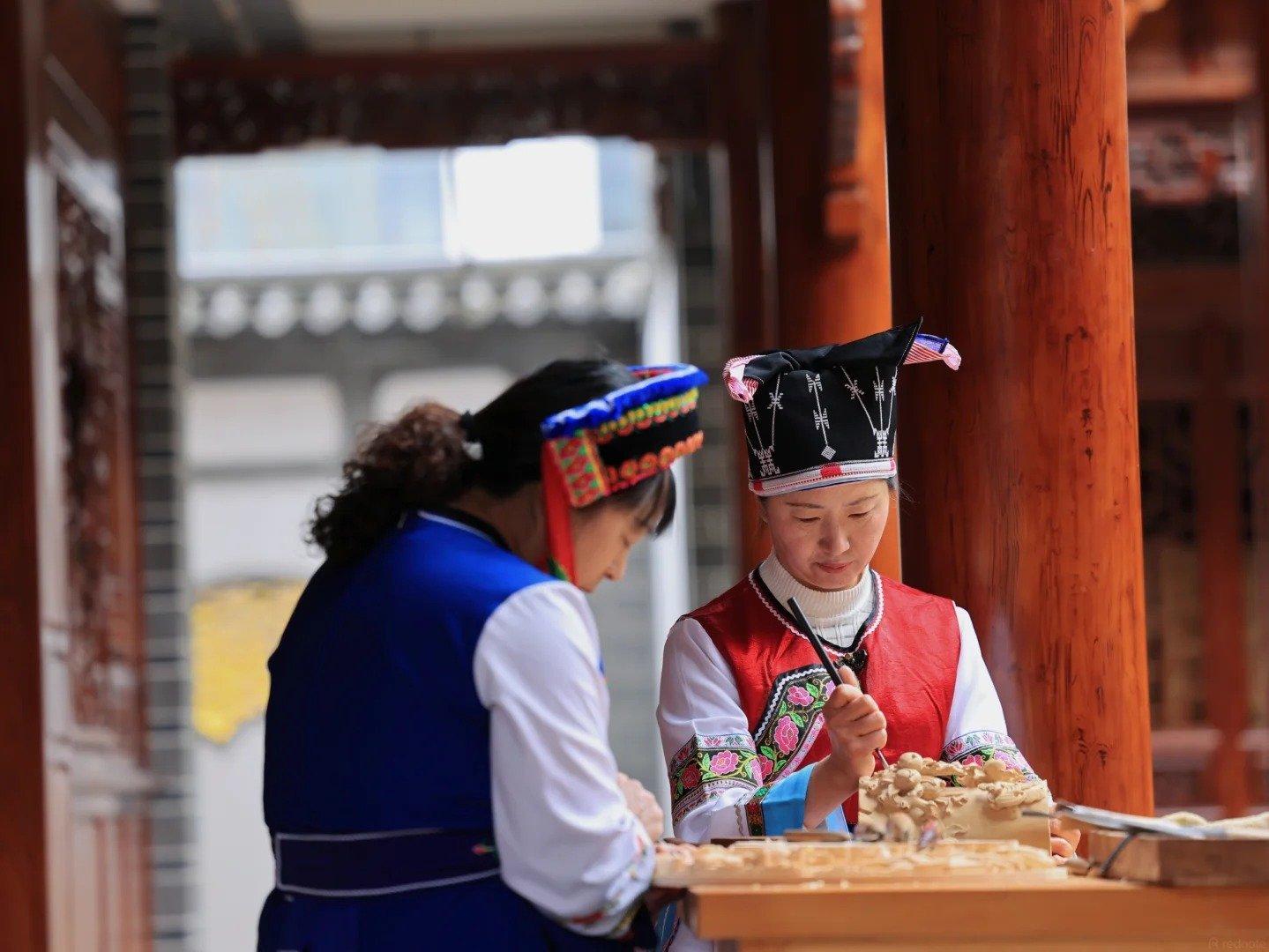
On the way to Shaxi, Jianchuan’s old town became a national historic city in 2023, only the third in Dali prefecture after Dali and Weishan. It keeps 21 Ming and 146 Qing buildings, the oldest from 1392. But the reason to stop is Jianchuan woodcarving, on the national heritage list since 2011: it’s the craft behind the carved doors and window screens you’ll see in Bai courtyards all over Dali. Give it a couple of hours on the drive north for a woodcarving workshop or museum and a walk past the old gates.
Shaxi — the Tea Horse Road town (沙溪)
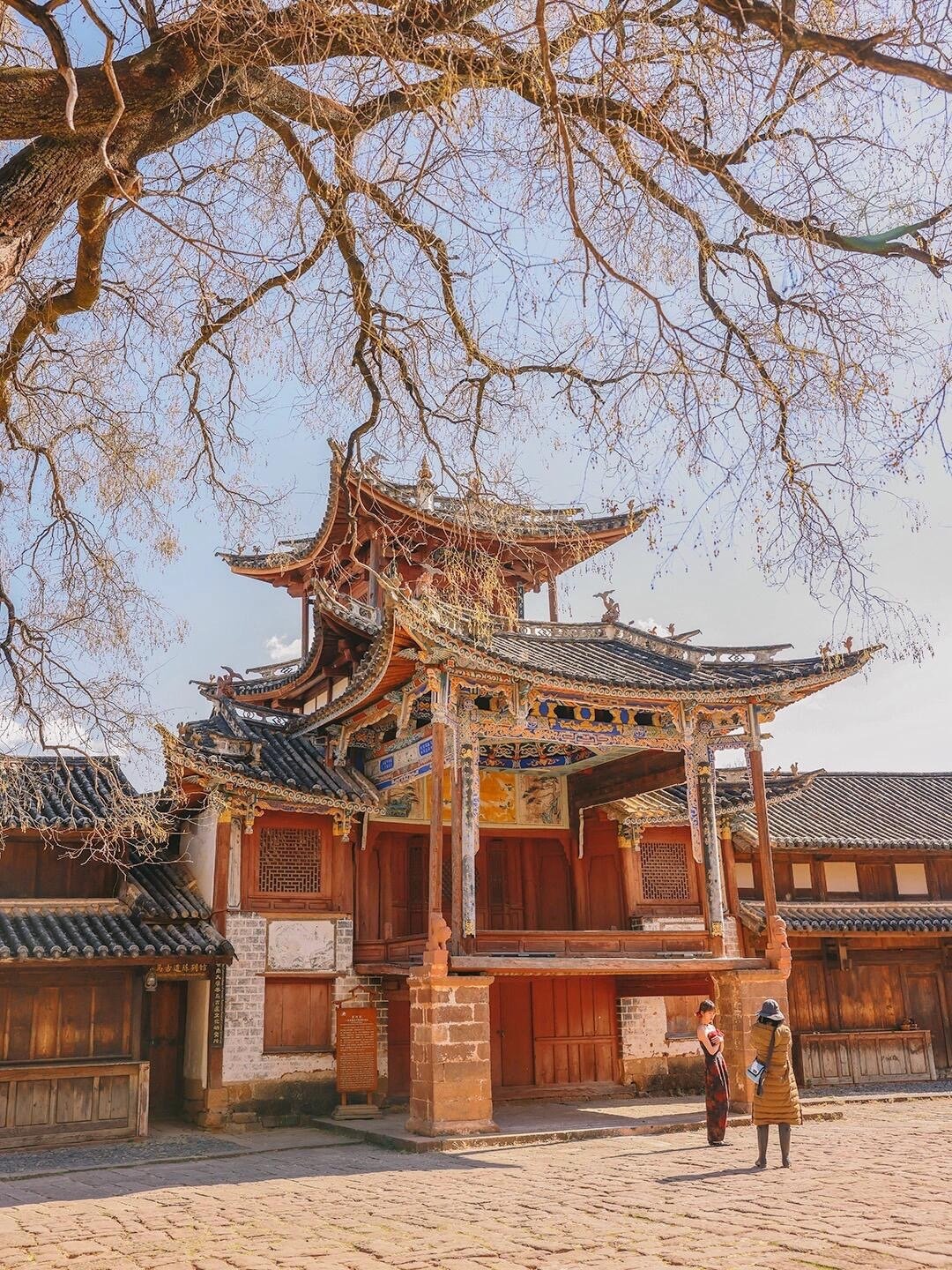
Shaxi is the one town here that has made it onto most travellers’ maps, and it earns its place. It was a market stop on the Tea Horse Road, the caravan route between Yunnan’s tea country and Tibet, and its heart, Sideng Square, still has everything a caravan town needed. On one side stands Xingjiao Temple, founded in 1415, with murals painted two years later by the Bai artist Zhang Bao. Across from it is a three-storey theatre stage with a Kuixing pavilion on top and fourteen upturned eave corners. The World Monuments Fund put the square on its watch list in 2002, a Swiss team from ETH Zurich worked with the county on the restoration, and in 2005 it won a UNESCO Asia-Pacific heritage award.
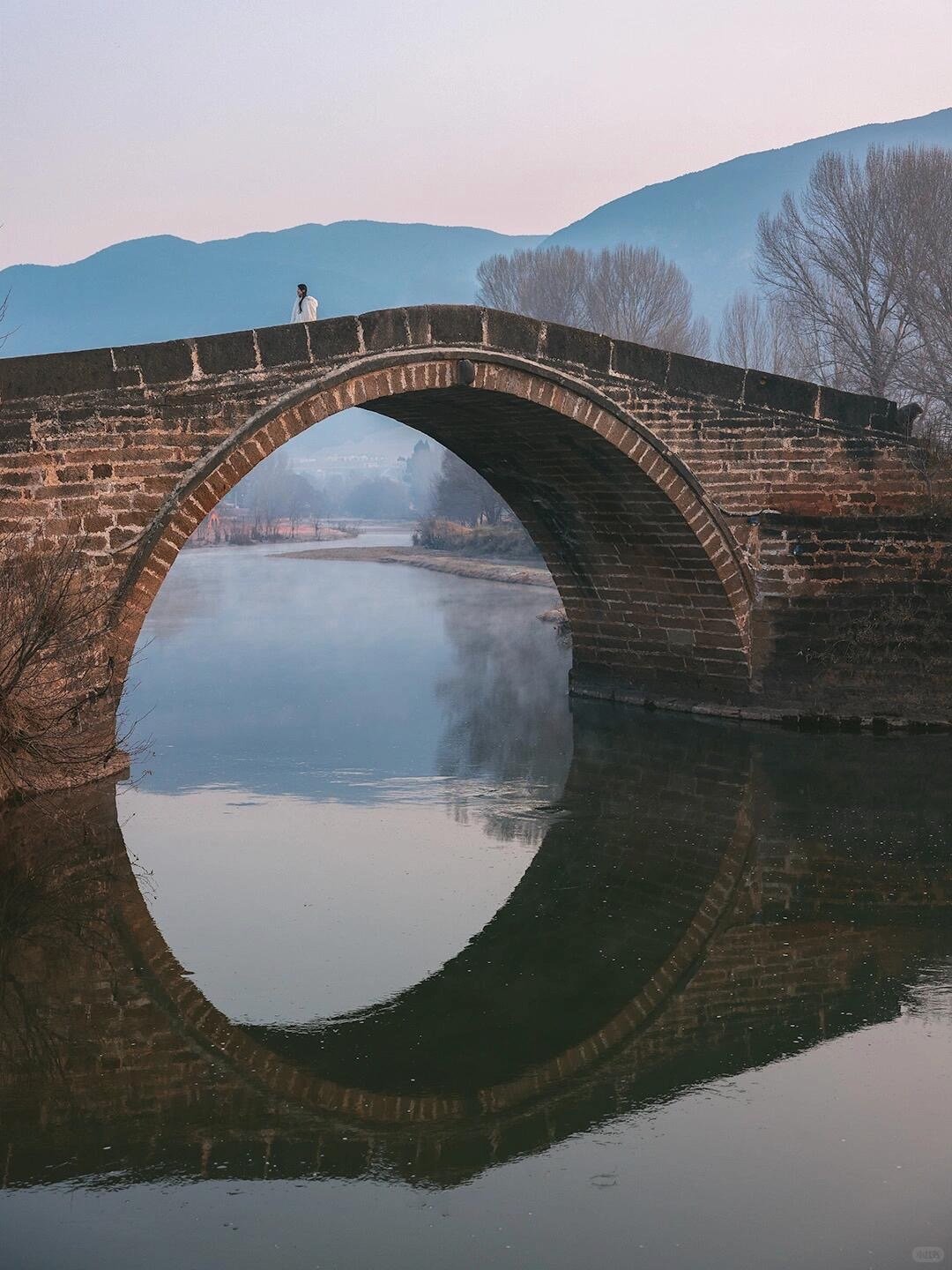
Walk out of town through the fields to Yujin Bridge, the single stone arch the caravans crossed, at sunset. Try to be here for the Friday market, when farmers come down from the hill villages. Fifteen kilometres away, the Shibaoshan grottoes hold Buddhist carvings dated between 850 and 1179, under the Nanzhao and Dali kingdoms (¥45 entry, plus ¥40 for the shuttle). Shaxi deserves two or three nights; our Shaxi guide has the detail, and Kogongdi and Lanlinge are courtyard stays a few minutes from the square.
Mijing — where Shaxi’s salt came from (弥井)
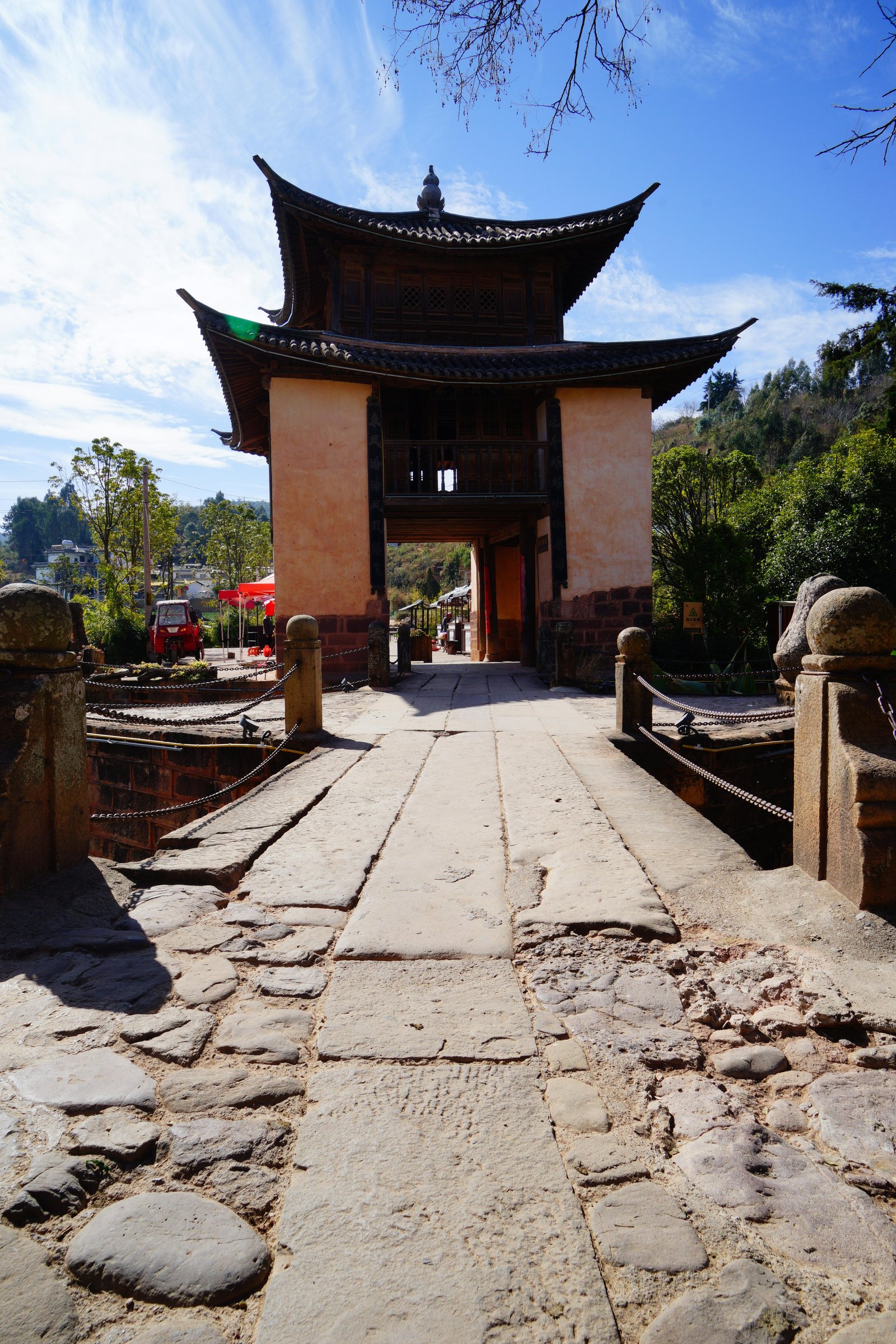
Locals will tell you Shaxi was only ever the transit stop, and that the salt came from here. Mijing is a Bai village over the mountain west of Shaxi, on both banks of the Misha River at about 2,200 metres. Its well was one of the four great salt wells of western Yunnan (Nuodeng’s was another). There was a salt office here from the Yuan dynasty, the trade peaked under the Ming, and mule caravans carried the salt about 30 kilometres over to Shaxi, up a switchback a Qing salt official built on the hillside above the village. From around 1955 the place began to empty. It’s been on China’s national list of traditional villages since 2013.
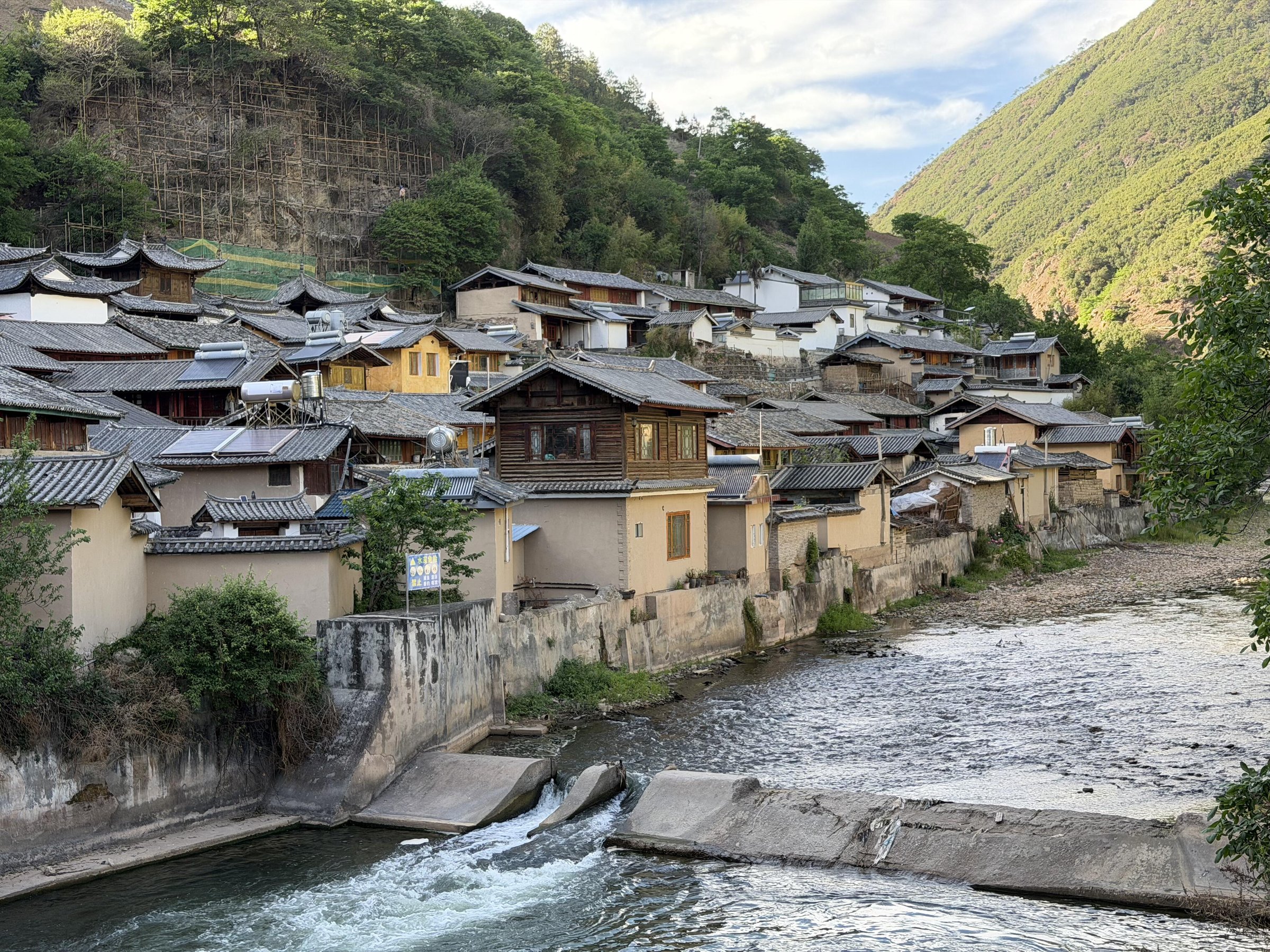
Walk the flagstone lanes between the courtyard houses and cross the covered Wind-and-Rain Bridge, which the villagers rebuilt after a flood took it in 1965. At the west end of the village, the Salt Mother shrine stands over the last of the old wells. Villagers built it in the 1990s to protect the well, which still yields salt, and there’s a restored boiling works inside. Zhaoying Temple, founded in the Ming, has a two-storey earth-and-timber theatre stage. It once held three showpieces of Jianchuan carving; the Ming “Immortal Window” is the one that’s left.
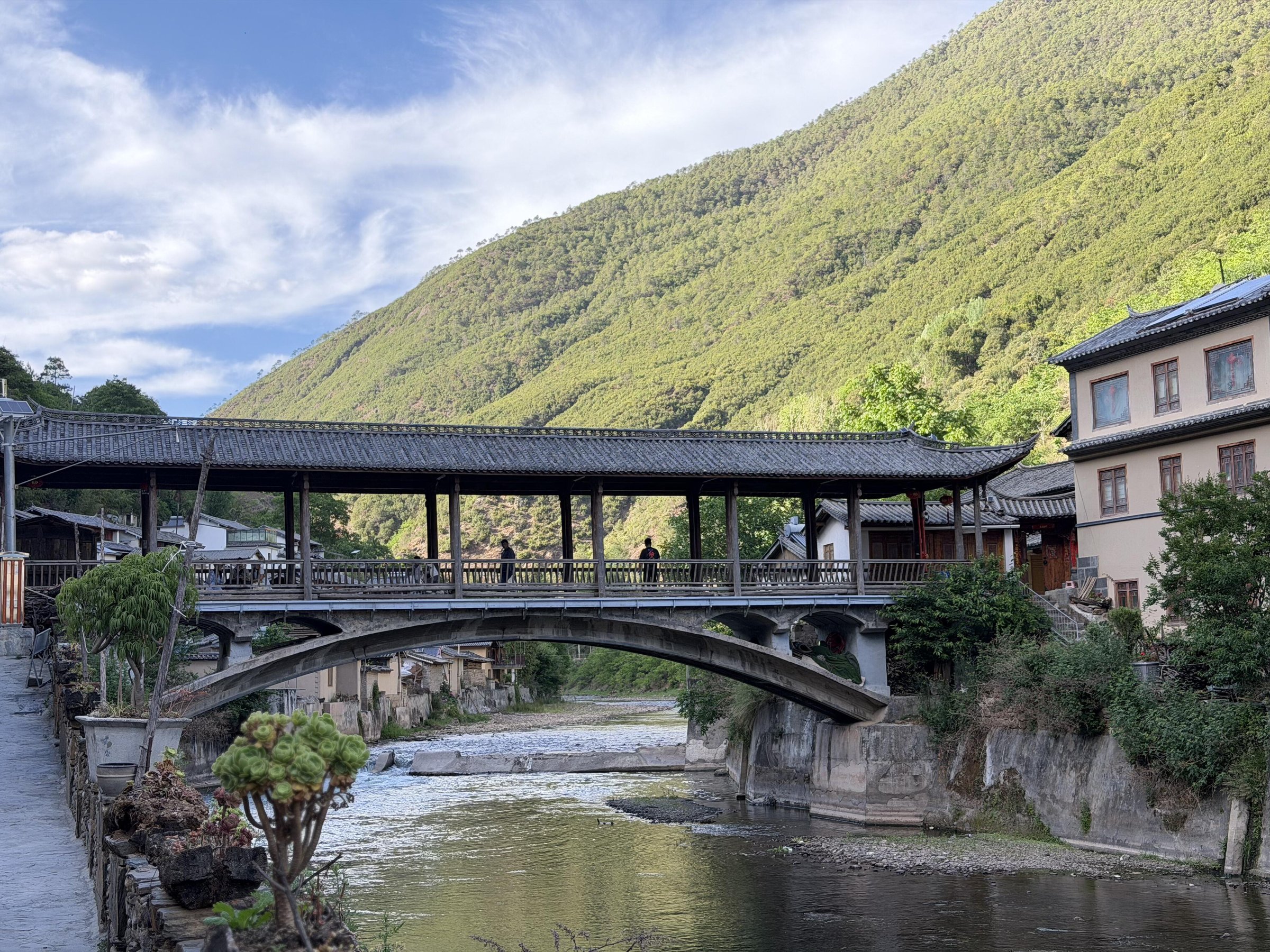
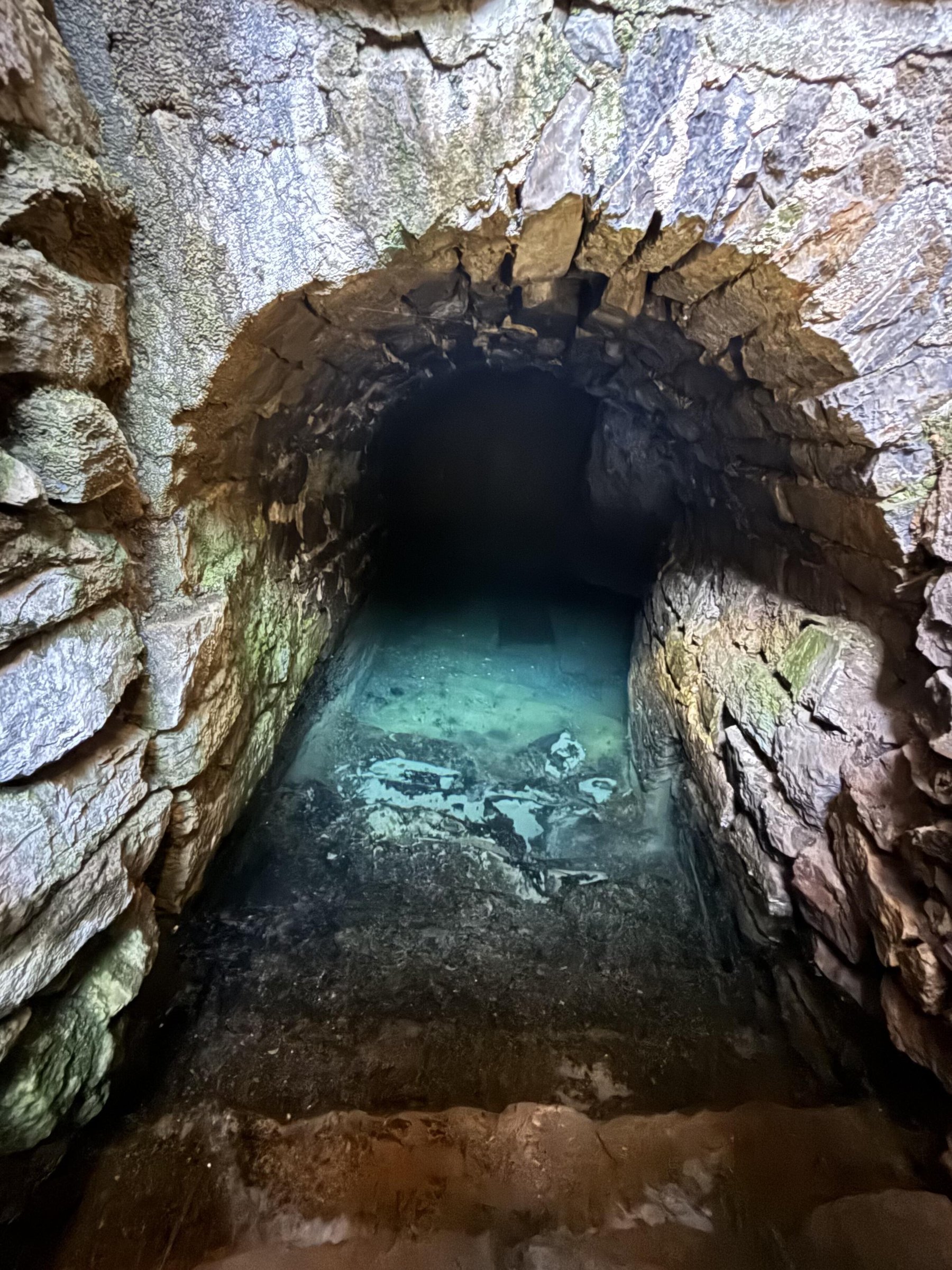
It’s about an hour and a half by car from Shaxi, because the mountain the mules went over is still in the way. Make it a day out from a third night in Shaxi, or take a room in one of the family guesthouses that have opened in the old courtyards. If you can, time it for the eighth day of the fourth lunar month (usually in May), when villagers climb to a hilltop pool to welcome the Salt Mother, and there’s a Bai bull dance, dragons, lions and opera at the temple.
West: Nuodeng, the salt village (诺邓)
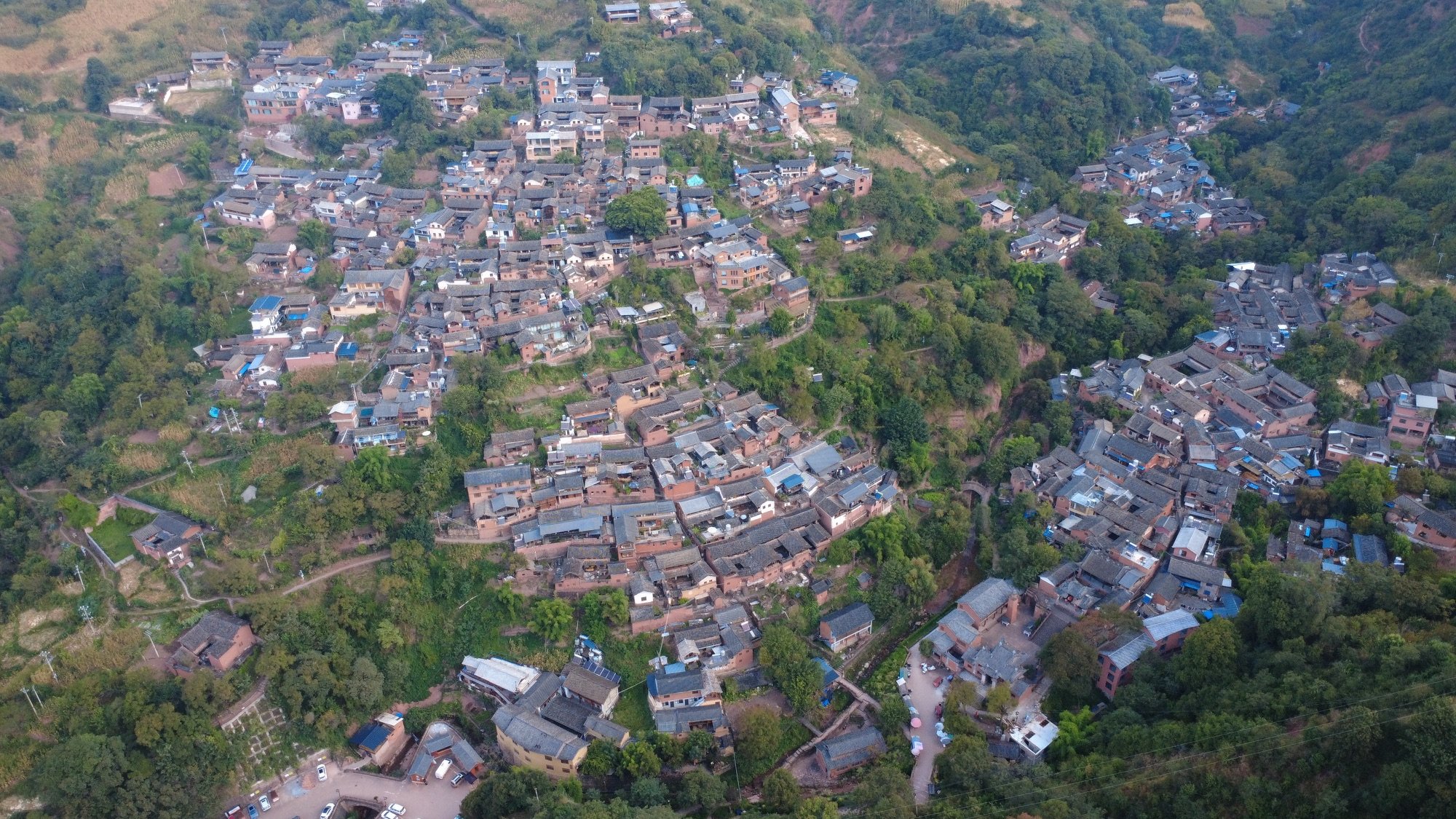
Nuodeng is about two hours west of Dali Old Town, into Yunlong county, and the one we’d most like you to make. It’s a Bai village of red-earth houses stacked up both sides of a ravine. It was built on a salt well, and the salt is why it’s old: the Manshu, an account of the region written around 863, mentions the Nuodeng well. Under the Ming the salt office for five wells sat here; at its peak the village had more than 3,000 people and over twenty temples, and one family, the Huangs, produced five jinshi, the top graduates of the imperial exams.
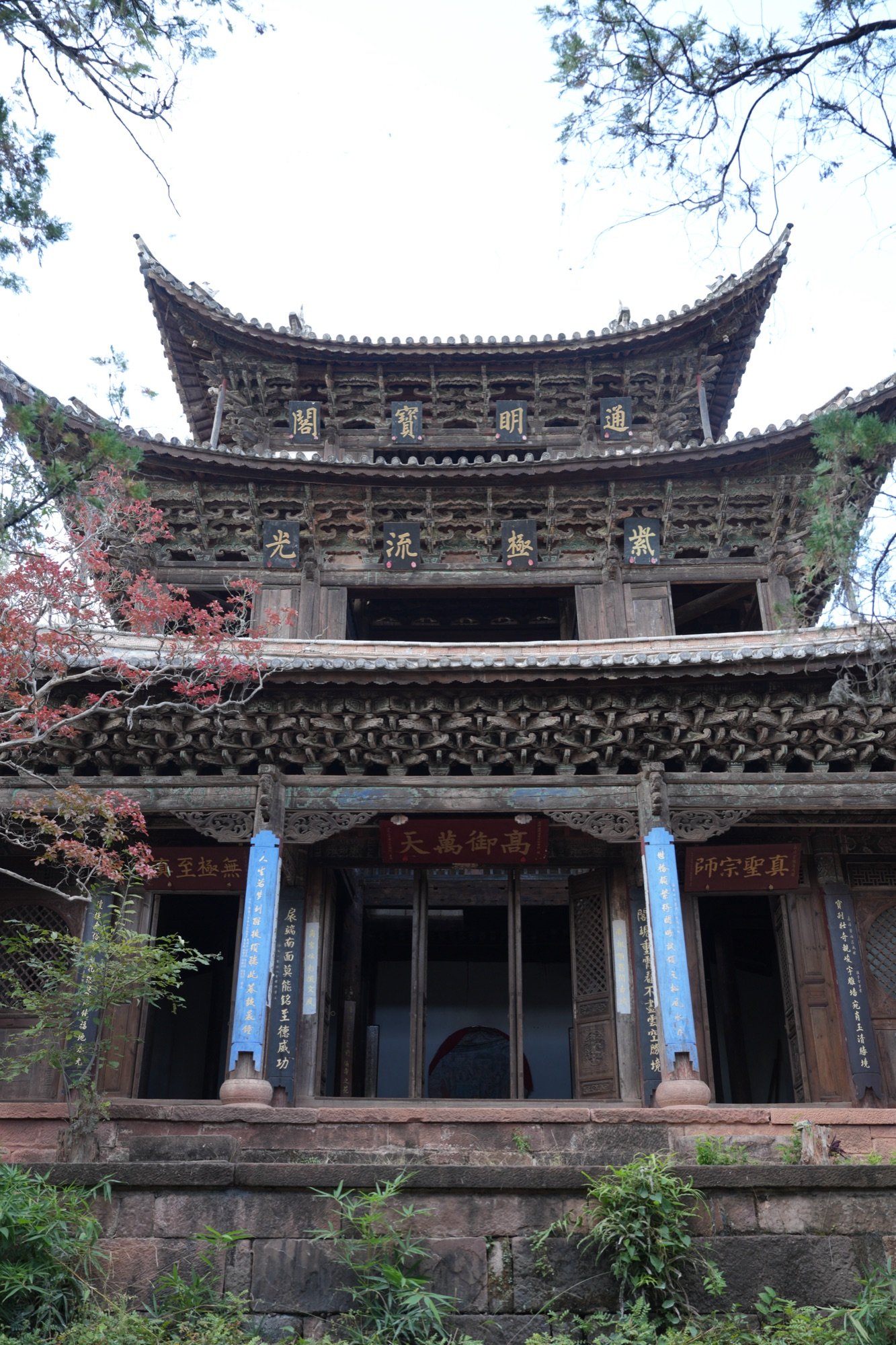
Its old buildings are a national heritage site, and there’s no gate ticket: you just walk in. Climb the stone lanes to the Yuhuang Pavilion, first built in the Ming, whose painted ceiling of the 28 lunar mansions survives. And eat the Nuodeng ham, cured with the village’s own salt and made famous in 2012 by the first episode of A Bite of China. Salt-making ended in the 1990s, but the families still cure ham, and some will show you how the salt was boiled. Stay the night: the light on the red walls early and late is the whole point, and the day-trippers are gone.
South of the lake
Weishan — where Nanzhao began (巍山)
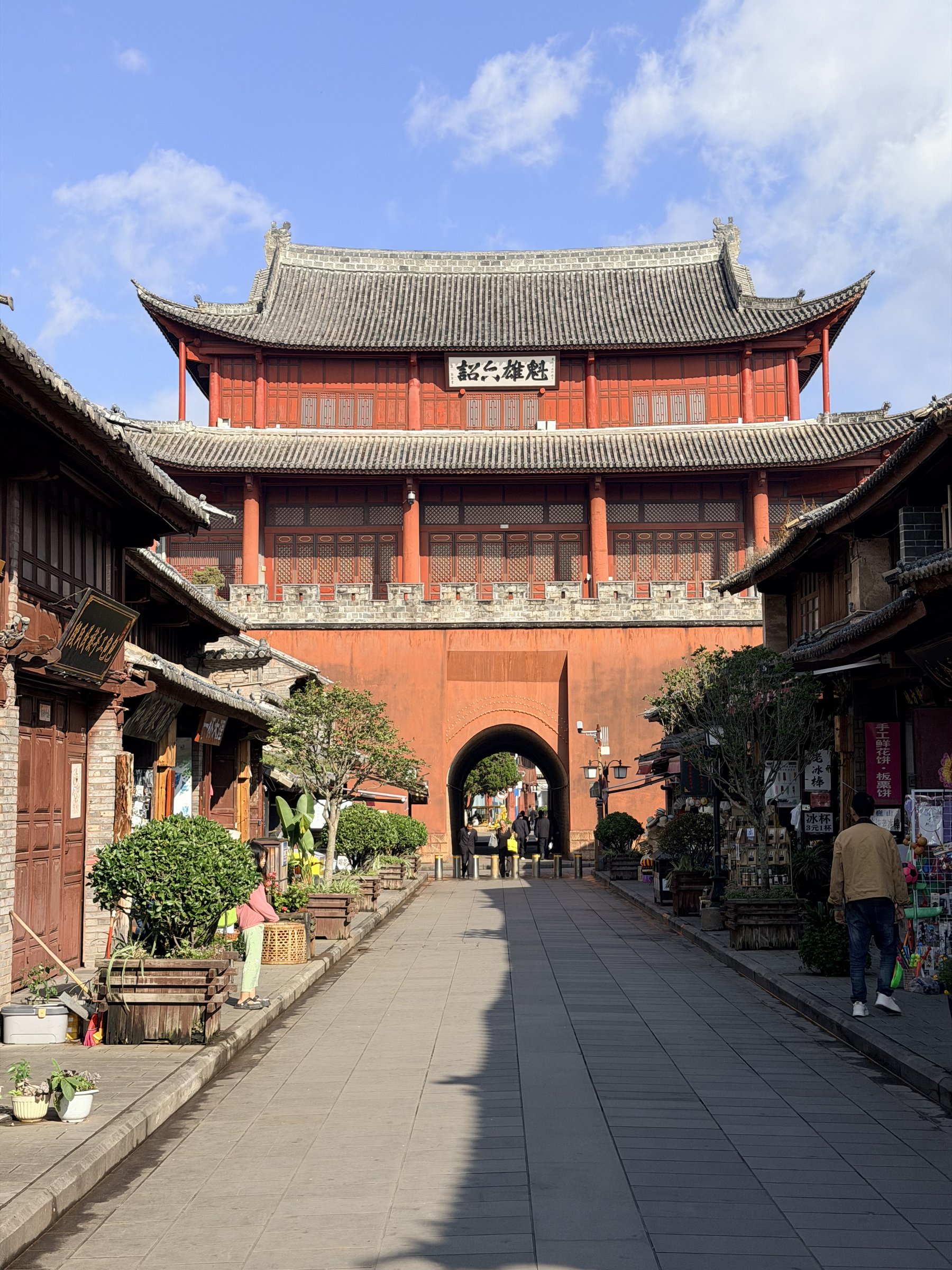
An hour south, Weishan is the valley the Nanzhao kingdom grew out of, though not the town you walk today. The old town is a Ming grid of about 1390, built around Gongchen Tower, and it’s been a national historic city since 1994. Be clear about the tower: it burned in January 2015, and the building on top of the original gate is a reconstruction finished that October. The streets around it are the real thing, and they’re where Weishan earns its place: China’s cuisine association named it a “home of famous snacks”. Eat parou ersi (slow-braised pork over rice noodles) for breakfast, and watch the “one noodle” being pulled.
On the way down, Donglianhua is a Hui Muslim caravan village founded in the early Ming. In the early Republic its caravan of 350 mules was led by Ma Ruji, and his old warehouse is now a caravan museum. Above Weishan, Weibao Shan is a Daoist mountain of old temples. To stay, Weishan Yunxi Jinshidi is a restored Qing scholar’s mansion in the old town and one of the most underrated hotels in Yunnan; it’s in our Dali boutique hotels guide.
Midu — the folk-song town (弥渡)
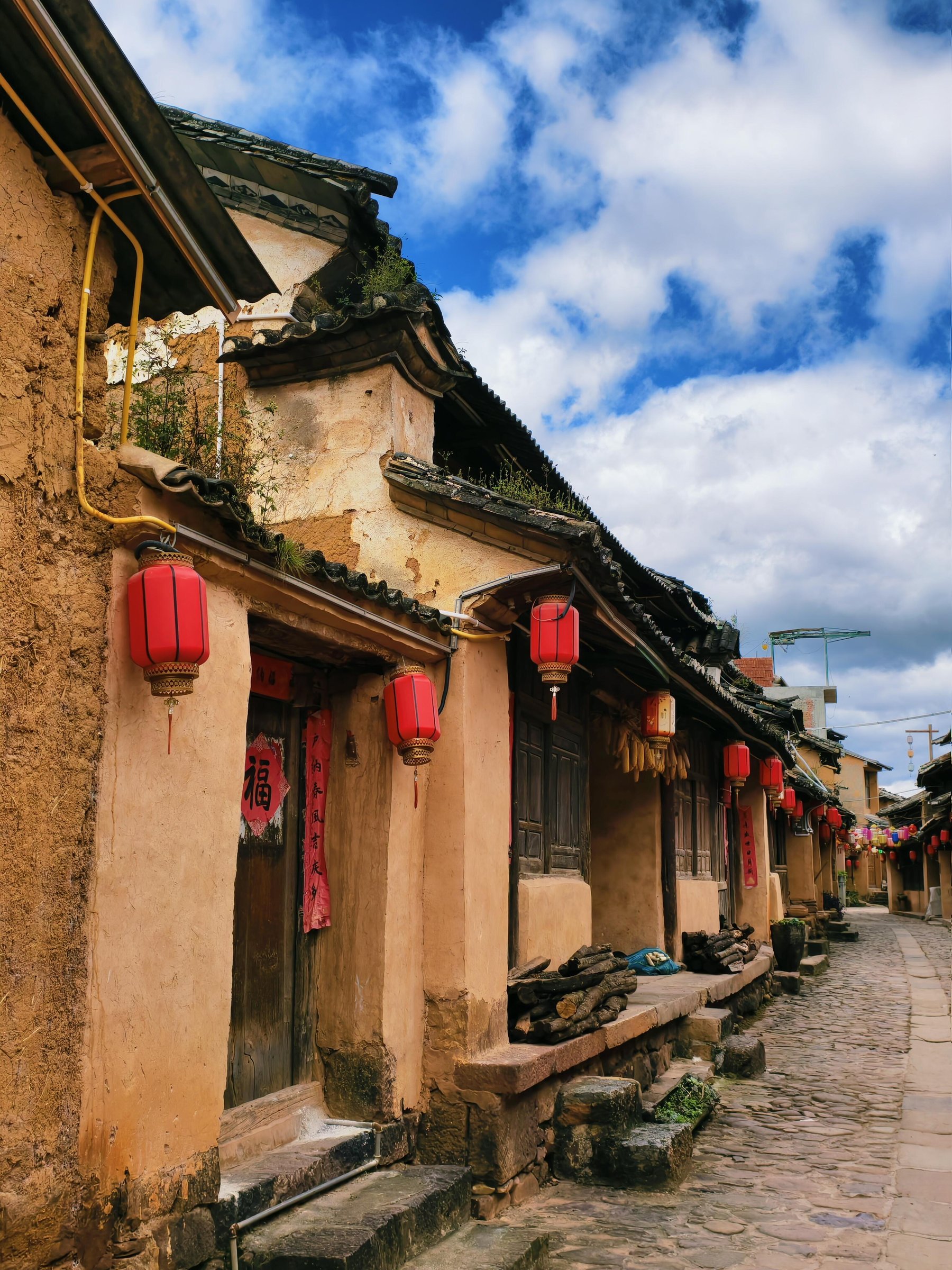
Midu county, south-east of Dali, is the least known of all, and it has two things worth the drive. The first is Wensheng Street in the town of Mizhi (密祉), about 800 metres of earthen shopfronts and horse inns on the old caravan road. Its old name meant “horse-feeding shops”. It’s a national historic village, and it’s where one of China’s best-known folk songs, Xiaohe Tangshui (The Flowing Stream), comes from. The former home of Yin Yigong, who collected and arranged the tune, is on the street. You’ll find horse inns, a Wenchang temple, a spring-fed pool and almost no crowds. Lunch is usually a tofu feast in a farm courtyard.
The second is the Nanzhao iron pillar at the Iron Pillar Temple, about 6 kilometres from Midu’s county town. It was cast in 872, in the reign of the Nanzhao king Shilong: 3.3 metres tall, about two tonnes, and still carrying its 22-character cast inscription. You’ll hear it was raised on Zhuge Liang’s orders. It wasn’t, and the date is right there in the iron.
How we’d put them together
- Three or four days: two nights on the lake (Xizhou or Shuanglang), with Zhoucheng and the Old Town at dawn, then two nights in Shaxi, stopping in Jianchuan on the way north.
- A week: add Fengyu on a long lunch, and a night in Nuodeng. It’s two hours each way, so it’s worth sleeping there rather than doubling back the same day. A third night in Shaxi buys you the day out to Mijing.
- For food and history: a day south for Weishan and Donglianhua, or a night in Weishan, with Mizhi and the iron pillar on another day.
Dali also hinges the rest of Yunnan: Shaxi sits on the road north to Lijiang’s quieter towns, and our Classic China & Yunnan and Volcanoes, Hot Springs & Golden Pagodas trips both stop on the lake and in Shaxi.
So which Dali ancient towns should you see?
If you have a few days, Xizhou and Shaxi: the merchant town and the caravan town, and between them the best of Bai Dali. If you have a week and want somewhere almost nobody else goes, Nuodeng, overnight. If you eat to travel, Weishan. And if you’ve done Dali before, Fengyu, Mijing and Mizhi are the ones to come back for. Do the Old Town early, and only once.
Want the towns without the coaches? Tell us your dates and we’ll build the route, the drives and the nights around them. For the wider picture, start with our Dali guide.